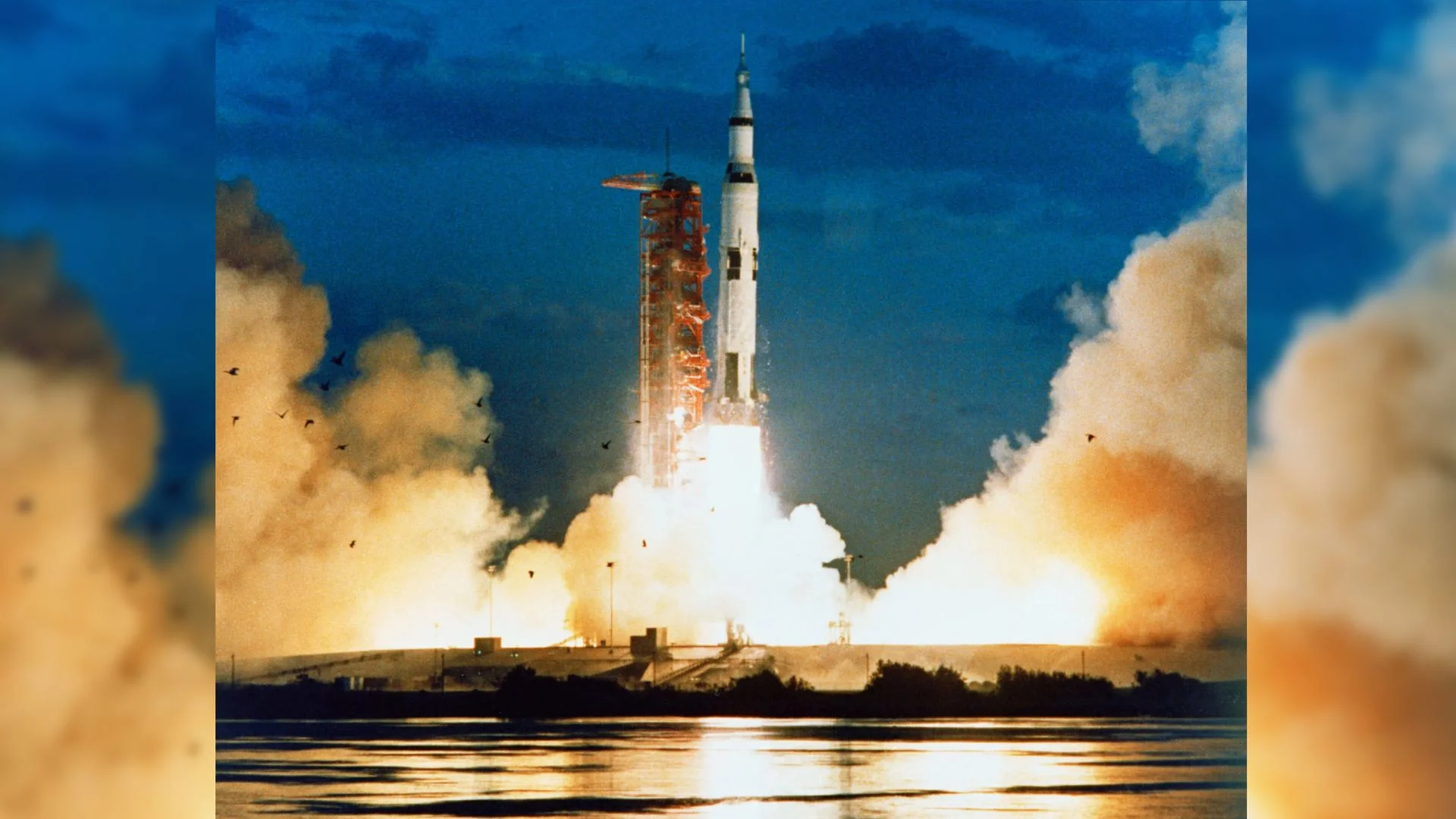
The Saturn V was the most powerful rocket anyone had built, and on Nov. 9, 1967, NASA flew it for the first time with nobody on board. That choice tells you how much the agency needed the first flight to go well. Here's the thing: an uncrewed flight lets you accept a failure without losing anyone, and that's exactly what a booster this size demanded.
At 363 feet, the Saturn V stood taller than the Statue of Liberty. SpaceX's Starship has since passed it in size and thrust, but in 1967 nothing else came close. NASA needed that kind of lift to put astronauts on the moon. Still, a rocket that big carries real risk, so the debut was a test flight with an uncrewed command module. That's the part that gets lost when people talk about the Saturn V as a size record. Height and thrust were means to an end, and the end was a lunar landing nobody had attempted yet.
Anyone nearby got a lesson in the rocket's power. The launch sent a loud shockwave through the area, and the ground shook hard enough to rattle buildings miles away. Dust and debris flew up in a huge cloud. If you've ever stood near a large launch, you know that the sound and vibration arrive before your brain has decided what you're witnessing. The launch took place from NASA's new launch center, the Kennedy Space Center in Florida.
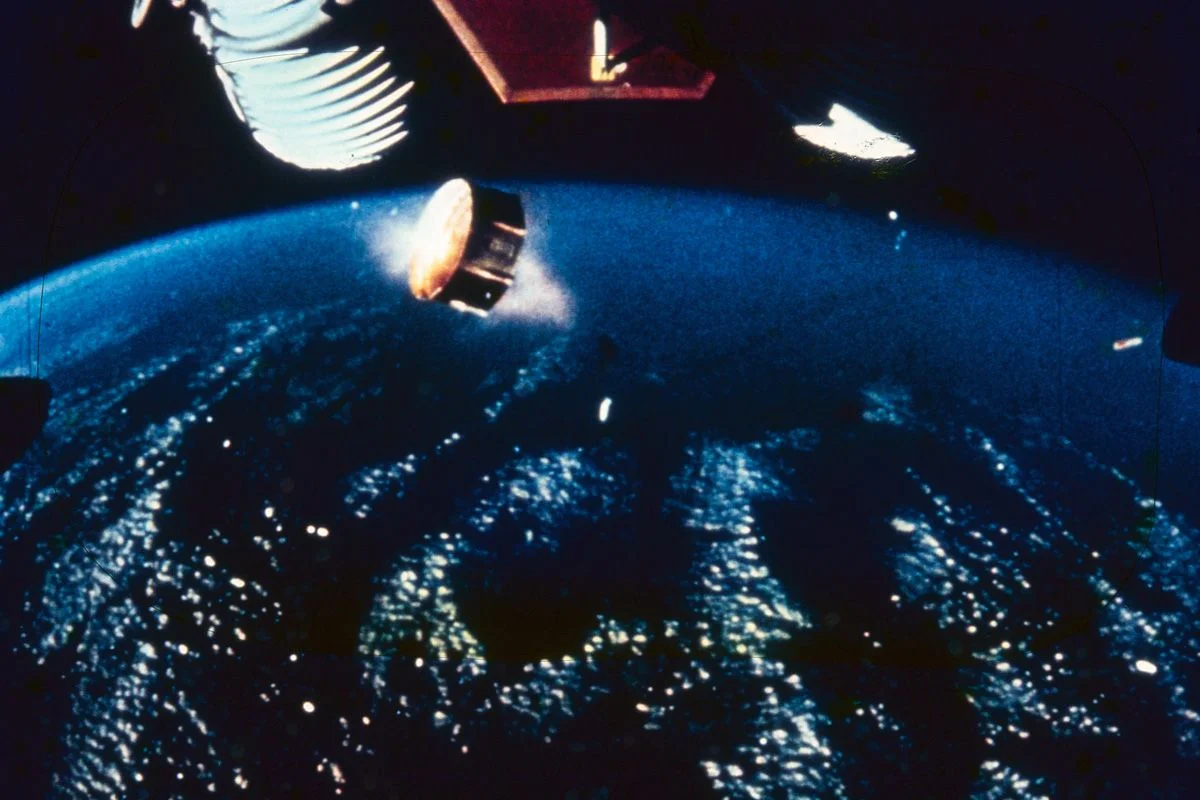
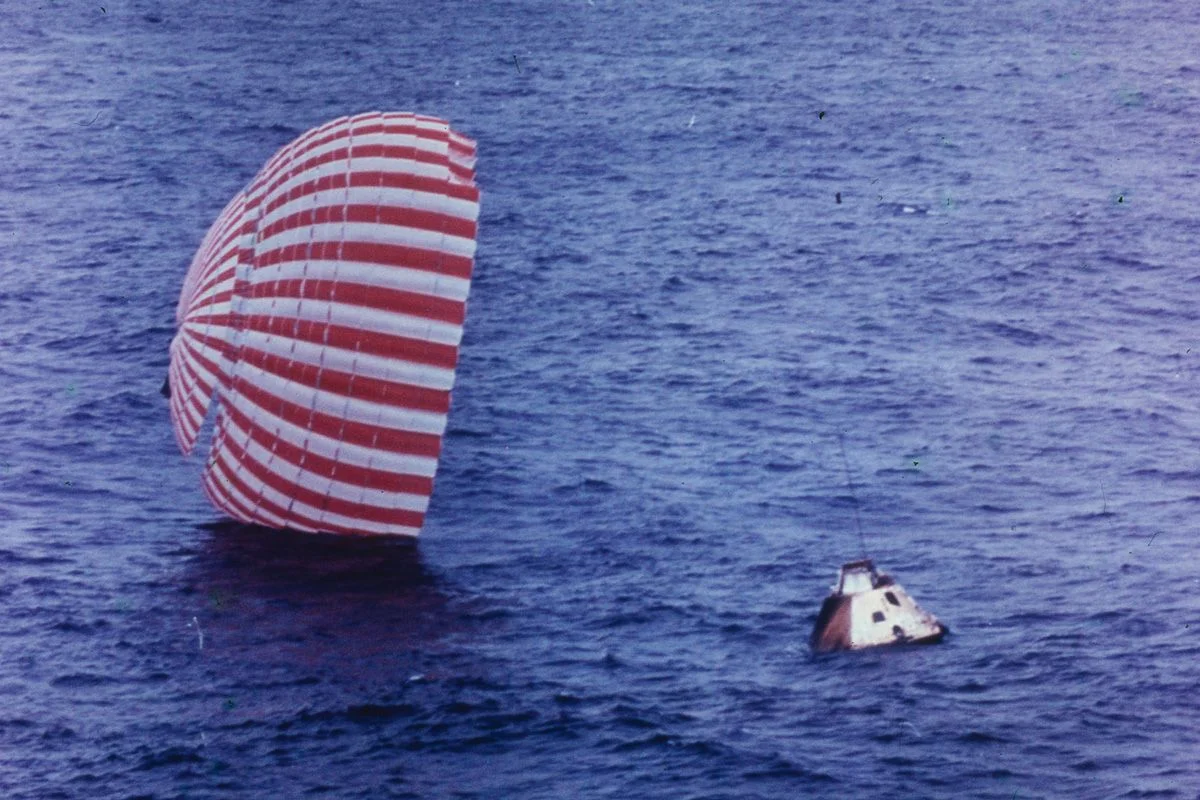
The mission ran 8 hours and 36 minutes, which was long enough to exercise the systems and short enough that it never resembled a full lunar mission. When it ended, the command module came down in the Pacific Ocean. For an uncrewed test, a splashdown at sea is the whole point. It means the capsule survived reentry, and it means engineers could recover the hardware and the data it carried back to the lab.
A bet on an untested booster
Apollo 4 was a turning point on the road to a moon landing. NASA had committed the lunar program to the Saturn V, a three-stage heavy-lift rocket meant to carry astronauts in a capsule, along with their lander, to the moon and back. Until this launch, the rocket had never flown as a complete system. Every stage had been built and evaluated on its own, which is how big engineering programs usually work. Putting them together for the first time is where surprises tend to show up.
The agency also needed a new place to launch from. It built Launch Complex 39 at what is now the Kennedy Space Center. Today that Florida spaceport is the home port for orbital human spaceflight in the United States. In 1967, though, no rocket had ever lifted off from it. That meant the pad, the support equipment, and the launch procedures were all being proven at the same moment as the vehicle. Everything worked anyway.
Wernher von Braun, director of NASA's Marshall Space Flight Center in Huntsville, Alabama, put it plainly: “It was really an expert launching all the way through from lifting off exactly on time to performance of every single stage.” That's a telling way to frame success. He didn't talk about the sheer force of the engines or the spectacle of the cloud. He talked about timing and about every stage performing, which is the language of a systems test. A three-stage rocket gives you three separate chances to fail at each handoff, and the flight had to clear all of them.
Recovering from a catastrophe
The timing mattered as much as the hardware. On Jan. 27, 1967, a fire broke out inside the Apollo 1 command module during a ground test and killed astronauts Gus Grissom, Ed White and Roger Chaffee on the launch pad. The program had only months to recover its confidence before Apollo 4 flew. That's a short window for a program that had just lost its crew in a test, and it explains why the November flight was watched so closely.
That's why the flight's outcome carried weight beyond the engineering. George Mueller, NASA's then-Associate Administrator for Manned Space Flight, said the maiden voyage “dramatically increased the confidence of people across the nation in the management of the largest research and development undertaking in which the western world has ever engaged.” I'd argue that quote is more revealing than it sounds. Mueller wasn't only describing a rocket. He was describing public trust, and that trust was in short supply after the Apollo 1 fire. A clean flight doesn't erase a tragedy, but it gives an agency a reason to keep going.
From test flight to Apollo 11
The Saturn V's real work came soon after. One year later, another Saturn V launched the first astronauts toward the moon on the Apollo 8 mission, and every Apollo flight that followed used the same booster. That consistency is easy to overlook. Once the rocket was proven, the program could focus on the spacecraft, the lander, and the procedures rather than wondering whether the launch vehicle would hold together. Two years after its debut, a Saturn V carried the Apollo 11 crew to the first crewed moon landing in July 1969.
What this flight means now
Apollo 4 is worth revisiting because it shows a pattern that still matters in aerospace. You test the biggest, most expensive piece of hardware before you trust people to ride on it. That sounds obvious, but programs under political and schedule pressure have always been tempted to shortcut it. The Saturn V team didn't, and the flight's success is partly a vindication of that discipline.
The Starship comparison is useful here, though it cuts both ways. Starship has surpassed the Saturn V in size and thrust, which makes the old record look modest on paper. Still, bigger isn't the same as more capable, and raw numbers don't tell you whether a vehicle is ready for people. If you're following current launch vehicles, the question worth asking is how each test flight is structured and what engineers learned from it, not only how tall the rocket is.
Apollo 4 didn't carry a single astronaut, and that's exactly why it matters. It was a flight with almost nothing to show in terms of crew, but everything to prove about the machine. Every crewed mission that came after depended on those eight hours and 36 minutes, whether the people involved realized it at the time or not.