Most space history gets written by the countries that won the race, which makes the Judica-Cordiglia brothers' story an odd outlier. Two Italian radio hobbyists claimed they caught the final transmissions of Soviet cosmonauts who never made it home. Six decades later, nothing has verified those claims. Still, the legend survives, and the reasons it survives say as much about Soviet secrecy as they do about the brothers.
A homemade listening post in a wartime bunker
The brothers' interest started in October 1957, when the Soviet Union launched Sputnik 1, the first artificial satellite. Achille and Gian Battista Judica-Cordiglia were teenagers, or close to it, and they decided they wanted to hear those satellites for themselves. Their budget was thin, so they built most of their gear from secondhand military surplus. When a part wasn't available to buy, they fabricated it.
Their station, which they called Torre Bert, occupied an abandoned World War Two bunker. Over time it grew into a fully functional radio facility. The antenna was a improvised assembly of chicken wire and scrap metal. It looked nothing like a professional installation, but it worked well enough to draw attention.
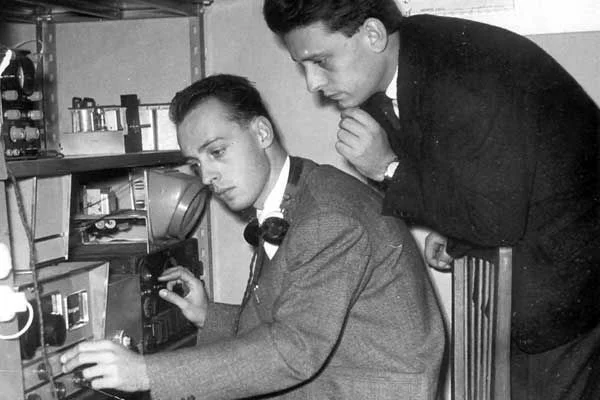
The brothers reportedly picked up transmissions tied to Sputnik 2, the first Soviet spacecraft to carry a living animal into orbit. That passenger was a dog named Laika, who never returned. They also said they tracked signals from America's Explorer 1 satellite. Their location in northern Italy helped here. It put them in a good position to catch signals from spacecraft passing overhead, so some of their early success came down to geography and timing.
The SOS that faded out
The legend takes its real turn in late November 1960. By then the brothers had heard reports from a West German observatory that an unidentified object might be circling Earth. If true, that raised an uncomfortable question. Had the Soviets launched something they had never announced?
The brothers started spending their evenings at Torre Bert, searching for the mystery object. According to their account, they eventually caught a signal unlike anything they had logged before. It wasn't the familiar electronic beeping of a satellite. It was Morse code, and the letters spelled SOS.
As they listened, the signal weakened. That detail mattered to them. A spacecraft in trouble and drifting away from Earth would produce exactly that kind of fade. If the object had a crew aboard, the implications were severe: a secret Soviet flight, a human passenger, and something that had gone terribly wrong in orbit.
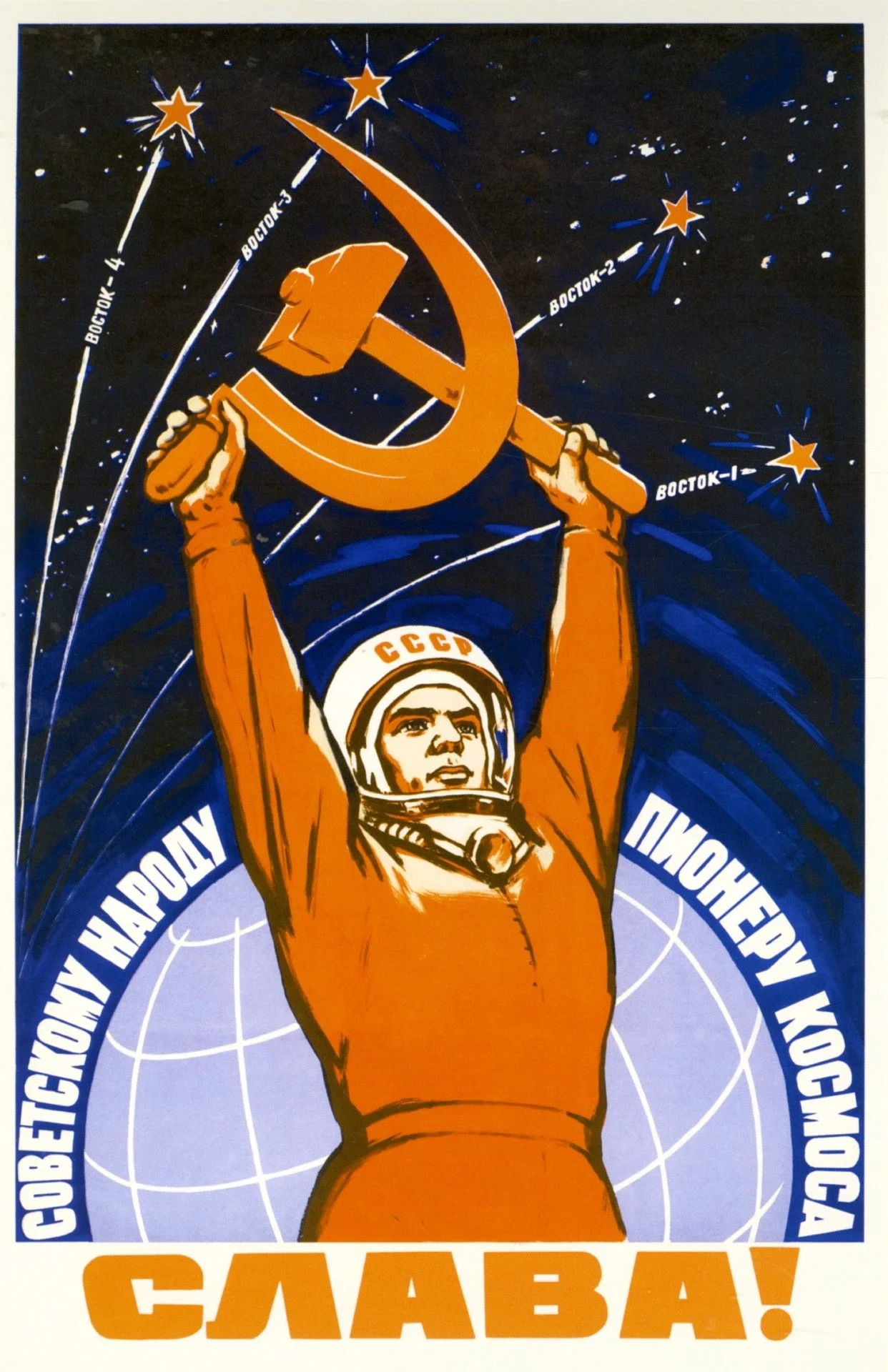
Here's the thing: the brothers seem to have reached that conclusion on their own, and no verified record has ever tied the SOS to a crewed craft. Nothing confirms that an unacknowledged Soviet mission existed, let alone that it escaped Earth's gravity and ended in tragedy. Still, the claim set off a chain reaction. It helped popularize the idea of unknown "lost" cosmonauts who died on flights the public never heard about.
Breathing, heartbeats and a female voice
The SOS was only the first of many claims. By early February 1961, the brothers said they had intercepted another unsettling signal. This time they described labored breathing and strained moaning, the sounds of a person aboard an orbiting spacecraft.
They also produced a recording that seemed to capture a rapidly beating human heart. They shared it with Italian cardiologist Achille Dogliotti. According to reports, Dogliotti concluded that the sounds were consistent with strained breathing and an elevated heartbeat. That's an impressive-sounding endorsement, but it's a medical opinion on audio, not evidence of where the audio came from.
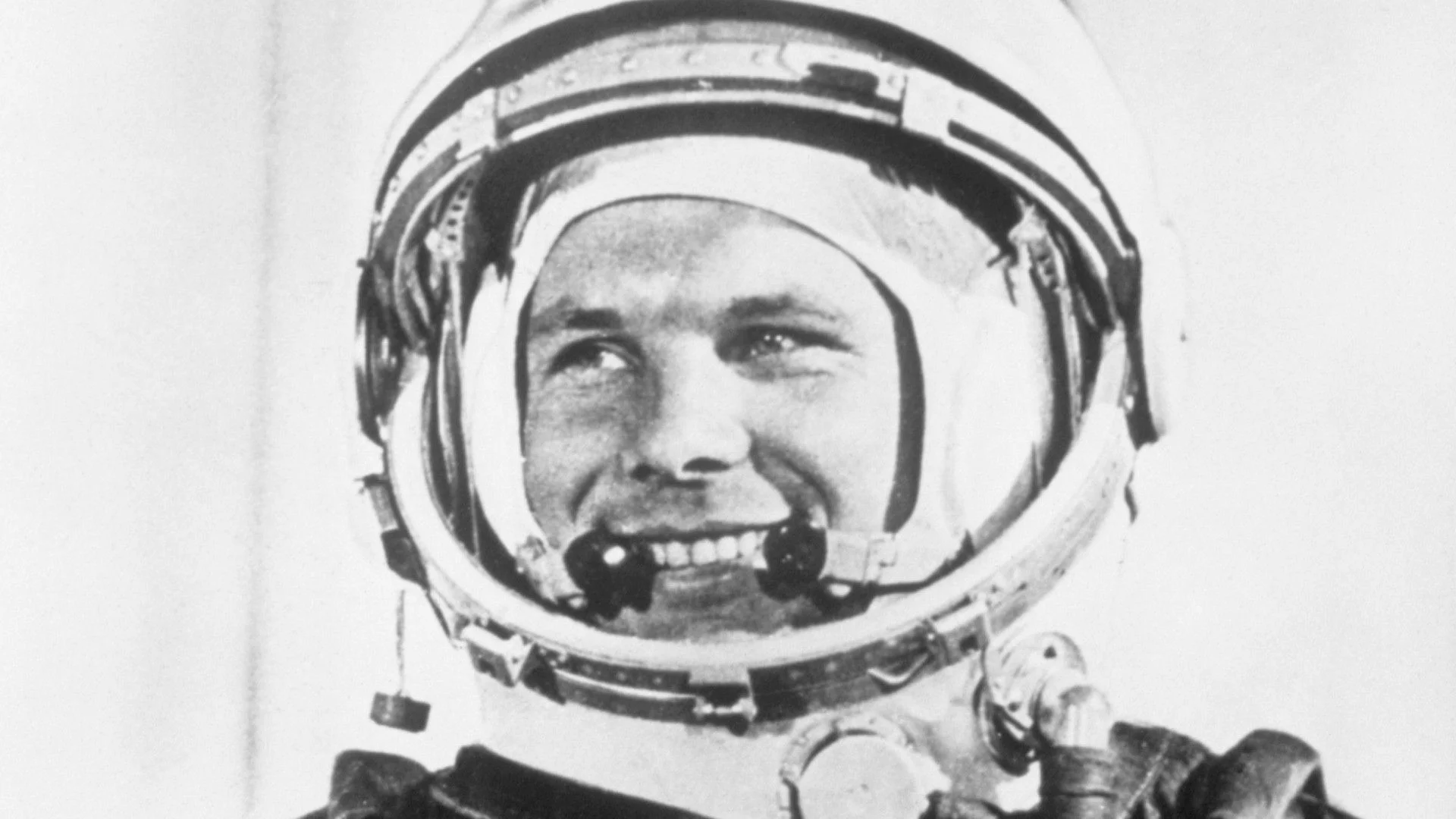
Over time, more recordings surfaced. The brothers believed these captured failed Soviet missions that came before Yuri Gagarin's successful flight. Gagarin's 108-minute orbit in April 1961 made him the first human in space, and in the brothers' telling, the first success was built on a trail of unreported failures.
The most controversial recording may be the one they associated with a female cosmonaut. They believed it captured her final moments on a flight that supposedly happened before Valentina Tereshkova's 1963 mission, which made her the first woman to travel into space. Researchers have pointed out that these transmissions don't follow typical military communications protocols, which makes the recording hard to take at face value.
A KGB shadow and a television appearance
The brothers' fame grew, and with it came attention from people who weren't hobbyists. In one episode, they said a man claiming to be a Russian reporter visited them. Soon after, someone who identified himself as an Italian counterintelligence agent warned them that the "journalist" was really a KGB agent.
That put the brothers, and their unusual hobby, on Soviet intelligence radar. The story's most striking details came out decades later. London-based journalist Kris Hollington revisited the claims for a feature in the paranormal-focused magazine Fortean Times. He reported that a former Soviet KGB operative, who later served as a Russian ambassador to a European country, confirmed on condition of anonymity that Moscow had taken an interest in the brothers.
"Our cosmonauts were warned to be careful what they said while in space after this and we had the brothers followed," the former agent reportedly told Hollington.
According to the same source, some officials believed the brothers "had to be dealt with — an accident perhaps." Their fame may have saved them. After the pair appeared on a television program that drew significant attention, any plans to endanger them became impractical. The former agent told Hollington that the brothers' celebrity had "saved their lives," and he added that he thought "they were good kids."
What can actually be checked
The surveillance story is hard to verify, mostly because the key source stayed anonymous. The same problem applies to much of what the brothers claimed. Even if they really did intercept Soviet transmissions, that doesn't prove they found evidence of hidden missions where cosmonauts died.
Spaceflight researcher Sven Grahn has taken a middle position. He accepts that the brothers ran a working tracking station, but he doubts the sensational claims. In his assessment, he wrote: "I think that the Judica-Cordiglia brothers did run a tracking station and picked up signals from various spacecraft," he said, adding that "for some reason they thought that they needed sensational stories [to] maintain their image of a 'hot-shot' operation." His explanation is that they over-interpreted some receptions, then felt trapped into producing more sensations.
Hoaxes are also on the table. Whatever the explanation, no independently verified launch records, authenticated communications or other period evidence back up what the brothers said they heard. That's the core problem with the legend. Every link in the chain depends on the brothers' word and on recordings nobody has authenticated.
The Soviet program's secrecy complicates things, though. Space historian James Oberg has documented cases where Soviet officials altered photographs and records from the early years of human spaceflight. The state also hid deadly failures. A launch pad explosion on Oct. 24, 1960 killed a high-ranking Soviet military officer and at least 100 others. Soviet state media described it as a plane crash.
That history explains why rumors of missing cosmonauts found such fertile ground. When a government has already buried a disaster, people reasonably wonder what else it buried. The brothers' recordings don't prove a cover-up. But the documented cover-ups show that a state willing to lie about a fatal launch failure is a state where a rumor of hidden deaths sounds plausible.
No verified evidence has surfaced for failed, unacknowledged Soviet crewed flights of the kind the lost-cosmonaut legend describes. Still, the Judica-Cordiglia brothers' accounts have circulated for decades. My read is that their staying power comes less from the signals themselves and more from the Soviet Union's habit of keeping its failures quiet. Archival releases from that era remain the only route that could settle the question, and until those records show otherwise, the SOS from Torre Bert stays an unsolved curiosity rather than a confirmed rescue call.