STAT’s free Morning Rounds newsletter brings health and medicine news to your inbox every weekday.
Friday’s lineup ranges from newborn vitamin K shots and gaps in women’s medical records to the latest state ballot results. It also reaches back nearly 2,800 years, where evidence from a Siberian burial adds a striking clue to cannabis’s history. Here’s what deserves attention.
143%
That’s the increase in the risk of brain bleeding during a baby’s first six months when the newborn didn’t receive a vitamin K shot. The figure makes a familiar public health recommendation newly concrete: babies are born with little vitamin K, which the body needs to form clots, and the American Academy of Pediatrics has recommended a one-time injection soon after birth for more than six decades.
Yet refusal is becoming more common. The share of newborns who missed the shot climbed from 3.1% in 2017 to 6.8% in 2025, a rise associated with growing medical mistrust. A study of more than 5 million infants born over those years, published Thursday in the Journal of the American Medical Association, found that infants without the shot had a 47% higher risk of bleeding in their first six months. Their risk of dying while bleeding shortly after birth was 169% higher. Those are stark differences; the study’s scale makes the trend difficult to dismiss as anecdotal.
Kratom’s appeal and its unknowns
Kratom and related synthetic products have spread through smoke shops and gas stations, promoted by some users for pain relief. Public health specialists are concerned about potential harms and weak regulation. The debate is playing out while roughly two-thirds of Americans have never heard of kratom.
Theresa Gaffney’s explainer traces the plant’s long use in Southeast Asia, where people have chewed or brewed it for stimulant-like effects, and its newer U.S. following. Some users say it has helped with chronic pain or enabled them to stop using opioids. That testimony helps explain the appeal, but it doesn’t settle questions about safety.
The concerns also extend to 7-OH and MGPI, semi-synthetic products related to kratom that some experts fear may be especially addictive. Addiction treatment clinicians report more people seeking help to stop using 7-OH. How often these products are involved in overdoses or deaths remains unclear; the available data are murky.
What medical records leave out
Electronic health records can look like an objective account, but they may omit the experiences that shape a patient’s care. Epidemiologist Annemarie Hirsch and sociologist Jennifer Silva paired records with interviews of 87 women about illness, pain, and interactions with the health system in a recent study. Many described misdiagnoses and encounters that damaged their trust in providers, episodes that rarely appeared in their charts.
One woman’s story shows what disappears. She endured debilitating pelvic pain for more than a decade. Doctors first attributed it to obesity; after she lost weight, they turned to mental health. Her husband’s presence at an appointment marked a turning point, and she was eventually diagnosed with endometriosis. The record tracks the path to that diagnosis, but not the frustration of having her pain minimized for years.
That gap has consequences beyond documentation. The researchers warn that AI systems trained on medical records could reproduce the assumptions recorded there, while missing the patient’s fuller account: “These tools are only as good as the data in the medical record,” they write. “If a woman’s symptoms are filtered through assumptions about her weight or mental health, and the true story of her pain is omitted, AI may learn and reproduce how the woman is framed in the record.”
Ballot results show uneven political momentum
Democrats’ gains in the House and Senate didn’t produce a single, consistent direction on health policy at the ballot box. As of late Thursday, voters in Arizona, Colorado, and Washington had approved or were on track to approve restrictions on transgender students joining school sports teams that align with their gender identity.
Abortion measures also preserved existing policy, though in different ways. Missouri, Nevada, and Virginia voters chose to maintain abortion rights; Idaho voters kept the state’s existing ban. California voters appeared likely to approve Proposition 38, which would authorize $8.4 billion in bonds for immunology research. The measure has drawn controversy because its chief backer co-founded an institute expected to receive half the money.
Two other results landed differently: South Dakota voters rejected a proposal to make Medicaid expansion conditional on continued federal financial support, while Massachusetts voters decisively rejected an effort to repeal recreational marijuana legalization. Theresa Gaffney and I have more on the state health ballot measures.
A Siberian tomb and cannabis history
The case for ancient cannabis use has often leaned on written sources, including the Greek historian Herodotus, whose work on the Greco-Persian wars includes the line, “of all possessions a friend is the most precious.” Archaeological proof is harder: plants decay, and surviving traces can be difficult to interpret. A new paper in Science offers unusually tangible evidence from a Siberian tomb dating back 2,800 years.
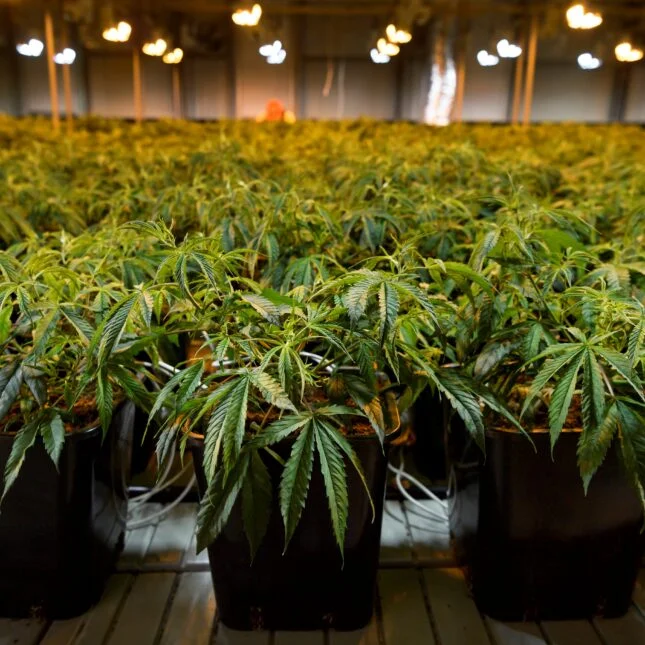
The burial mound held a log cabin-like structure, one coffin, multiple human remains, and sacrificed horses. Archaeologists found hundreds of cannabis seeds; a sample was dated to the first decade of the eighth century BCE. More unusual still, two long braids of human hair contained substantial amounts of cannabinol, a psychoactive compound. The researchers acknowledge that intent can’t be proven for a prehistoric burial, but say the evidence strongly supports deliberate use of cannabis for its psychoactive effects.
This is a reminder that drug use has a much longer history than modern debates often suggest. The evidence can’t answer every question about how the plant was used, but it makes the case for ritual consumption harder to wave away. — Theresa Gaffney
In other news
- A child died of measles in Wisconsin, the state’s first such death since 1990: Associated Press.
- Are you a hugger? Your answer may reveal something: New York Times.
- What it’s like to live with cognitively unimpaired Alzheimer’s disease: STAT.
- Some migrant children stuck in shelters for months are giving up hopes of staying in the U.S.: KFF Health News.
By Jonathan Wosen and Theresa Gaffney · Nov. 6, 2026
Jonathan Wosen covers West Coast biotech and life sciences for STAT. Theresa Gaffney covers substance use and addiction and co-writes Morning Rounds.