The Brainstorm Night Sky projector makes light pollution tangible. Its Northern Hemisphere star slides show a dense field of stars that’s a stark contrast with the 10 to 20 stars visible from a light-polluted backyard. That contrast gives the projector a useful role in astronomy education—and makes a stronger case for finding a genuinely dark sky than another screen-based guide can.
A simple setup for young stargazers
Weighing 14.8 ounces (420 grams), the Night Sky is light enough for a child to handle without feeling flimsy. It’s designed for budding astronomers aged eight and up, and the controls are deliberately spare: insert a slide, aim the projector at a wall or ceiling, adjust the focus, then press the single button. Press it again and the image rotates at one steady speed.
The projection can cover an area up to 8.2 feet (2.5 meters) across. That’s enough for a bedroom ceiling or a section of wall, though it won’t fill a large room. A built-in timer shuts the unit off after 30 minutes, with no option to disable it. That suits a short lesson or bedtime session, but makes the projector a poor fit for longer gatherings.
The blue model tested here comes with four interchangeable slides. Each sits in a protective case and slides into a holder that fits into the projector. The images cover the Moon, the solar system, and the Northern Hemisphere’s night sky in two versions: one with constellation labels and one without. The gray model includes six slides, adding space shuttle and black hole images.
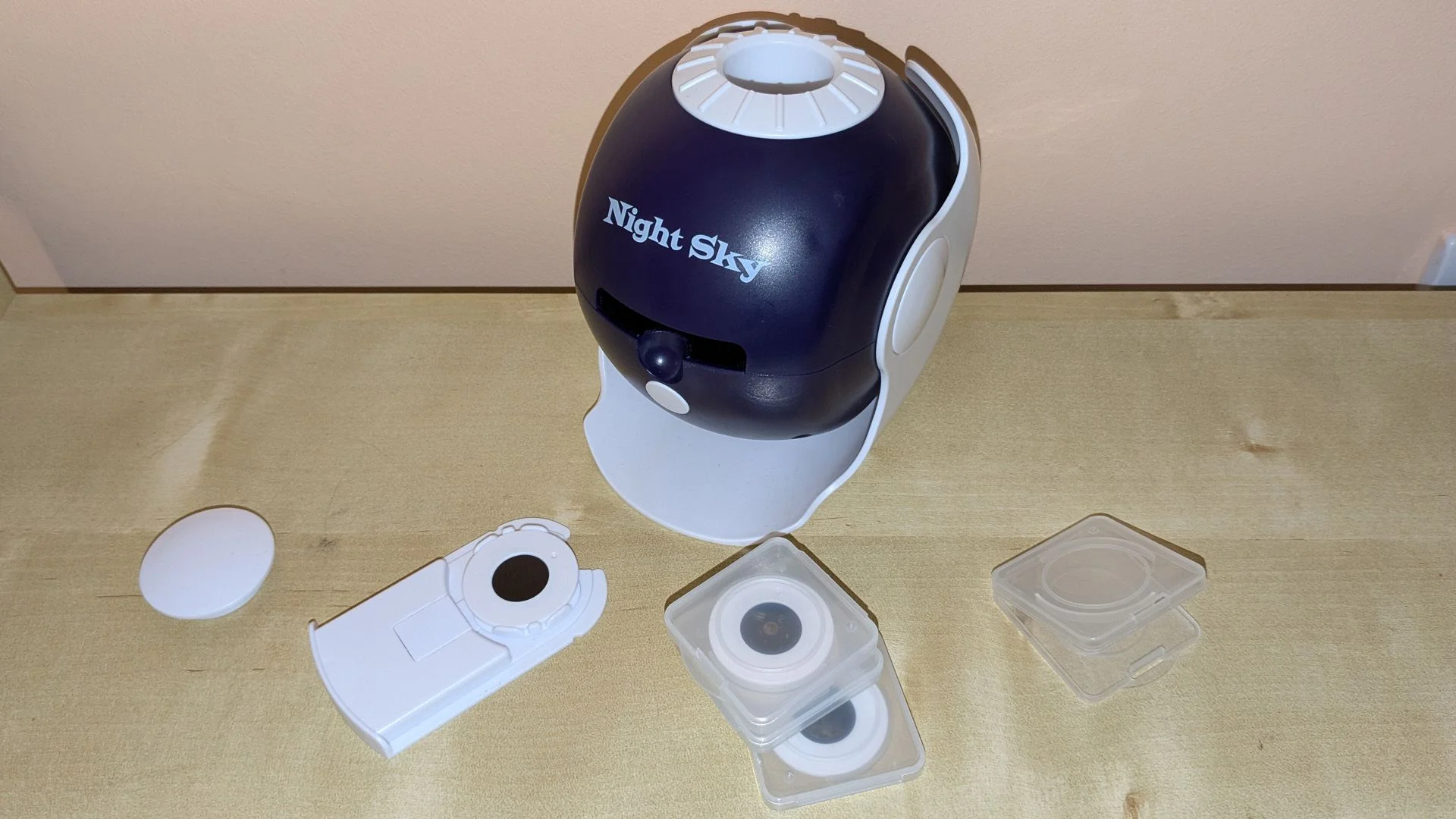
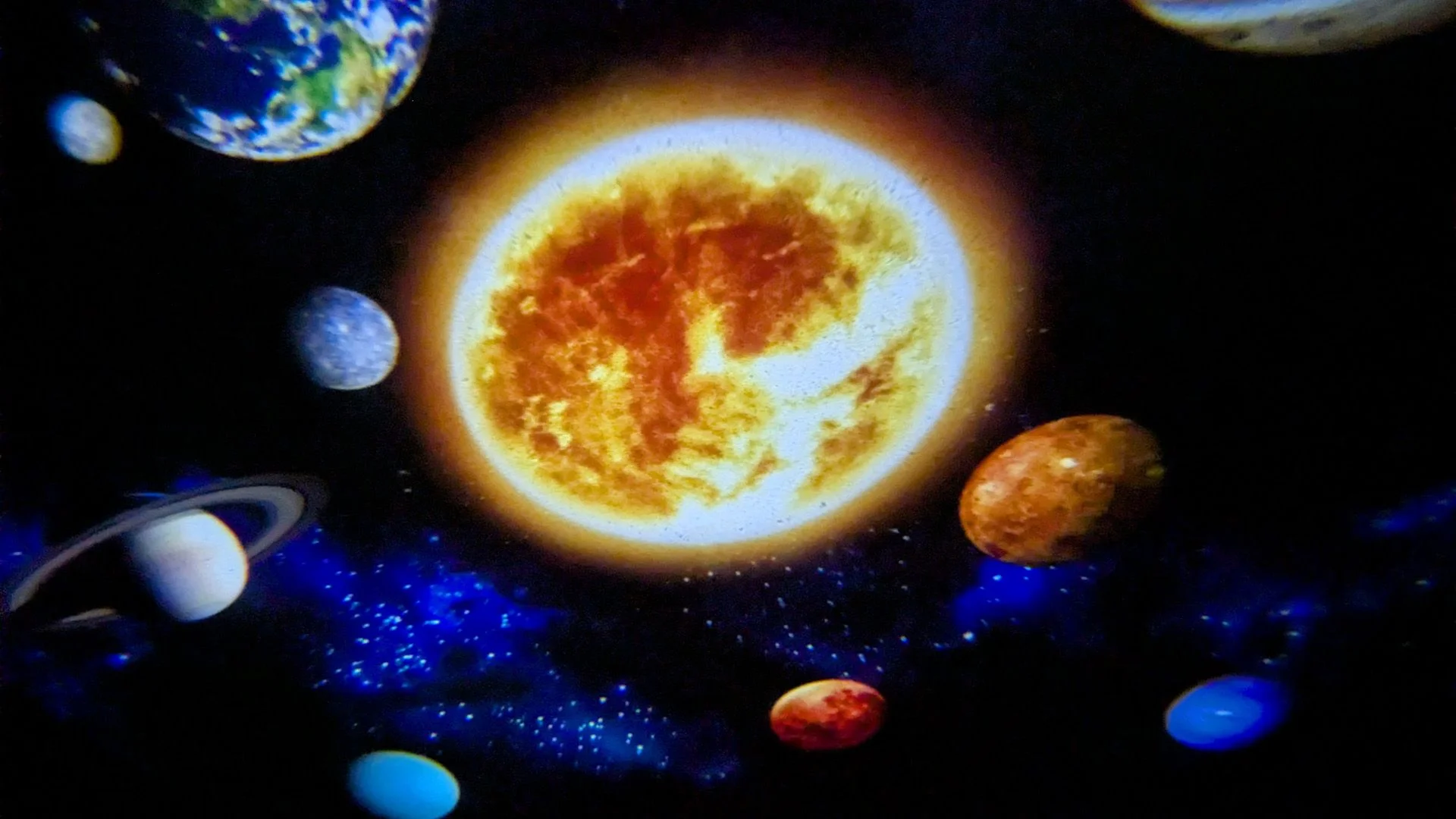
Image geometry is a strength. The planets look round without fiddly adjustments, and the projected circle is easy to position without sending part of the display onto nearby furniture. The stars are sharp enough to make constellation names legible, though the image could be brighter. The Ainael Meter Galaxy Projector, for comparison, produces more illumination.
The stars make the case for darker skies
The Moon and solar system slides are straightforward teaching aids. The star fields have a different effect: they reveal how much a bright urban or suburban sky hides. The Northern Hemisphere images represent a view from Hawaii, a major astronomy location. Brainstorm says the star slide draws on a source image with more than 20,000 stars; that figure describes the source, rather than the number of points visible in the projected image.
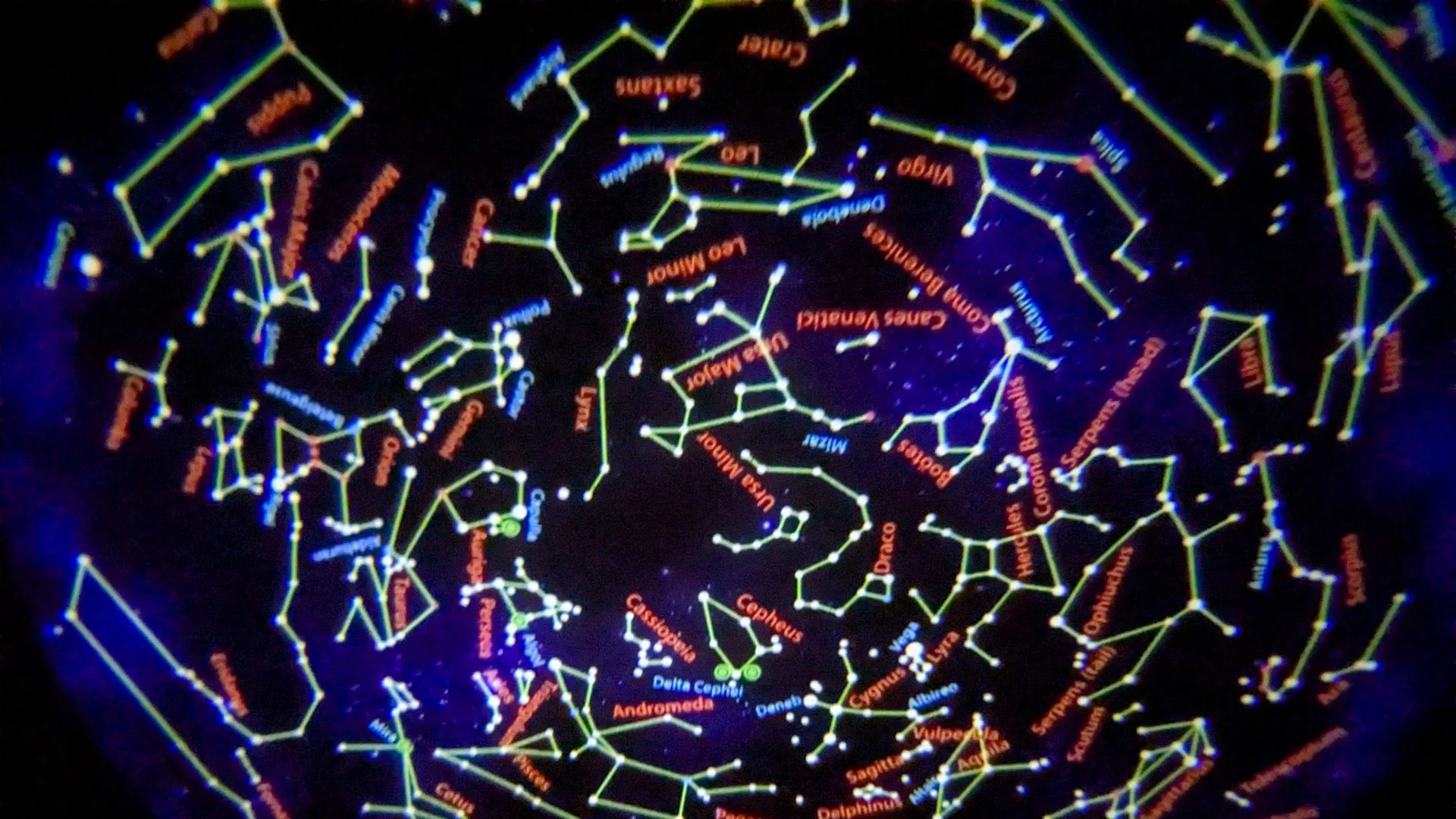
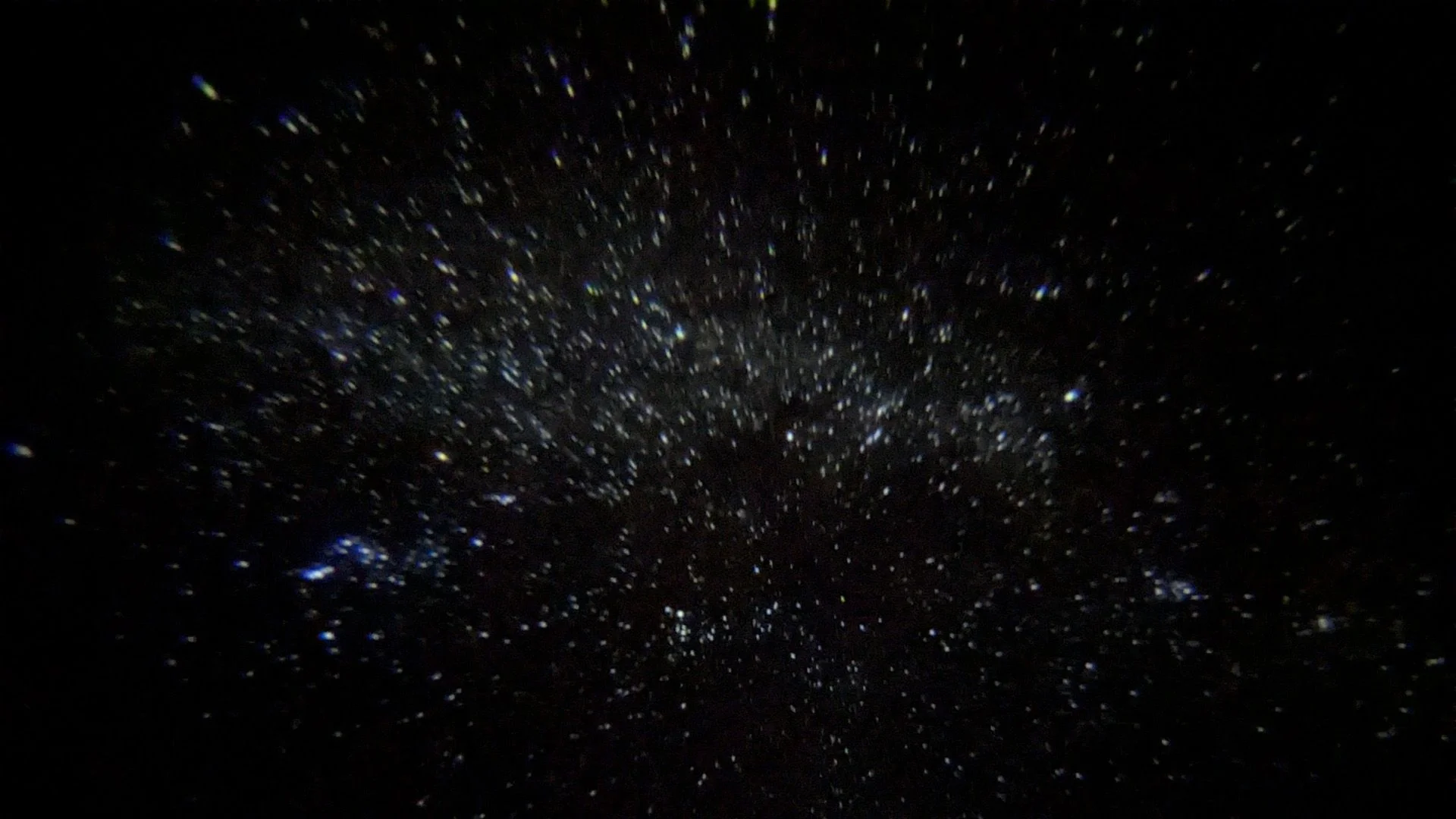
That gap between the projected view and a typical backyard sky is the product’s most persuasive lesson. A stargazing app can identify what should be overhead, but it can’t make the stars visible through skyglow. For anyone who usually spots only a handful of stars, seeing the labeled constellations together in one display can turn an abstract problem into a reason to seek darker skies.
That said, a projector remains a simulation. Its fixed slides can introduce star patterns and prompt questions, while a visit to a dark sky site gives children—and adults—a chance to see the sky directly. The strongest takeaway here may be the motivation to make that trip. A pair of binoculars and a local dark sky location can extend the experience beyond the bedroom ceiling.
Affordable, with a short list of images
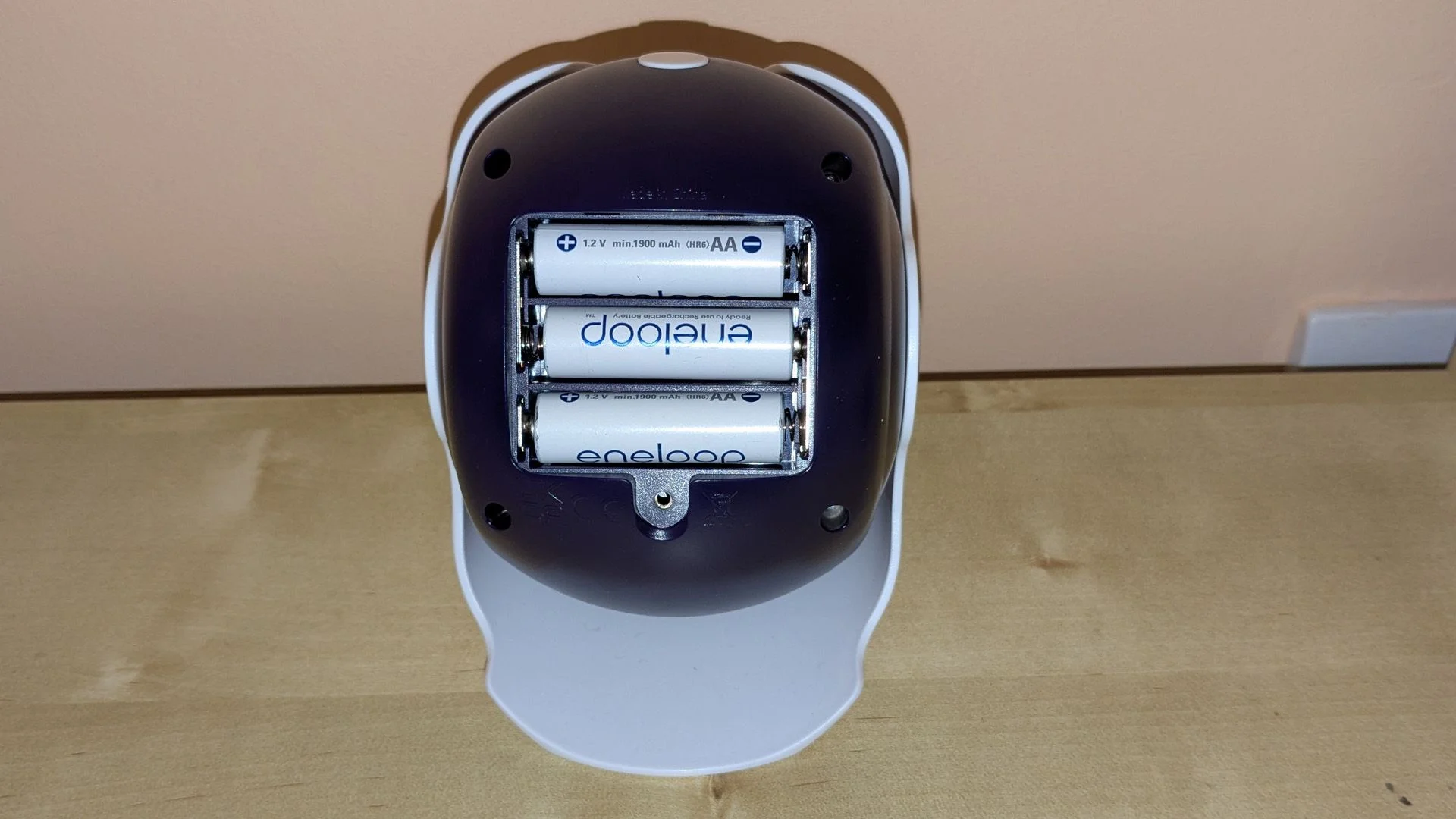
Starting at $49.99, the Night Sky is a modestly priced educational device. It runs on three AA batteries, which aren’t included, and has no speaker or laser. The manufacturer doesn’t specify battery life; one set of rechargeable batteries lasted several days in testing. When switched to rotation, the projector moves quietly, and the slow motion gives the display a gentle, hypnotic quality.
The main constraint is the limited slide library. Owners can buy an additional disc with Southern Hemisphere stars, bringing the total to seven images, but the Night Sky doesn’t accept discs made for Brainstorm’s Deep Sky Projector. That caps the scope for refreshes as a child’s interest grows. Extra themed slide packs could give the device a longer life; as it stands, its educational value depends on how much use a household gets from a handful of fixed views.
The included instructions help make the most of those views. They double as a solar system poster, and a printed secret code leads children to more astronomy facts on Brainstorm’s website. Those touches support the projector’s classroom-at-home purpose, though they don’t solve the limited selection.
The Brainstorm Night Sky looks best as an accessible first astronomy gift: easy to operate, clear enough for learning, and priced for casual use. Its slides can spark curiosity, but the real payoff comes when that curiosity carries outside—to a darker location where the night sky can supply the stars the projector only hints at.