Phobos 2’s final images left two questions in their wake: why did the Soviet probe stop responding, and what was the elongated shape in its pictures? The first still has no confirmed answer. The second has a well-supported explanation: it was the shadow of Mars’s moon Phobos, stretched across the planet and distorted by the way the spacecraft was imaging it.
That distinction matters. The probe’s abrupt failure helped turn an ordinary observation into a space-age mystery, but the image itself doesn’t require an extraordinary explanation. Phobos 2 was working in an unusual viewing geometry, and later analysis found several factors that could make the moon’s shadow look like a cigar-shaped object.
A mission carrying the weight of its predecessor
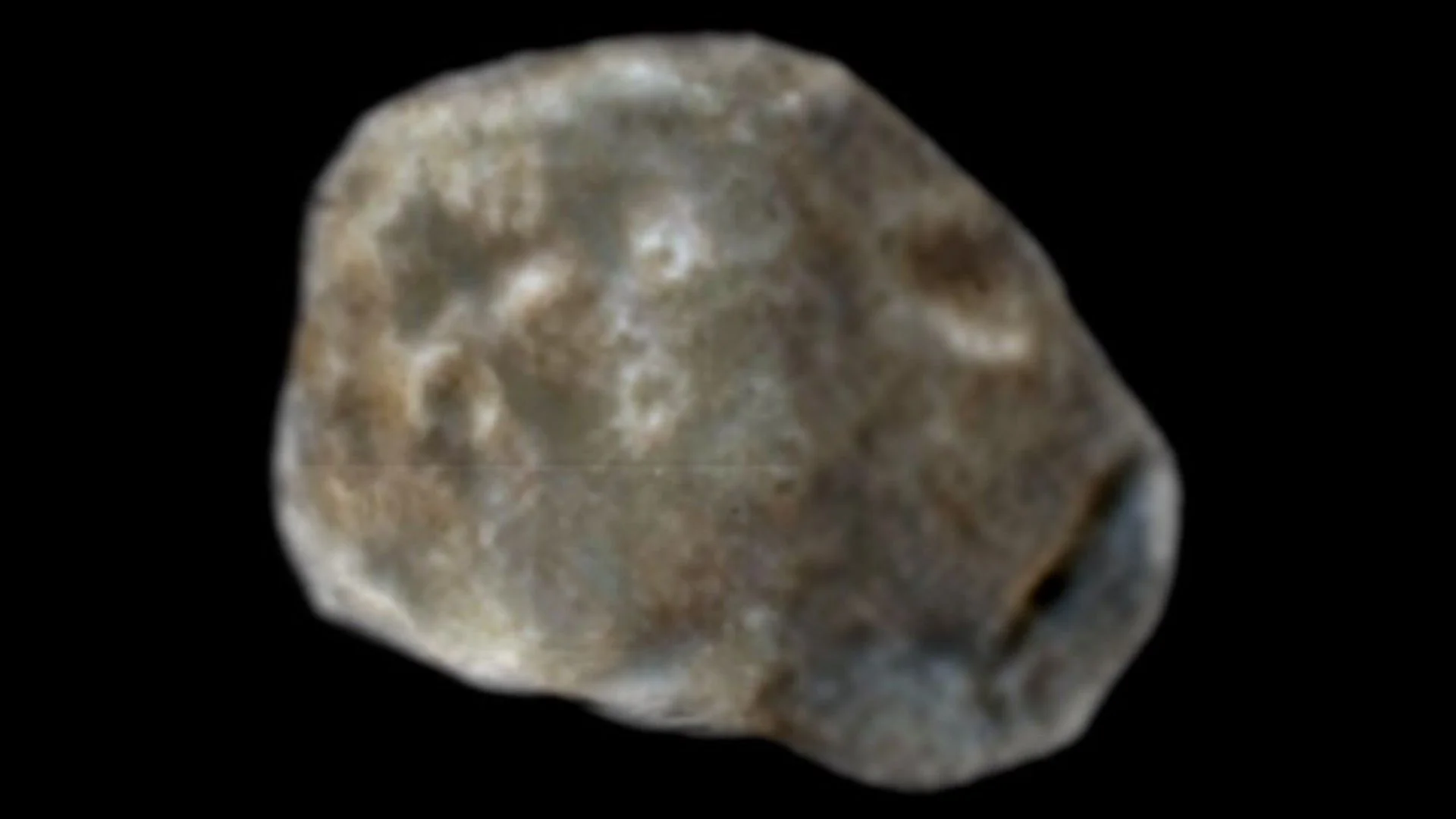
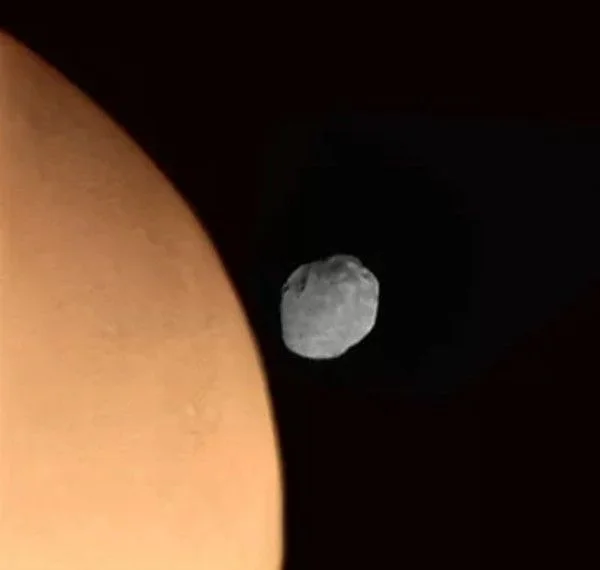
The Soviet Union launched Phobos 2 from Baikonur Cosmodrome on July 12, 1988, aboard a Proton rocket. Its goals included studying Mars and its moon Phobos, making a close approach to the moon, and deploying landing probes. The spacecraft reached Mars orbit on Jan. 30, 1989, and during its operational period sent back more than three dozen images of Phobos. Its imaging campaign produced valuable observations even though the mission ended before its main objectives could be completed.
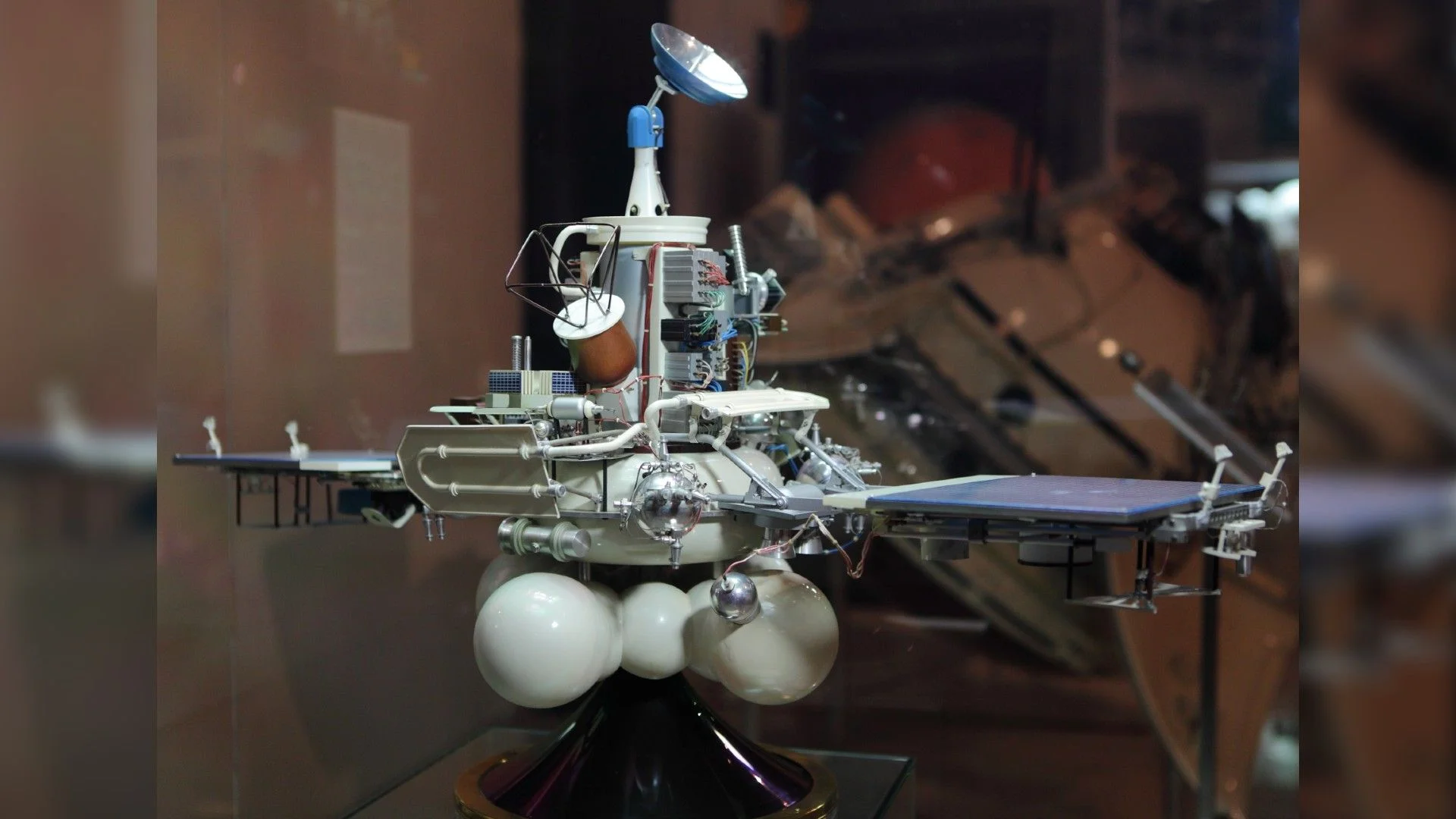
The mission had already been put under pressure by the loss of Phobos 1. That spacecraft went offline on Sept. 2, 1988, after a faulty command sequence was sent while it was travelling to Mars. The failure meant Phobos 2 was the remaining Soviet attempt to carry out the program’s planned exploration of the Martian system.
Phobos 2 arrived with problems of its own. One of its three flight-system processors was already offline, and another was experiencing technical trouble. Still, the spacecraft began returning useful data about Mars and its surroundings. By March, its science instruments appeared to be working normally, and its two functioning processors had kept the probe under ground control.
The final maneuver and the loss of contact
The break came on March 27, 1989, as Phobos 2 prepared to take navigation images of its namesake moon ahead of another planned flyby in early April. The maneuver required the spacecraft to point its imaging equipment toward Phobos, temporarily turning its communications antennas away from Earth.
The imaging sequence appeared to go as planned. Afterward, however, controllers could not reestablish a stable connection. A few brief radio contacts followed over the next several hours, but no lasting communications were restored. The probe’s final close-approach images did reach Earth, giving scientists a record of its observations even as control of the spacecraft slipped away.
Engineers considered whether the probe had begun spinning during the period when its antennas were pointed away from Earth. If it could no longer orient its solar panels toward the Sun, the resulting power loss could have ended the mission. Investigators later identified an onboard computer failure as the most likely cause, but the precise sequence of events remains unknown.
A fault in the second attitude-control computer is one plausible explanation. It had shown signs of trouble before the spacecraft reached Mars. With two of the three processors unavailable, the remaining unit may not have been able to control the probe by itself. Battery depletion could also have contributed if the solar arrays were not receiving sunlight. The spacecraft lacked a failsafe that would have shut down nonessential systems to conserve power under those conditions.
Why the shadow looked like an object
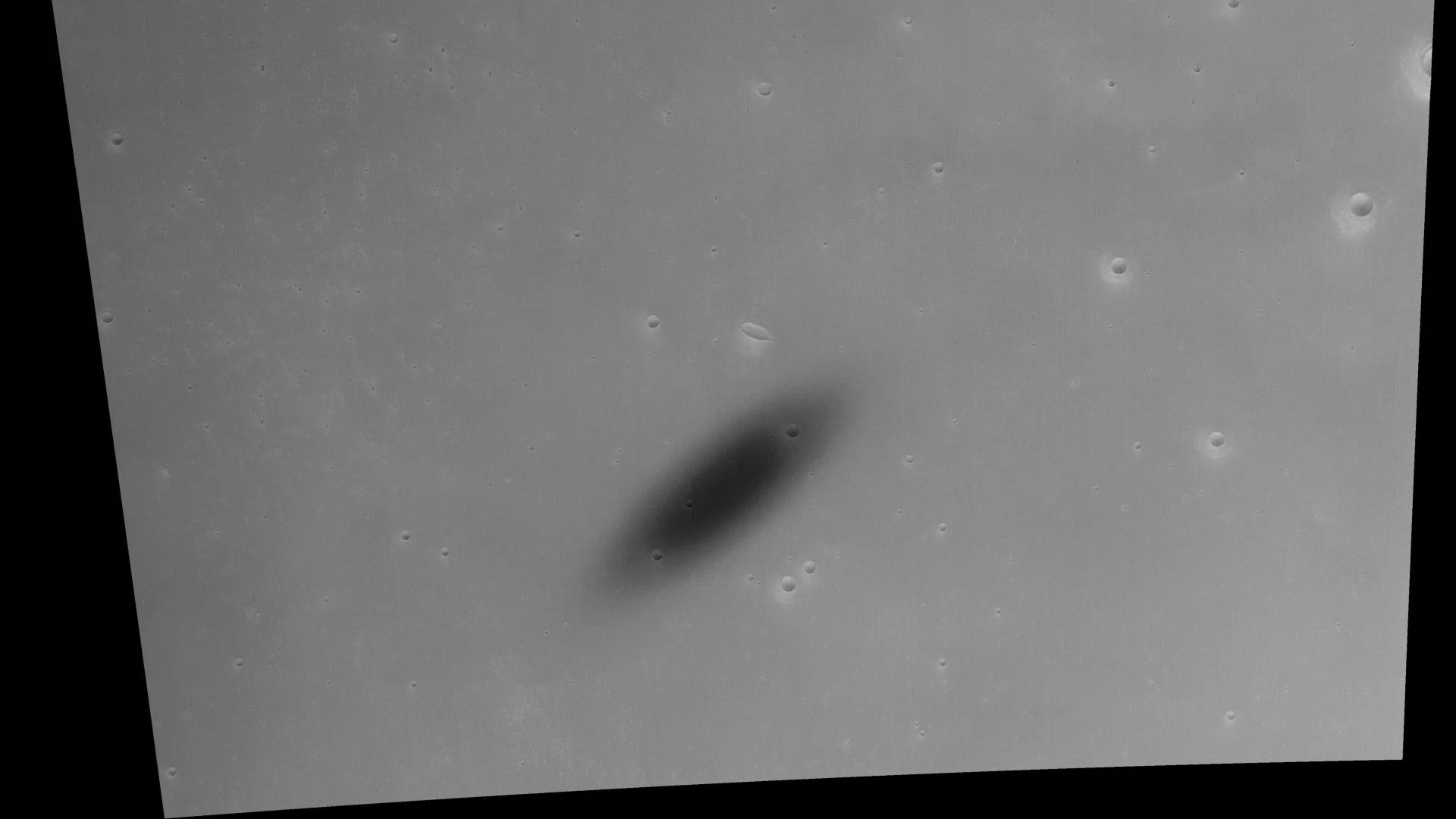
The image that attracted the most attention was interpreted by some as showing an elongated object near Phobos. Marina Popovich, a former Soviet test pilot and the first Soviet woman to break the sound barrier, advanced the alien-craft explanation. At a 1991 press conference at the Soviet Consulate in San Francisco, she described a cigar-shaped object in the image as a possible alien mothership.
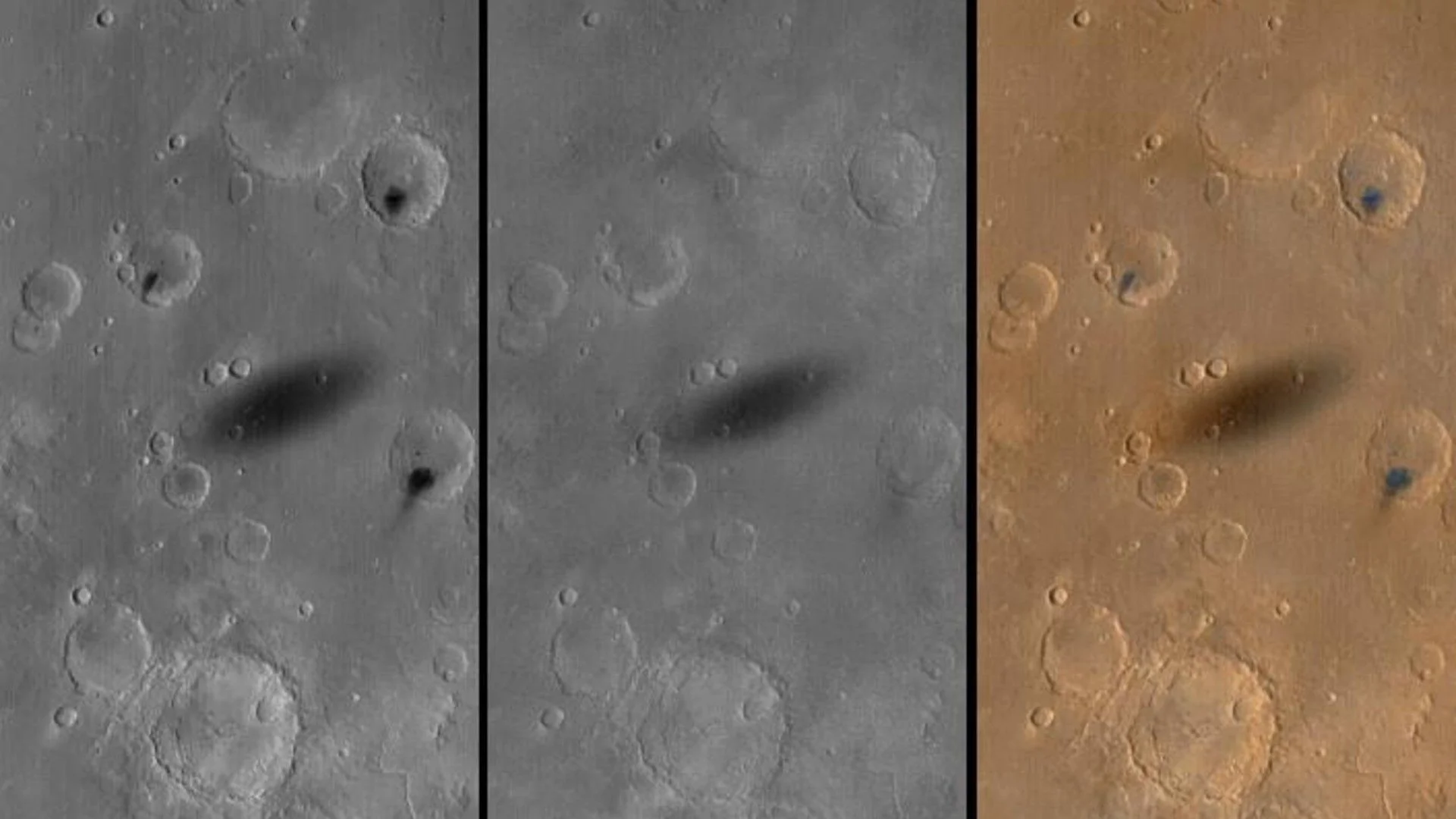
Her aerospace credentials made the claim more prominent, but they didn’t establish what the image showed. The spacecraft’s orbit offers a more grounded explanation. Phobos 2 and the moon were travelling in nearly the same orbit at similar speeds. Its Termoskan multispectral imager could therefore capture the shadow of Phobos moving across Mars as a dark, elongated feature. The instrument’s observations were shaped by this geometry and by the way it scanned the scene.
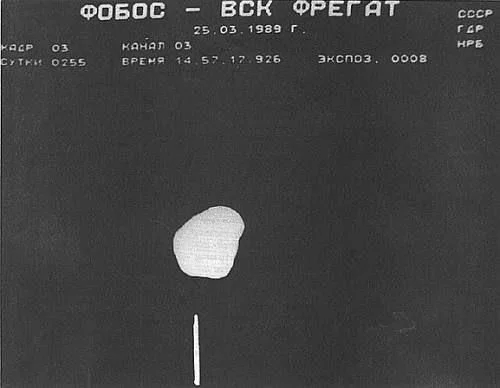
A NASA-led study published in 1991 attributed the shadow’s appearance to a combination of the imager’s scanning behavior, the spacecraft’s near-co-orbital motion with Phobos, its viewing direction, and a slight rocking motion. The moon’s shadow also strikes Mars at an oblique angle, which can stretch its shape in an image. These factors together account for the striking silhouette without requiring an object to have been near the spacecraft.
Later observations provide a useful comparison. In 2005, the High-Resolution Stereo Camera aboard ESA’s Mars Express captured an elongated shadow from Phobos on the Martian surface. NASA’s Mars Global Surveyor also imaged Phobos’s shadow in 1999, showing that the shape in the Soviet probe’s pictures was consistent with a recurring planetary observation.
A short mission with a lasting scientific record
Phobos 2’s failure had consequences beyond the Soviet program. Scientists from more than a dozen countries had supplied instruments and funding, and the mission’s loss left that international work incomplete. John M. Logsdon, then director of the Space Policy Institute at George Washington University, described the failure as “just horrible” in comments to the Los Angeles Times. He also warned that it could intensify internal disputes as the Soviet system underwent political change.
Both Phobos spacecraft were lost before completing their primary missions, yet the program still returned meaningful data about Mars and its moons. Paolo Ulivi and David M. Harland have noted that the information gathered by the two probes exceeded the total data collected by earlier Soviet missions to Mars.
The probe’s final pictures are best understood as a product of its imaging instrument, the close orbital relationship between spacecraft and moon, and the geometry of Phobos’s shadow on Mars. The failure itself remains unresolved, but its most famous visual mystery has a straightforward explanation. That leaves Phobos 2 remembered less as evidence of an unknown visitor than as a mission whose last useful observations survived its sudden loss.