Unusual rocks offer clues to ancient Mars
Mars’ oddest-looking rocks may carry some of the clearest clues to its ancient environments. Curiosity has found wafer-thin crystal formations and polygonal ridges, while Perseverance is examining pale rocks rich in hydrated silica—material that can form in water-related settings and preserve microscopic fossils.
Each feature raises a different question about how water, minerals and sediment interacted on the planet. A crystal’s shape can point researchers toward the conditions in which it grew, while the chemistry of a pale rock can help identify the materials present when it formed. Neither appearance nor a single measurement settles the story, though: the rovers need to combine images with chemical and mineralogical data to test possible explanations.
This is more significant than it looks. Mars’ surface has been altered by many processes, and a striking formation can have more than one plausible origin. The work is less about finding a single answer in an unusual rock than about narrowing the range of conditions that could have produced it.
Curiosity examines “potato chip” crystals
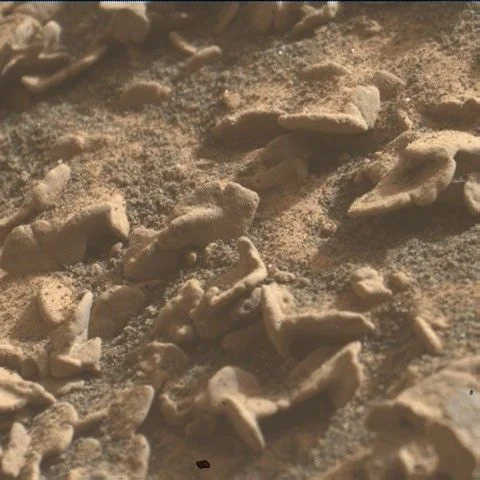
At a site nicknamed Nazca, Curiosity recently completed a drilling campaign around disk-shaped crystals embedded in bedrock. Some are so flat that the mission team compared them to potato chips. The rover photographed them with its Mars Hand Lens Imager on Nov. 7, 2026, its 5,067th Martian day, or Sol 5067.
The comparison captures the crystals’ thin, flattened shape, but their form is also a useful clue for geologists. Crystal growth depends on the material available and the conditions around it; the surrounding rock can preserve evidence of those conditions long after the original environment has changed. The image shows what the formations look like at close range. It can’t, by itself, explain how they formed.
Curiosity also used ChemCam to assess the rocks’ chemistry and sent material from the drill site to its onboard Sample Analysis at Mars instrument. Those measurements may help explain how the crystals formed and what conditions shaped the surrounding rock.
Together, the instruments offer different views of the same target: images reveal texture, while chemical analysis can help distinguish among materials that look similar. The drilling campaign gives the rover access to material from within the rock, where it may be less affected by surface dust and weathering. The results could help researchers determine whether the crystals formed as part of the bedrock’s original history or during a later change to it.
Perseverance investigates silica-rich rocks
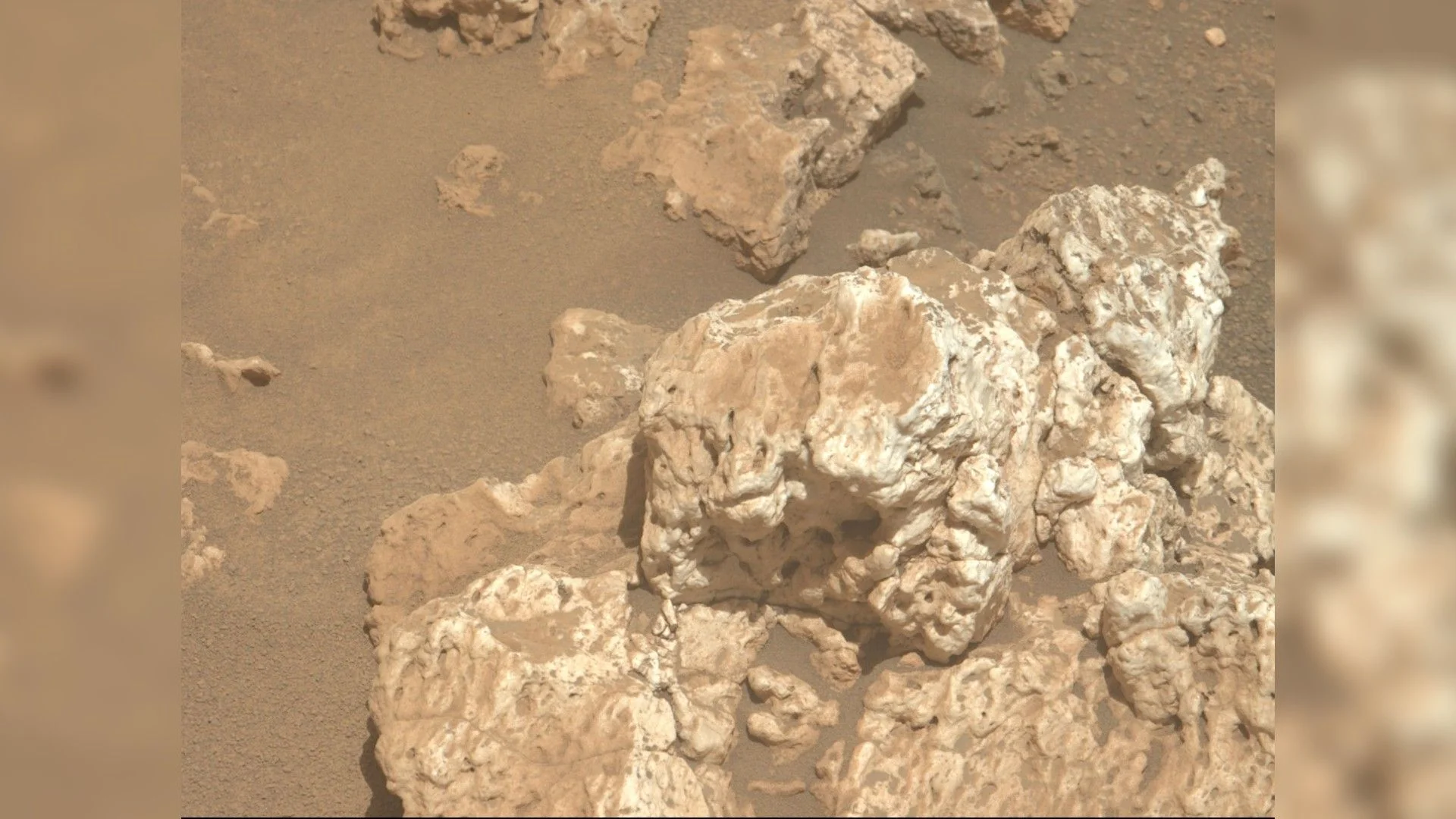
Perseverance has been studying bright formations at Idubi, in the Lac de Charmes region outside Jezero Crater. Images taken on Oct. 29, 2026 (Sol 2023), show pale rocks contrasting sharply with the darker, dust-coated ground.
The contrast makes the formations easy to pick out in images, but color alone can’t identify a rock. SuperCam data indicate the formations are rich in hydrated silica, rather than being typical igneous rocks. That chemical distinction matters because it points to a different set of possible formation histories than the rover would consider for ordinary volcanic material.
On Earth, hydrated silica can develop where hydrothermal activity or groundwater is present, and it can preserve microscopic fossils. That makes the Idubi rocks useful targets as Perseverance gathers more chemical and mineralogical measurements to assess how they formed and whether they could preserve traces of ancient microbial activity.
The fossil connection is a reason to investigate, not evidence that fossils have been found on Mars. Hydrated silica can preserve small traces in some settings, but whether these particular rocks formed under suitable conditions is still an open question. Perseverance’s measurements can help establish the rocks’ composition and geological context; any claim about past life would require evidence the current observations don’t provide.
If you’re working in this space, that distinction is familiar but easy to lose in a headline: a promising place to search isn’t the same as a discovery. The value of the Idubi observations is that they give the rover a specific, chemically informed target for follow-up.
Polygon patterns return on Mount Sharp
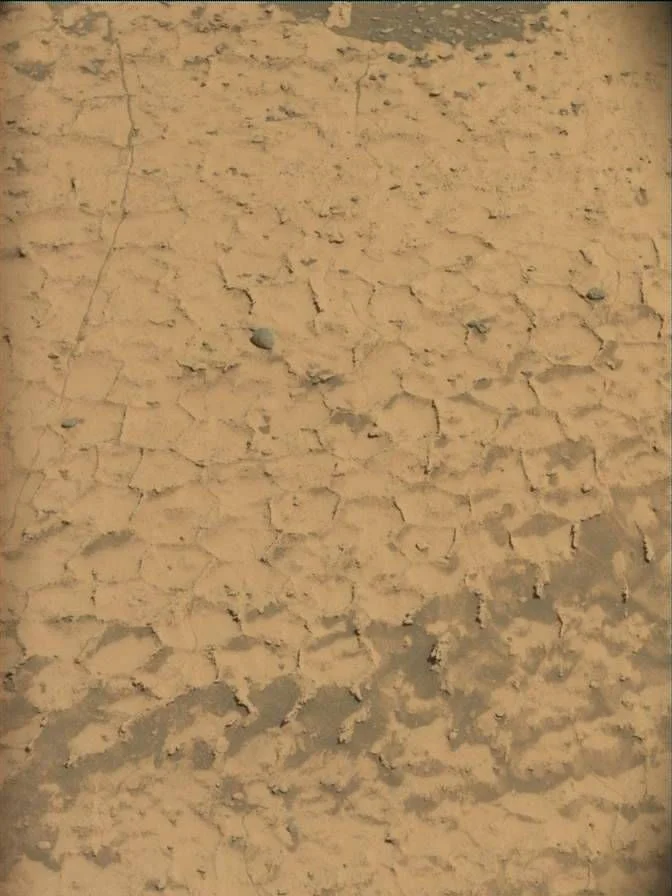
Curiosity has also spotted polygon-shaped patterns again as it climbs Mount Sharp. Images from Nov. 13, 2026 (Sol 5073), show small, regular shapes traced by raised ridges—textures similar to ones seen earlier on the mountain.
Several processes could account for the patterns: minerals shrinking as water evaporated, temperature shifts, or buried sediments expanding and compacting. Curiosity is studying both the rock and the material cementing the ridges to help distinguish among those possibilities.
That comparison is important because polygonal patterns can record more than one kind of change. If minerals shrank as water disappeared, the ridges may preserve a signal of drying. If temperature shifts or sediment movement played a role, the same surface geometry would point to a different sequence of events. The shapes alone don’t settle which explanation fits.
Examining the material that binds the ridges to the surrounding rock gives Curiosity another way to test those possibilities. The rover can compare the composition of the ridge material with the nearby rock and consider whether their differences fit one proposed process better than another. A repeat sighting also lets researchers compare textures across the mountain, rather than treating each patch as an isolated curiosity.
What the rover observations can tell us
Mount Sharp’s layered slopes preserve evidence of changing conditions, including ancient watery environments. The chemistry of the crystals, silica-rich rocks and polygon ridges will help researchers narrow down how those environments evolved. As Curiosity continues up the mountain and Perseverance investigates beyond Jezero Crater, their findings are building a more detailed picture of Mars’ geological past.
That picture will come together through accumulated observations, not one dramatic image. Curiosity’s crystals, Perseverance’s silica-rich formations and the polygon ridges each preserve different kinds of evidence, and each has competing explanations that need to be tested. Read together, they may help show where water affected rocks, how long those conditions lasted and what changed afterward—questions that shape how scientists assess Mars’ past habitability.
And yet, the limits are plain: evidence of water-related chemistry doesn’t establish that life existed, and a pattern that resembles one formed on Earth may have a different origin on Mars. The next useful steps are careful comparisons between a feature’s appearance, composition and geological setting. Not a verdict, but a tighter set of possibilities.
For readers, the practical significance is that Mars exploration is increasingly about context: where a rock sits, what it’s made of and how it relates to surrounding layers. The rovers are still doing field geology at a distance, using instruments on the ground to work through questions that images alone can’t answer. That’s a slower story than a claim of discovery, but a more reliable one.