The booster catches have become routine for SpaceX. The Ship catch is a different story. It comes back from orbit faster and hotter than Super Heavy does, which leaves far less room for error, and SpaceX pulled it off on its first attempt. That's the detail that matters, and it's easy to skim past.
Here's the thing about booster catches: they've stopped feeling like news. A successful return now reads as a checkbox on a checklist. Ship is different, and the physics explain why. The vehicle has to survive reentry before anyone can even attempt a catch, so the tower gets a machine that's already been through its hardest stretch.
Four views from the tower
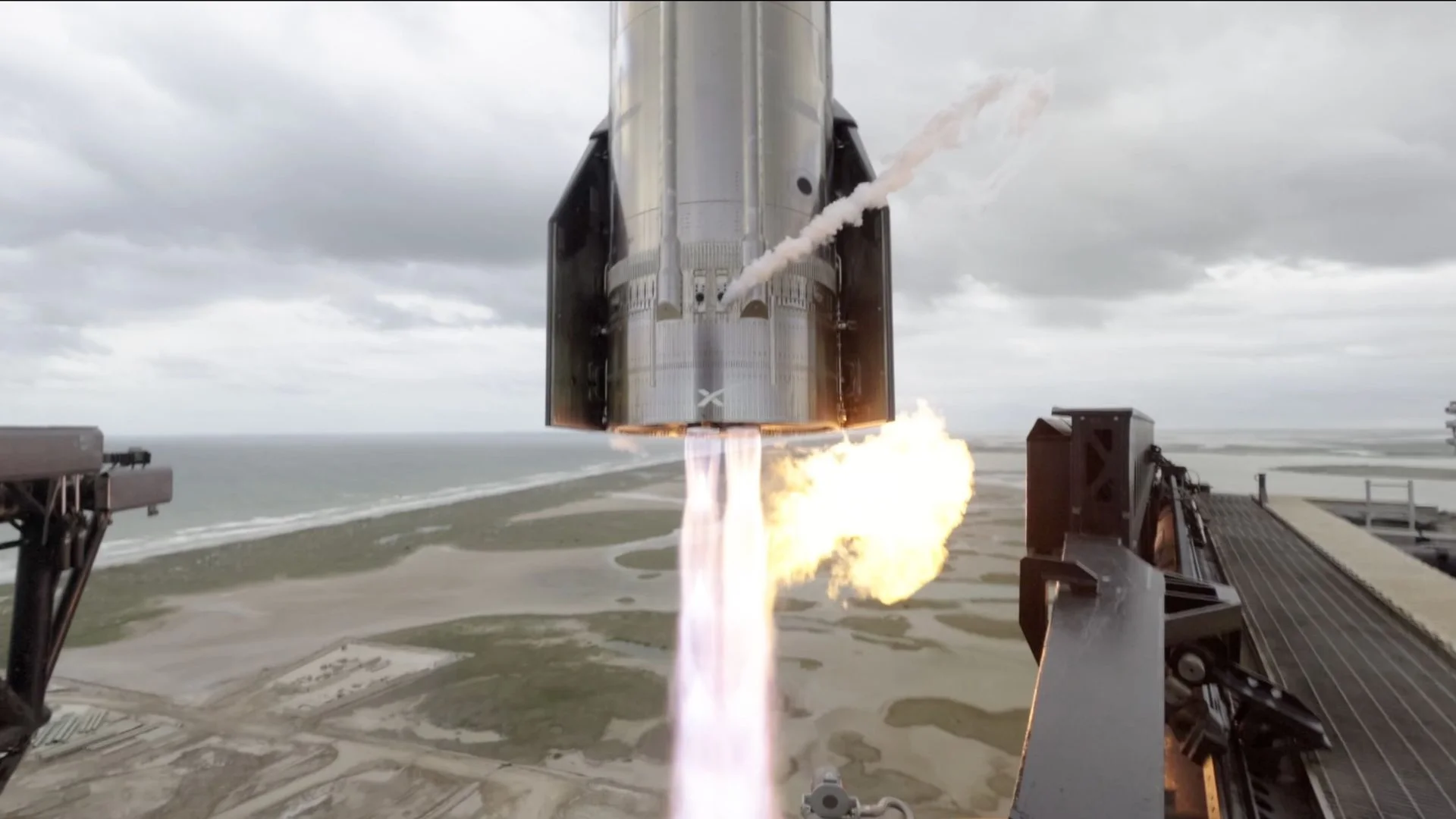
The catch happened Saturday, Nov. 14, when the launch tower at Starbase in South Texas caught the Ship upper stage with its chopstick arms. Most of us have only seen it from the ground. On Tuesday, SpaceX released four slow-motion clips filmed by cameras near the top of the 480-foot (146-meter) tower, and they show how close the rocket came to the structure. That's the value of this footage. Ground-level video can prove a catch happened, but it can't show the margins, and the margins are the whole story.
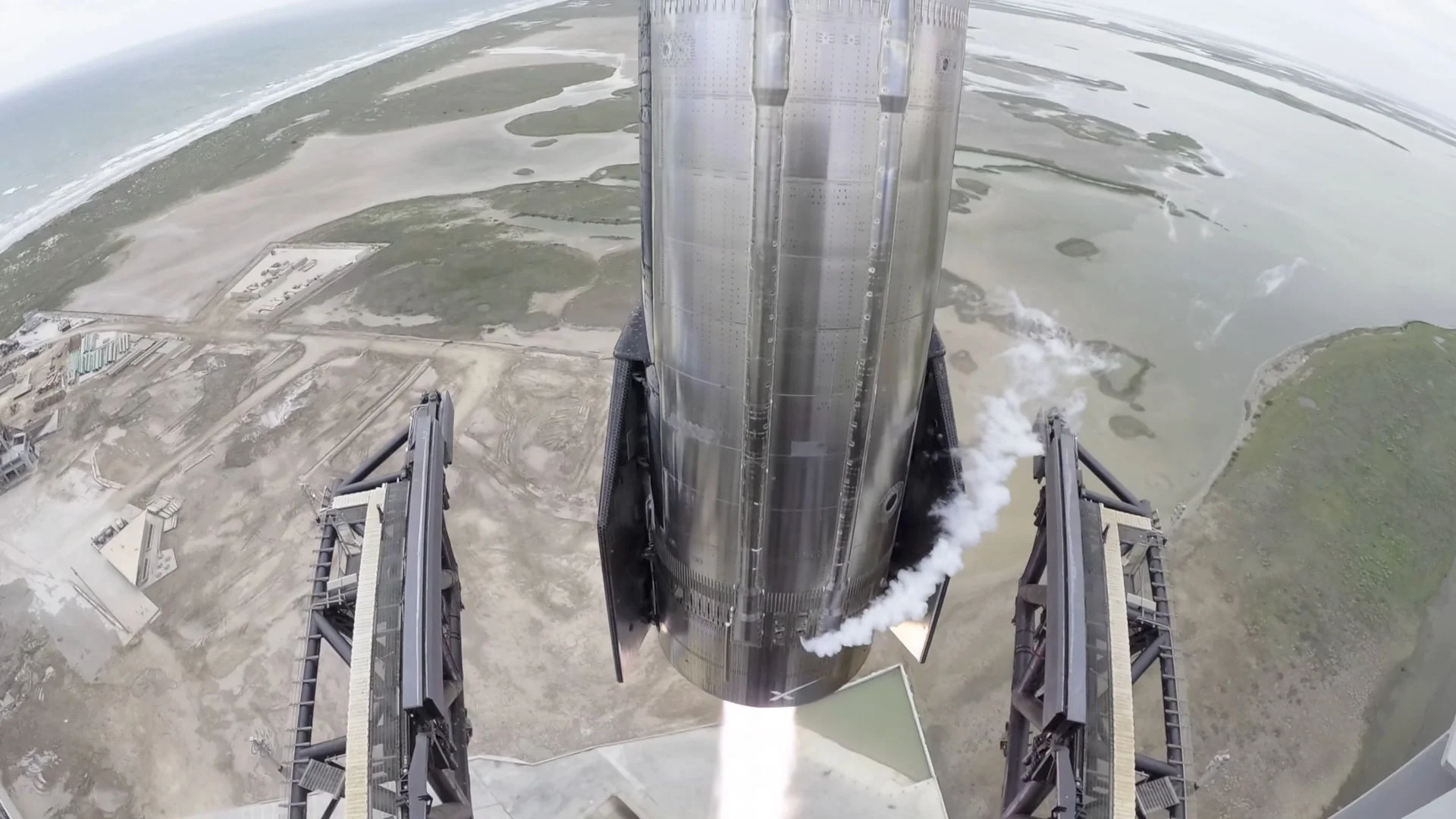
SpaceX framed the milestone in its own terms. In a Tuesday X post, the company wrote: "The Starbase tower chopsticks catching their first Starship. This unique architecture was designed for full and rapid reusability, enabling repeat launches and landings from the same pad." Read that carefully. The company isn't just celebrating a catch. It's describing a design philosophy in which the launch site is part of the vehicle system. If you're used to thinking of a pad as a fixed slab of concrete, that framing takes some getting used to. That last point is the real story, and I'd call it a sharp pitch, though I'd want to see the reflight cadence before buying it wholesale. A pad that can catch and reset is what makes rapid turnaround possible.
A rough start, then a clean catch
Flight 15, Starship's 15th, lifted off Friday evening, Nov. 13. The plan called for a double catch, with the booster and Ship both coming back to the tower. That didn't happen. About 6.5 minutes after launch, Super Heavy reported a low-fuel warning during its return and autonomously diverted to splash down in the Gulf of Mexico. The booster's choice to divert on its own is the kind of safety behavior you want to see. Still, a double catch is a bolder plan, and missing it turned the day's headline into a single success instead of the pair the team was aiming for.
For SpaceX, that was a manageable setback. The company had already caught Super Heavy on three previous flights. Ship was the unknown. Before Flight 15, SpaceX had never tried to catch one, and the upper stage's speed and heat on reentry made it the harder target. Think about why. It arrives moving faster and hotter, so there's less time to correct a bad approach and less tolerance for error. Booster catches are a repeated exercise at this point, which is exactly why a first Ship catch deserves more attention than the booster work ever got.
If you're following this program closely, the sequence matters. Each flight adds one capability to test, and each success shrinks the list of what's still unproven. Flight 15 checked off the Ship catch. What's left is making it boring. Impressive, yes. Not yet routine.
Reuse is the point
Ship had more to do than come home. On Flight 15 it deployed 26 of SpaceX's next-generation Starlink V3 broadband satellites into low Earth orbit. That's the second batch of V3 satellites the company has sent up, following the Flight 14 deployment on Sept. 28. Carrying a payload and returning to the tower on the same flight is the kind of stacking that makes this program hard to judge. Every extra objective adds weight to the return plan, so pulling off both is a stronger signal than either one alone.
The goal is to catch both stages, Ship and Super Heavy, at the tower. That approach is meant to speed up inspection, refurbishment and reflight. Those steps are where reusable hardware usually wins or loses its economics. A vehicle that flies once and gets discarded resets the cost every time, while one that returns to the same pad could, in principle, fly again with less rebuilding. That's the theory, anyway. The open question now is repetition. One clean catch proves the concept. Dozens of them, flown from the same pad with short turnarounds, would prove the business case, and one flight can't answer whether the hardware holds up.
What the tower changes
Here's the thing: the catch matters less as a stunt and more as a statement about infrastructure. Most launch systems treat the pad as a place to start, and recovery happens somewhere else, usually on a ship or in a landing zone. Putting recovery hardware on the launch tower compresses that loop. It also changes what a launch site is for, and that's a bigger shift than a single flight suggests. The tower stops being a launch point and becomes part of the vehicle's return system.
That said, I'd be careful about reading too much into a first attempt. Early successes in programs like this tend to look cleaner in hindsight than they felt at the time. The real test is whether the next catches come with the same margins, and whether each vehicle's condition afterward supports a fast turnaround. A clean catch followed by months of rework would tell a very different story.
If you're working in this space, whether as an engineer, a supplier, or someone tracking launch cadence, watch repetition rather than spectacle. Track the days between flights, the refurbishment each vehicle needs, and how often the tower is ready for the next catch. Those are the numbers that will settle this. They aren't in yet, and until they are, Flight 15 is a strong first chapter, not a verdict.