Hayabusa's most famous moment on asteroid Itokawa wasn't the sample collection it was built for. On Nov. 19, 2005, the Japanese probe lifted off the surface of an asteroid, the first spacecraft ever to do so. The hop was a happy accident, and it overshadowed a mission that had been in trouble almost from the start.
If you cover space missions for long enough, you learn that the headline achievement is rarely the one the planners wrote on the whiteboard. Hayabusa's design goal was modest on paper: touch down, collect material, and bring it home. What actually happened was messier, and that messiness is where the story gets interesting.
A rough road to Itokawa
The Japan Aerospace Exploration Agency (JAXA) launched Hayabusa on May 9, 2003, targeting an asteroid arrival in early summer 2005. A solar storm degraded the spacecraft's solar arrays and cut the power available to its ion engines, pushing the arrival back to September. Hayabusa reached Itokawa on Sept. 12, 2005, still limping along.
Solar storms are a known hazard for deep-space hardware, and solar arrays are among the parts most exposed to them. Degraded power is a slow, grinding problem. It doesn't cause a dramatic failure, but it forces mission controllers to choose between schedule and margin, and that choice tends to get harder with every week of delay. Hayabusa's team had to rebuild its timeline around a spacecraft that could do less than originally planned.
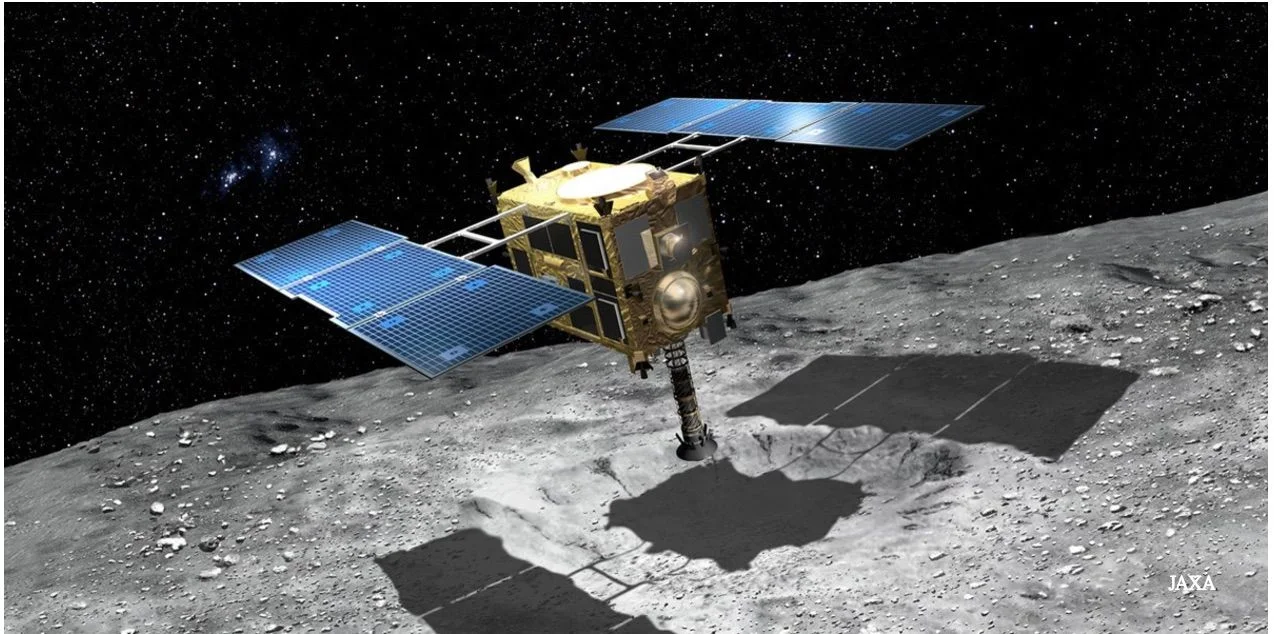
The lander Hayabusa released onto the surface appears to have been lost. The probe then dropped a landing target instead and touched down about 99 feet from that marker, JAXA has said. Precision like that mattered, because the team had little margin for error. Here's the thing: a spacecraft that misses its target by a wide margin on an asteroid with weak gravity can drift into a place it can't recover from, so hitting a marker that close is more significant than it looks. It also tells you how much the team was relying on the mothership's navigation rather than on a backup plan.
A hop first, samples second
The first touchdown attempt, on Nov. 19, didn't go cleanly. Hayabusa descended to a point just 56 feet above Itokawa, then went silent for three hours, according to an Associated Press report. When contact returned, JAXA officials confirmed the probe had landed, and it lifted off again for a second attempt. That made it the first spacecraft to lift off from an asteroid.
Three hours of silence is a long time when you're a few hundred meters from a rock you've never seen up close. Communication gaps like that are a routine feature of deep-space operations, but they're rarely comfortable for the people on the ground. Teams in this situation usually can't do much except wait and hope the spacecraft's own automation handled the situation. Hayabusa came back, and that's the part that matters for the record.
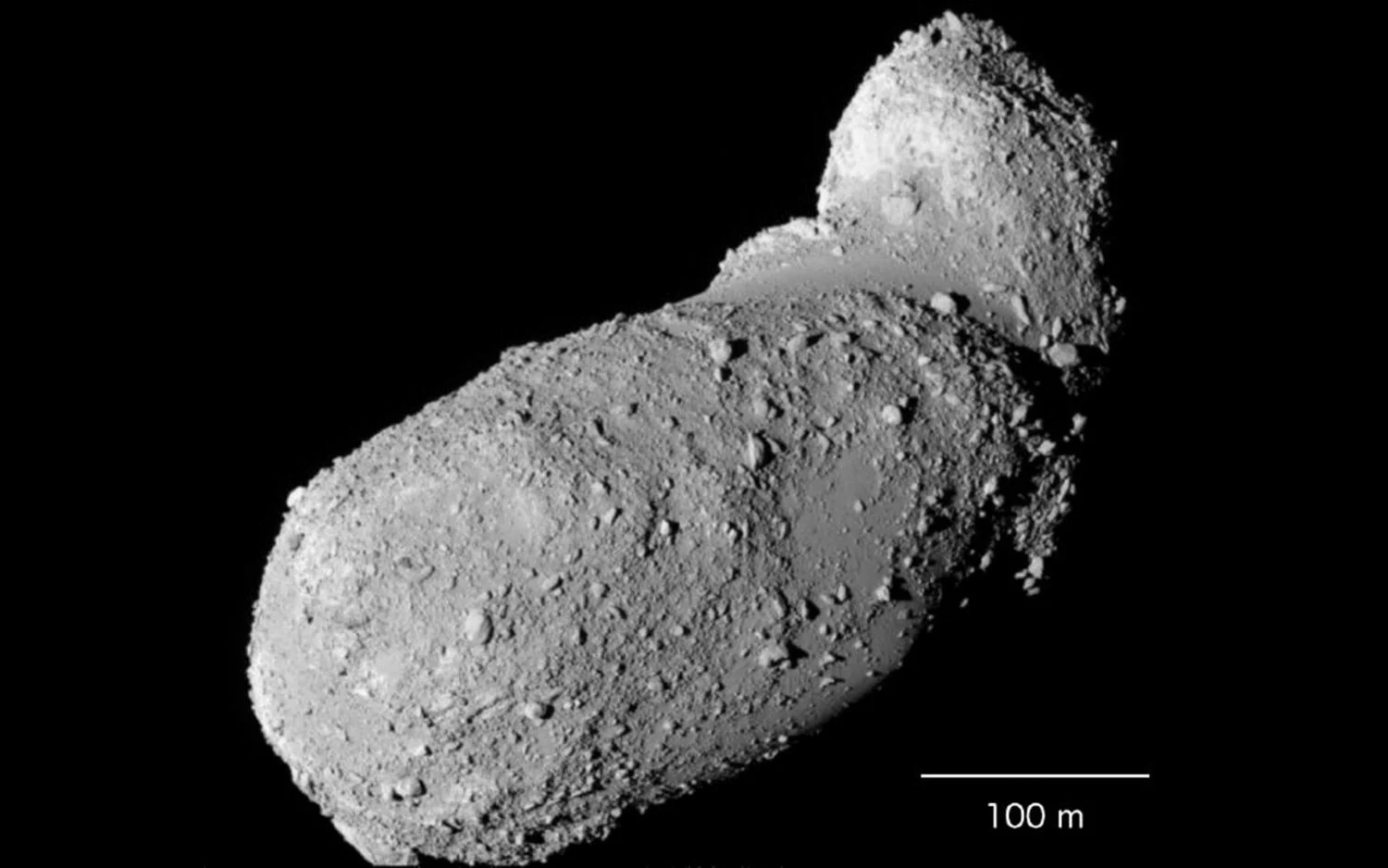
"The spacecraft actually bounced off the surface a few times and spent about 39 minutes resting on the asteroid, but apparently the samplers never fired," said Andrew Cheng, a Hayabusa science team member at Johns Hopkins University Applied Physics Laboratory, speaking to Space.com at the time. Some material might still have made it into the collector, but nobody could say for sure. "After all the thrashing about ... there is no way to confirm that," Cheng said. A second landing followed on Nov. 26, 2005.
That's a striking admission. The mission's central purpose was sample return, and the people closest to the data couldn't say whether the hardware had done its job. Bouncing and skidding across an asteroid's surface is not how anyone draws up a sampling procedure, and it leaves a clear question about what actually reached the collector. (And this is the part most people overlook: the uncertainty wasn't a failure of the scientists' analysis. It was a consequence of a landing that didn't go the way the hardware was designed to handle.) A second attempt followed a week later, which kept the mission alive but didn't resolve the question.
The samples turned up anyway
Hayabusa's sample-return capsule touched down in Australia and came back to Earth in June 2010. Scientists found Itokawa dust inside it, which settled the question Cheng couldn't answer. In November 2010, JAXA reported that the probe had collected 1,500 dust grains. The two touchdowns had forced material into the collector even though its mechanism never fired. Nobody planned that outcome, but it's the reason the mission still counts as a success.
Grains are a modest haul by the standards of popular imagination, and it's fair to be underwhelmed by the number. Still, dust from a known asteroid, returned to labs and analyzed with instruments that didn't exist when the mission launched, is a substantial scientific prize. Most asteroid material on Earth arrives as meteorites with unknown origins, so being able to tie samples to a specific body is valuable. This is what separates a mission that gathers data from one that gathers evidence.
What this means for the next mission
That result shaped what came next. JAXA's Hayabusa2 launched in December 2014, reached asteroid Ryugu in 2018, and returned its own samples in December 2020. The probe is now on an extended mission to asteroid 2015 BM510, which it will fly by in April 2028. Its original target, the strange asteroid 1998 KY26, is off the table after engine trouble made that rendezvous impossible.
The engine trouble that cancelled the 1998 KY26 rendezvous is a reminder that the first mission's lessons carried over in an uncomfortable way. Spacecraft that operate far from home tend to age in ways their designers only partly anticipated, and a single component problem can reshape a decade of planning. If you're working on long-duration robotic missions, the pattern is familiar: the plan you launch with is a starting point, not a contract. Hayabusa2 has already shown that adaptability, first by completing its Ryugu sample return and now by pivoting to a new target.
My read is that Hayabusa's legacy has less to do with the hop itself than with what the team salvaged from a mission that kept refusing to go to plan. The hop got the attention, and the samples got the science. Lucky, mostly, but the team still had to recognize what they had and make the most of it.
Looking ahead, the question isn't whether Hayabusa2 can fly past 2015 BM510. It's whether the program can keep converting setbacks into results without the public narrative collapsing into a list of near-misses. That's a higher bar than most missions face, and it's the one that will define how the next generation of sample-return work gets judged. Hayabusa2's 2028 flyby will be the next real test of that.