The tower catch of Ship 42 got most of the attention after Starship Flight 15, but the morning tour of Starbase's Starfactory left a bigger impression. Seeing where the hardware comes from changes how you think about the cadence SpaceX is aiming for.
The five-story Starfactory covers roughly 1 million square feet, or about 93,000 square meters. Production is split between Super Heavy boosters and the upper stage Ships, and an additional 330,000 square feet of office space sits alongside it. SpaceX officials describe the building as closer to an automotive assembly plant than a typical aerospace production site. That comparison sounds like marketing until you walk the floor and see how the work is organized.
Inside Starfactory
We entered under the large "X" sign on the building's shorter face, through an arched doorway, and were led onto the factory floor. Few people outside SpaceX ever cross that threshold. Workers glanced up as our group passed, and it was clear our presence was as unusual to them as their work was to us.
The scale hits first. Stainless-steel rocket parts sit across subassembly stations throughout the building, with Ship nose cones, cylindrical sections, and booster components all at different stages of manufacture. The sheer amount of hardware is hard to process. Walking close to each piece, with no barrier between you and a half-built flight vehicle, makes the production pipeline feel far more tangible than any launch photo does.
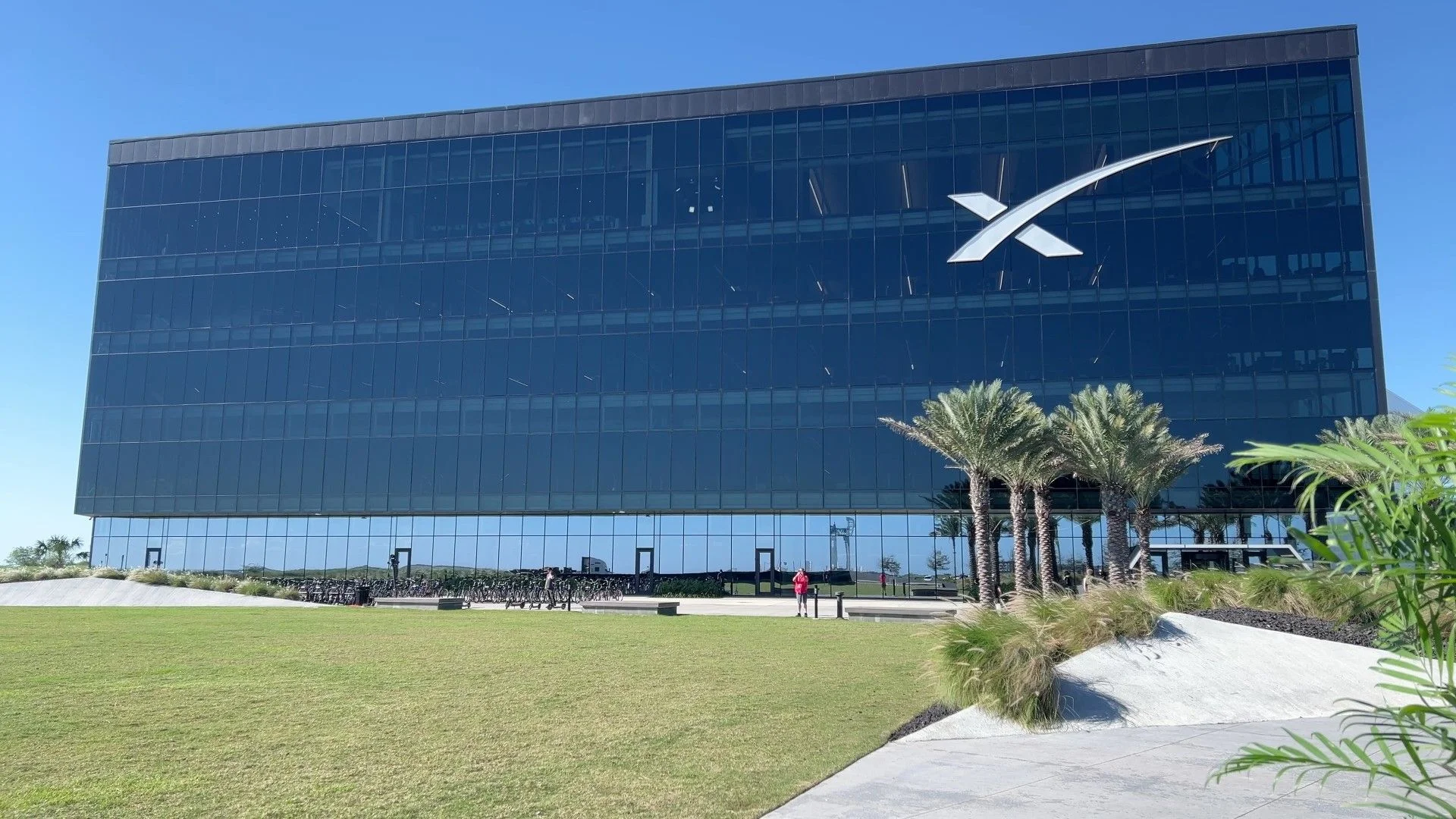
Starbase is an unusual arrangement. Part of it is privately owned SpaceX property, and part of it is publicly accessible land and shoreline. That mix means anyone willing to drive out can get within a few hundred feet of the Starship launch pad. As rockets go, that's very close.
Fully stacked, Starship stands more than 400 feet, or 120 meters, tall. Standing beside that on the pad drives home how big the vehicle is. Standing beside its individual segments inside Starfactory is more humbling still. One of the Ship's upper aerodynamic flaps, laid flat, is large enough that you could park a pair of large SUVs on their faces with room to spare. Parts that size make the finished rocket's dimensions feel abstract until you see them on the floor.
As we moved through the building, we passed rows of nose cones staged for integration, numbered as high as Ship 51. One stood out. It was visible for only a moment between other Ships as we walked by, and it had a series of windows cut into its face. It looked like a prototype, or possibly the finished article, for the lander SpaceX is developing for NASA's Artemis program.
NASA has contracted SpaceX to build a version of Starship that can land astronauts on the Moon. The agency is targeting Artemis IV as the first crewed lunar landing, in 2028. The lander decision isn't final. Blue Origin is also competing with its Blue Moon lander. Still, the windowed nose cone suggests SpaceX is preparing for that mission in parallel rather than waiting on the outcome.
Production pace and the Starlink push
Artemis isn't the only thing filling this building, though. Most of the Ships we saw had no windows at all. SpaceX officials said the company is currently completing about one Ship upper stage every two weeks and one Super Heavy booster every four weeks. Overlapping production lets several vehicles move through the factory at once, which is what makes those numbers possible. Most of the vehicles now in assembly are slated to carry stacks of the upgraded Starlink Version 3 (V3) satellites.
That matters because the Starlink constellation is already enormous. More than 11,000 spacecraft currently make up the network in low Earth orbit, delivering wireless internet to SpaceX customers around the world. Almost all of them went up on the Falcon 9, the company's workhorse rocket. The exception was satellites deployed on Starship's two most recent test flights, which carried V3 stacks. SpaceX officials say each of those flights added data capacity equal to ten Falcon 9 Starlink launches. As the company refines Starship's design, it plans to raise the vehicle's launch cadence sharply, and the constellation will grow with it.
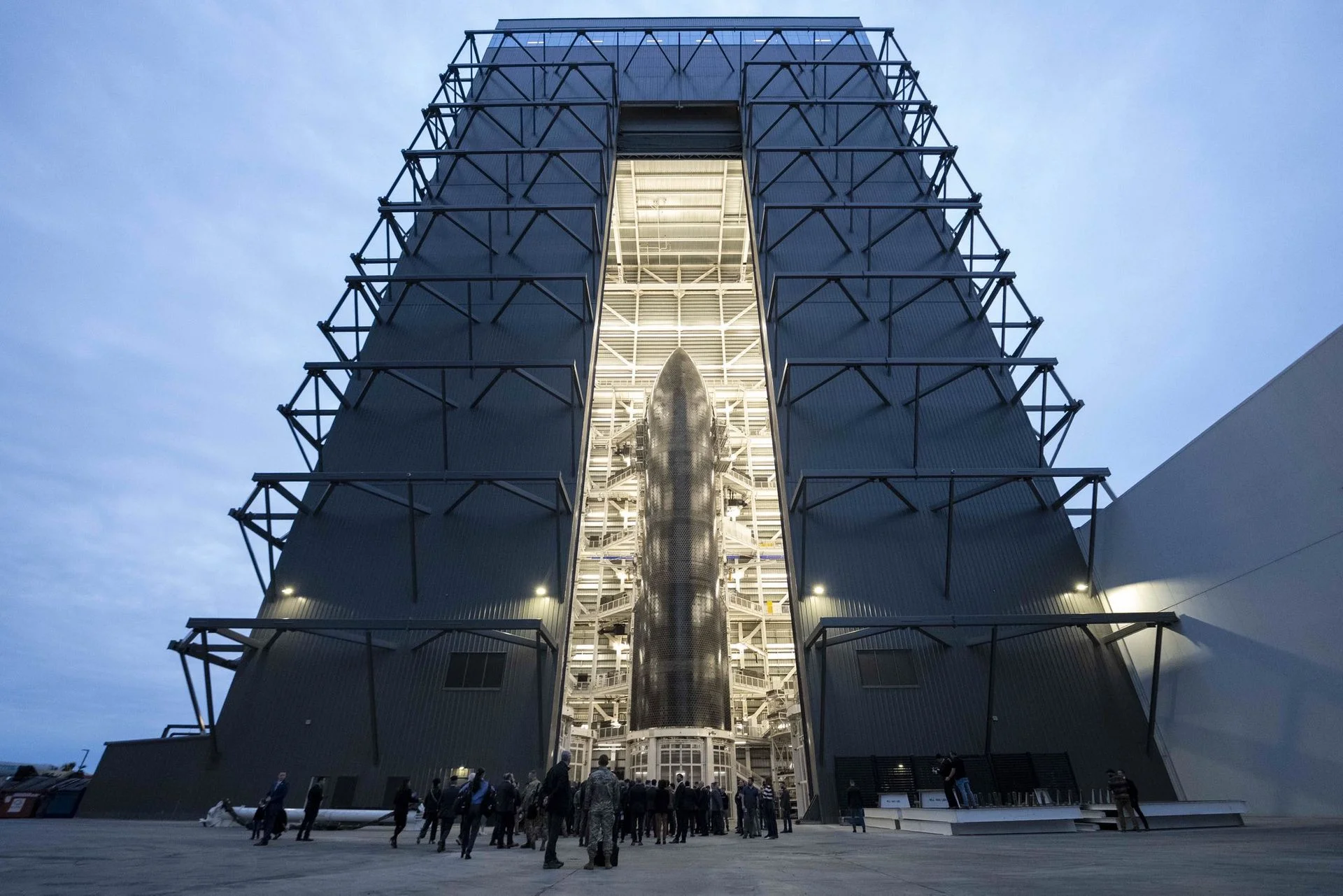
SpaceX CEO Elon Musk has said the company hopes to launch Starship about once a week starting in 2027. Looking at the vehicles lined up inside Starfactory, hardware supply doesn't look like the bottleneck. The harder question is whether flight operations and the rest of the chain can keep pace with the factory.
Building rockets like cars (and Lego bricks)
The production model borrows heavily from automotive manufacturing, where repeatability is the whole point. Identical parts, built the same way every time, are what let a factory scale. Automation is part of that equation, but SpaceX isn't ready to hand the floor over to robots.
Much of the tooling used to build Starship was designed in-house by SpaceX engineers, who keep refining processes to remove bottlenecks. SpaceX has also deliberately kept human technicians on the floor while the design is still changing. Automating a procedure that might be obsolete after the next design revision is an expensive mistake, and the company seems to be avoiding it.
Our tour guide compared the goal of consistency to Lego bricks. Lego is known for precision that holds across more than a trillion bricks produced since the company started in the 1940s. That's a useful benchmark. A rocket built to Lego-style tolerances can be assembled in any bay by any trained crew, and the parts fit regardless of which line made them.
Expansion
On the far side of the building, we stood between SpaceX's two Mega Bays, where Starship sections are stacked and integrated with their engines. One bay handles Ships and the other handles Super Heavy boosters. Each can hold about five or six assemblies. When we visited, each bay held two or three vehicles.
Next to them, the Mega Bays look modest compared with the Gigabay under construction. At roughly 700,000 square feet, or 65,000 square meters, the Gigabay will have room for up to 24 vehicles at once. It's designed to expand SpaceX's capacity to assemble Ship and Super Heavy rockets substantially.
SpaceX's long-term goal is to make all of this routine, so that launches and landings feel as ordinary as commercial airline flights. Standing inside Starfactory, surrounded by huge vehicles in every stage of assembly, that goal was hard to picture. A world where giant rockets fly to and from orbit on a regular schedule still reads like science fiction.
The launch day itself didn't ease that feeling. Super Heavy attempted a return to the pad but was diverted to an offshore landing, where it exploded. The next day, Ship 42 came down through the overcast, belly-first, toward the same tower it had left a couple of dozen hours earlier. It lit its engines and was caught.
That felt like science fiction too. The factory tour makes it clear, though, that the people building these machines are treating them as products to be made on a schedule. The question now is whether the flights can keep up with the factory.