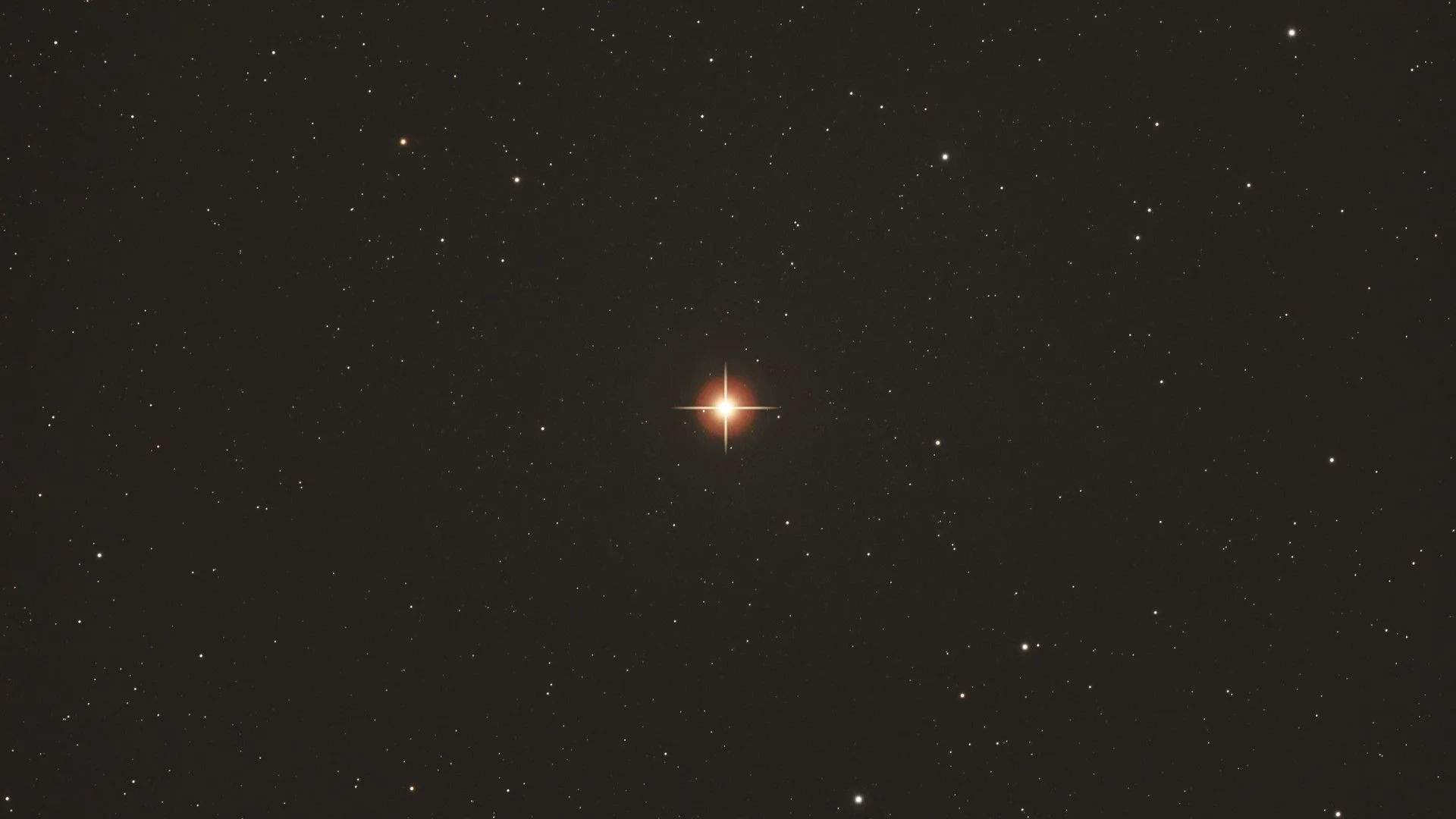
Aldebaran isn't part of the Hyades. It only looks that way because our eyes read the sky as a flat picture, and we rarely notice the flaw. The orange star that seems to sit in the bull's eye is roughly 65 light-years away, while the cluster it appears to belong to lies about 150 light-years out. Once you see that gap, Taurus stops being one object and becomes a scatter of stars at very different distances.
I spent years treating the two as one thing. Every chart reinforced the idea: Aldebaran as the eye, the Hyades as the face, all of it sitting together in a neat little cluster. Then I learned the truth, went back outside, and looked again. Nothing had changed. Aldebaran still looked perfectly at home among its neighbors. That's the unsettling part. The illusion survives even when you know the facts, because our eyes judge distance poorly when they look into space.
That makes the night sky one of nature's better tricks. It looks flat, and our brains accept that without much argument. Yet the sky has enormous depth, and constellations are simply the stars that happen to line up from where we stand. Learn the depth and you start to learn the geography of our local neighborhood.
Where the Hyades actually sits
Taurus is easy to find from the Northern Hemisphere in the evening. Once it's dark, look east for the tight knot of the Pleiades open cluster (M45). Then look nearby for a much broader V. That V is the Hyades, and the orange star perched on one arm is Aldebaran. Its name comes from the Arabic Al Dabarān, meaning "the follower," because it seems to trail the Pleiades across the sky.
The Hyades is a real group, not a coincidence of positions. It's an open cluster whose stars formed together and still move through the galaxy together. At roughly 150 light-years, it's the nearest open star cluster to Earth. The ancient Greeks called it the "rainmakers," since its rising and setting seemed to coincide with wet weather. Its stars share a similar age and are mostly sun-like, which lets astronomers conclude they were born in the same nebula.
Aldebaran is a different animal. It's an orange-red star, the 14th-brightest in the night sky, and it sits less than half as far from the sun as the cluster does. Move the viewpoint to another part of the Milky Way and the familiar picture falls apart. Aldebaran would drift away from the bull's face, and Taurus would stop looking like a bull at all.
That's the core point about constellations. They aren't objects in the way a planet or a star cluster is. They're viewpoints. Stars that appear side by side can be separated by vast distances, and our whole view of the sky is a line-of-sight projection. The patterns are real enough that we can draw them. They just don't describe how things are arranged in space.
How to test your own depth perception
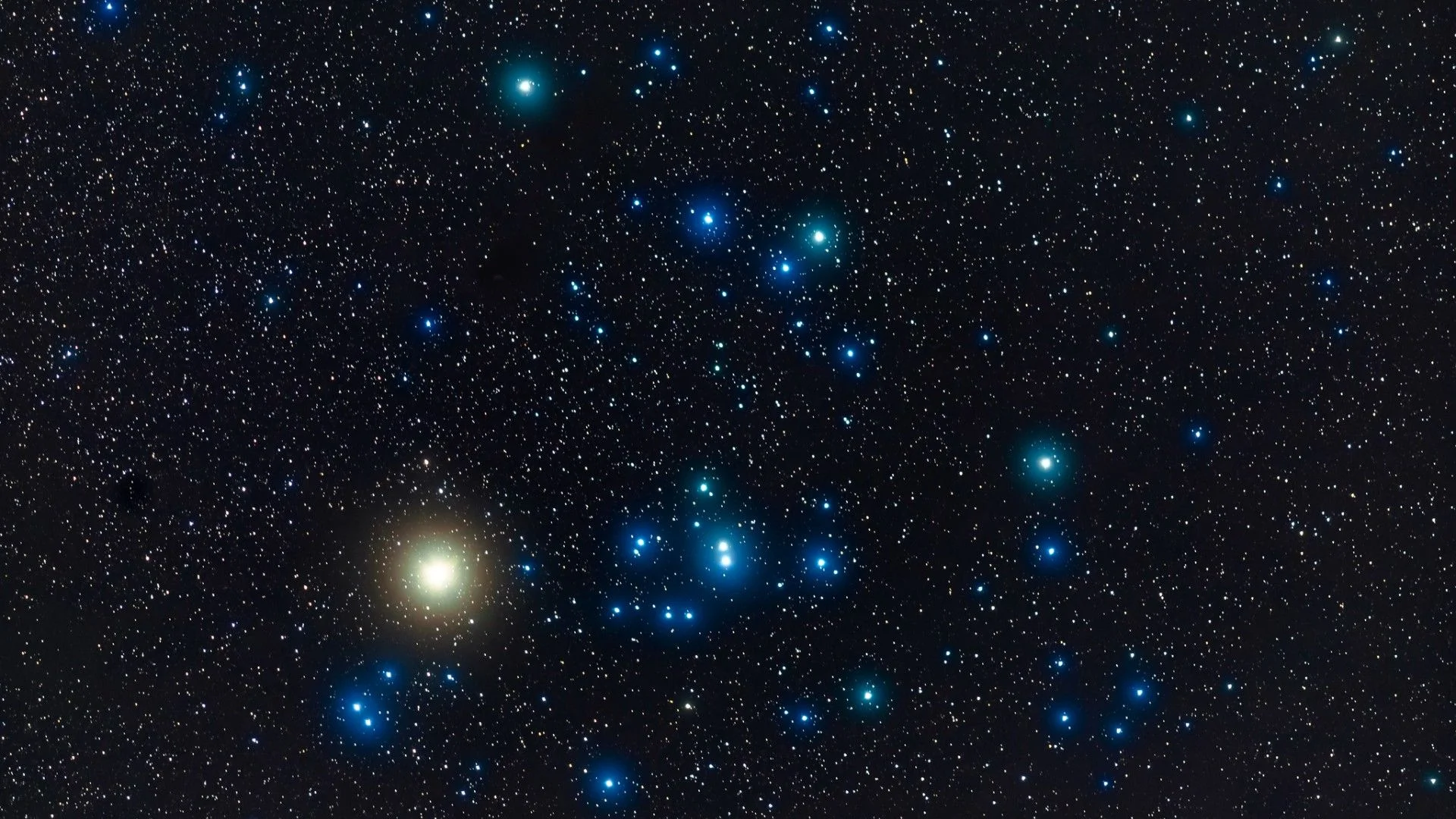
Start with the naked eye. Find the V, then recall the rough distances: about 65 light-years for Aldebaran and about 150 for the Hyades. Try to pull the orange star toward you in your head while leaving the rest of the cluster where it is. It's harder than it sounds. Experienced observers are wired to find patterns and group stars into shapes, and they rarely practice seeing stars at their true distances.
Binoculars suit this target well. The Hyades is broad, so low magnification frames it nicely and takes in the scattered stars around it. Binoculars reveal many more faint stars, but that's not the real payoff. Knowing what you're looking at changes the observation far more than extra magnification does.
Tackle the sky one constellation at a time. Fair warning: once you start, you'll grow suspicious of everything. Next time you trace Orion, Cassiopeia or Auriga, you'll wonder which stars sit nearby and which only look that way. Looking up the distances and working them out yourself is genuinely eye-opening. Memorizing constellations gets you around the sky. Taking them apart and reassembling them in three dimensions is where the sky starts to make sense.
The moon crowds out the faint stuff this week

This week belongs to the moon. It's already waxing when the week begins and becomes the full Beaver Moon on Nov. 24, a supermoon. That means brighter evening skies each night and worse conditions for faint galaxies, nebulae and other low-contrast targets. Aldebaran and the main Hyades stars are bright enough to show from suburban skies even under strong moonlight, so you won't need a dark site to practice this exercise.
The trickiest night looks like Nov. 23, when the waxing gibbous moon drifts close to the Pleiades. Its glare washes out the fainter stars around the cluster. Binoculars can still pick out some of the hundreds of stars in the group, which makes them the right tool for that night. Shifting your view from 2D to 3D takes only a little imagination, and moonlight won't stop you from practicing on the brighter stars.
Cepheus, the quiet house in the north
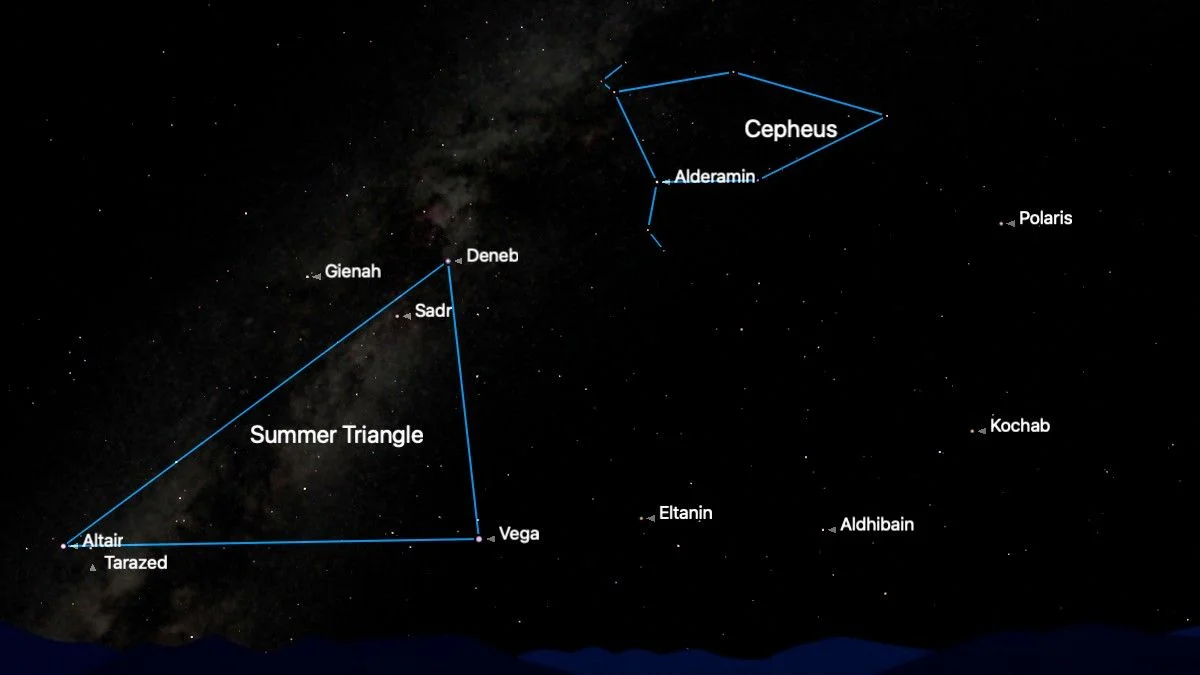
I'm a stargazer, not a mythology buff, but a few ancient stories make constellations easier to find. Cepheus is a good example. It's named after a king of Ethiopia, the husband of Cassiopeia and father of Andromeda. All three sit close together in the northern sky right now.
Use the Summer Triangle as your anchor. Look west after dark, away from the moon's glare, for Vega, Deneb and Altair, which are sinking toward the western horizon. From Deneb, look north for a five-star pattern that resembles a child's drawing of a house, with a square base and pointed roof. That's Cepheus. Its brightest star, Alderamin, lies about 49 light-years away and marks one corner of the house.
Pick one star on your next clear night and work out how far away it is before you name it. The answer will tell you more about the sky than any chart will.