Two of NASA's most productive Mars spacecraft are sidelined at the same time, and one of the problems looks more serious than the other. NASA said Thursday, Nov. 19, that the Perseverance rover and the Mars Odyssey orbiter have both stopped science work. The agency hopes both will be running again by the end of November.
Perseverance's radio problem
Perseverance's fault is a communications failure, and it hit right after a good run. The rover had just set a new distance record for off-Earth driving on Oct. 11, rolling past the 28.06 miles (45.16 kilometers) covered by its smaller predecessor, Opportunity. Nineteen days later, the team noticed that the rover's main UHF downlink radio had stopped sending its routine "heartbeat" pings to the main computer. That radio carries data home through relay satellites in Mars orbit.
Perseverance caught the fault itself. It switched to its backup UHF radio and entered a protective safe mode, shutting down everything non-essential. The team brought the rover out of safe mode, but then found the backup radio was transmitting at about half its expected power. So the backup is off the table too.
Perseverance now talks to Earth directly, using its high-gain antenna to reach NASA's Deep Space Network dishes without relay orbiters. That path carries less data per second. The team has decided to put diagnostic information first, which means science, including observations from the rover's cameras, is on hold.
Fans have already noticed the gap. The mission's raw image feed hasn't posted anything since Nov. 7. NASA's read is that the rover is stable and in regular contact with the team, and it hopes to resume science by the end of the month. That's a reasonable bet for a machine that's already survived years of harder problems, though the radio is the piece to watch.
Odyssey's reaction wheel
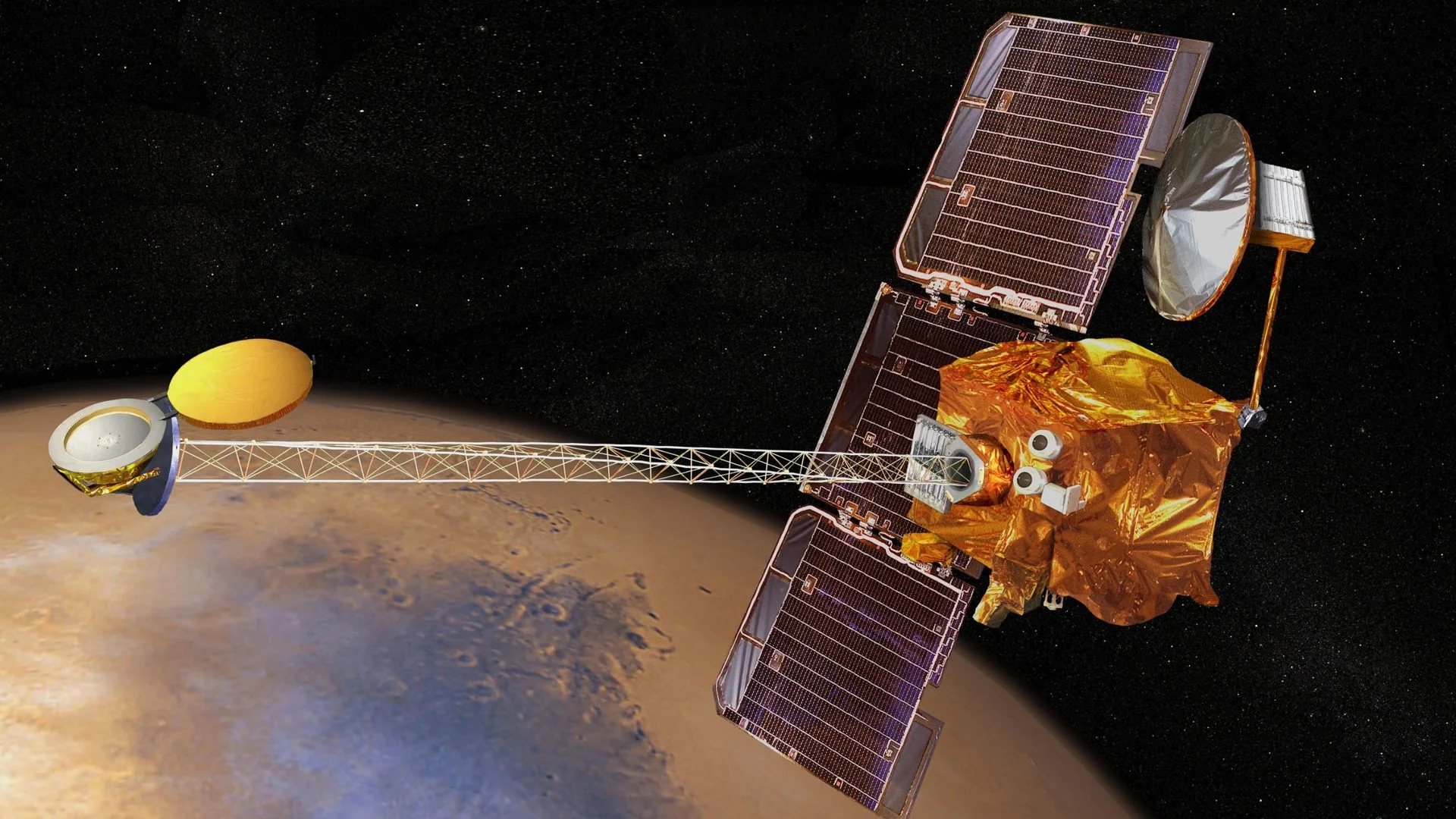
Odyssey's situation is the one to keep an eye on. The orbiter reached Mars in October 2001, and it has now lost use of one of its reaction wheels. Those wheels keep the spacecraft pointed where it needs to be. Odyssey has four, and it needs three working to hold its orientation. It already lost one in 2013, so this is a second loss, and the margin is thin.
The trouble began Nov. 4, when Odyssey dropped into safe mode. It stayed there until Nov. 6 while the team worked the problem. They've made some progress, including getting the faulty wheel to move when commanded. Whether the wheel can be fully recovered is still an open question. NASA says further testing is underway to find out.
Odyssey has been out of safe mode for two weeks, but it hasn't resumed science or data relay. That relay role matters, because the orbiter has long been one of the main routes for information from NASA's surface missions back to Earth. NASA's target is to return Odyssey to science and relay work in the last week of November, pending the results of these tests.
If the wheel can't be recovered, the picture gets harder. The team would have to steer the orbiter with its thrusters alone. NASA estimates Odyssey has enough hydrazine fuel for that for only a month or two. That's a real clock, even if it isn't an immediate one.
Still, Odyssey's legacy is secure whatever happens to that wheel. It has operated at Mars longer than any other spacecraft. It produced the first global maps of the Martian surface's composition, and those maps have become a reference point for Mars geologists. NASA says the orbiter's maps have also helped flag hazards at potential landing sites, pick out targets for landers and rovers, and map water molecules in the top 3 feet (1 meter) of soil, including buried ice that could matter to the first astronauts on Mars.
Both spacecraft are expected to be back by month's end, and that's the near-term test. The bigger question is whether Odyssey's wheel can be saved, because that determines how much longer one of Mars's longest-serving explorers keeps working.