The next eruption of T Coronae Borealis could turn a faint point of light into a naked-eye star within a day. Astronomers are confident the binary system will flare again, but they can’t say exactly when: the trigger depends on material accumulating on a white dwarf at a rate they can’t measure precisely.
A recurring outburst with an uncertain clock
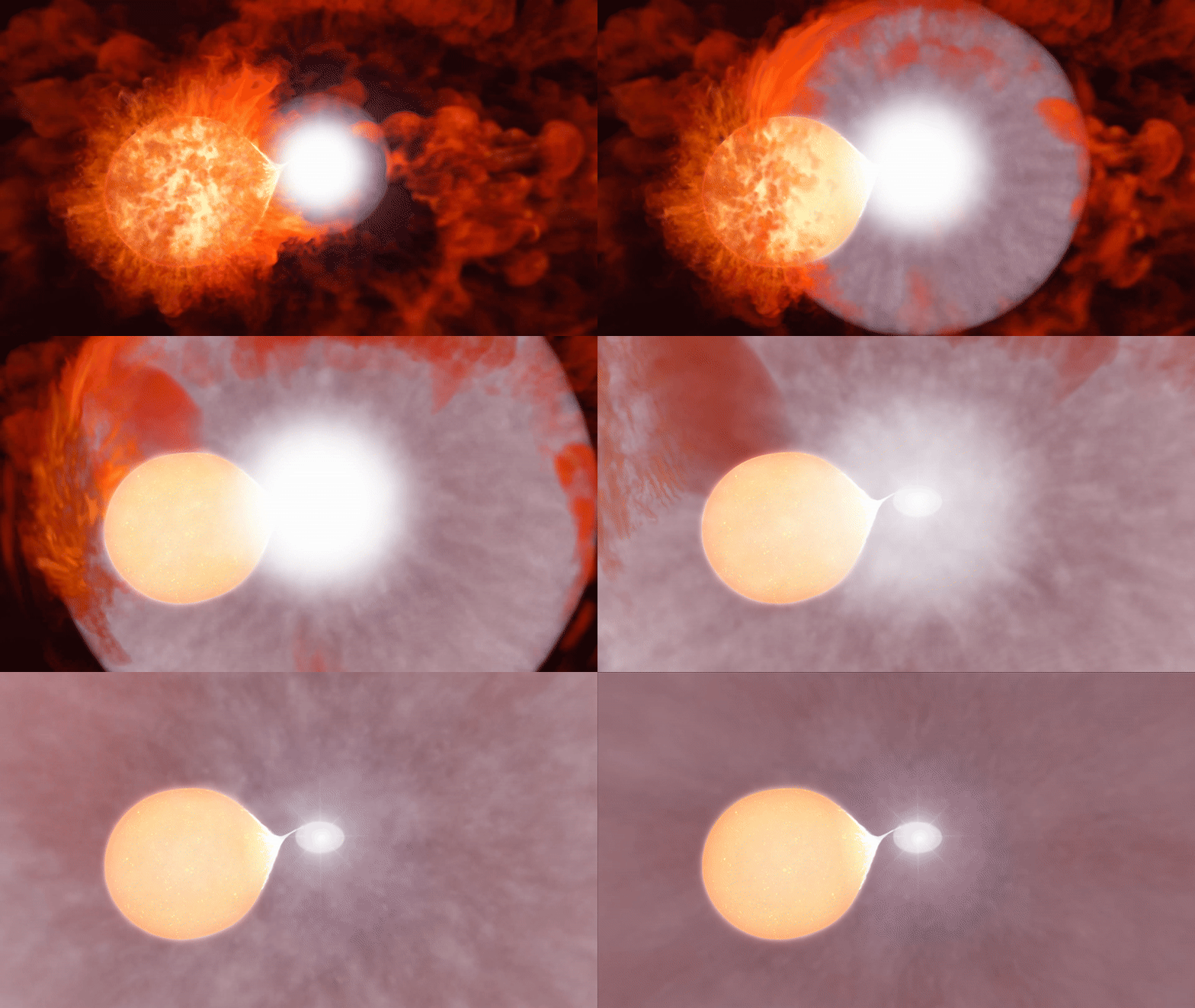
T Coronae Borealis, or T CrB, pairs a dense white dwarf with a swollen red giant. The white dwarf pulls gas from its companion. Once enough material collects on its surface, a runaway nuclear reaction produces a nova, making the system about 1,000 times brighter than usual. The system then fades and begins building toward another eruption.
The last observed nova reached Earth in 1946. That roughly 80-year interval puts T CrB near the expected window for another outburst, but the interval alone can’t provide a date. Bradley Schaefer, a physicist and astronomer at Louisiana State University, says researchers lack accurate measurements both of the gas transfer rate and of the mass needed to trigger the eruption.
“The exact date of the upcoming T CrB eruption depends primarily on how fast the gas coming from its companion star is accumulating on the surface of the white dwarf,” Schaefer said. Astronomers believe the system is close to the required threshold after decades of buildup, but that doesn’t reveal how soon it will cross it.
Observers have also watched for changes resembling a fluctuation seen before the 1946 eruption. Some recent dips and rises prompted speculation, but they haven’t marked the main event. Elizabeth Hays, chief of NASA Goddard Space Flight Center’s Astroparticle Physics Laboratory, expects the nova within the next few years and said she would be surprised if it had not happened by 2030, 84 years after the previous eruption.
Pinpointing the trigger is difficult in part because the red giant’s light overwhelms the fainter white dwarf. Astronomers also can’t directly determine the temperature and pressure of the material near the white dwarf’s surface. Hays likens the forecast to weather: the conditions may be approaching, while the timing remains uncertain.
What observers will see
There probably won’t be a visible warning before the outburst reaches Earth, though an early X-ray flash may offer a signal. Amateur astronomers are monitoring T CrB at intervals of roughly one or two minutes. Schaefer says that once its brightness increases by about one magnitude, alerts could circulate worldwide within minutes, prompting observatories to begin prepared observation programs.
The rapid rise should follow soon after the nuclear runaway begins, with the nova reaching its peak in less than a day. T CrB normally sits around magnitude +10, too dim for unaided vision. At peak, it could reach magnitude +1.7, appearing brighter than Polaris.
The naked-eye display is expected to be brief. Hays says the nova should fade below unaided visibility in dark locations within a couple of days and become too faint for binoculars in about a week. Radio, X-ray and gamma-ray signals could persist for months or years, giving observatories a much longer window to study the eruption.
Where to look for T CrB
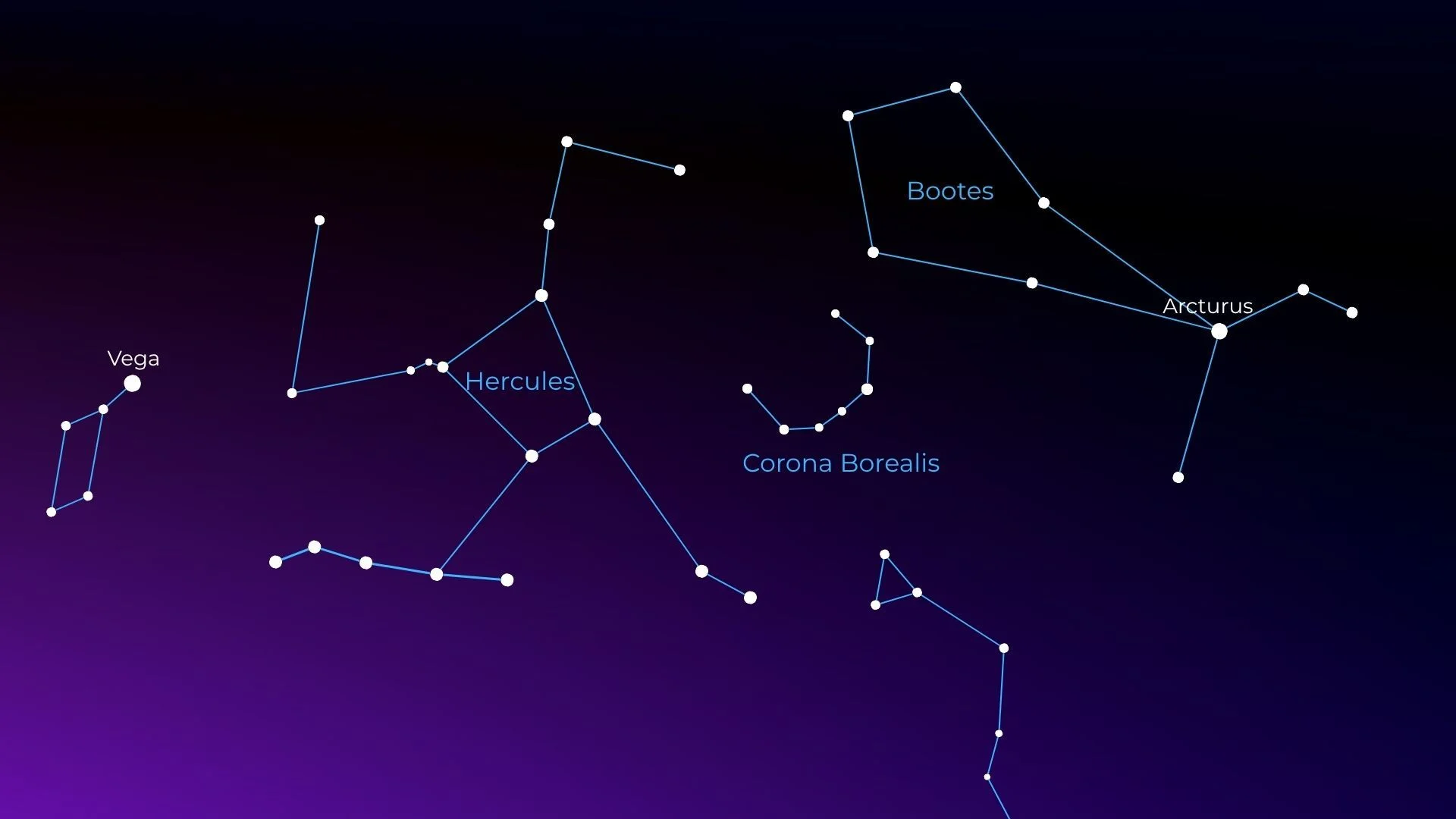
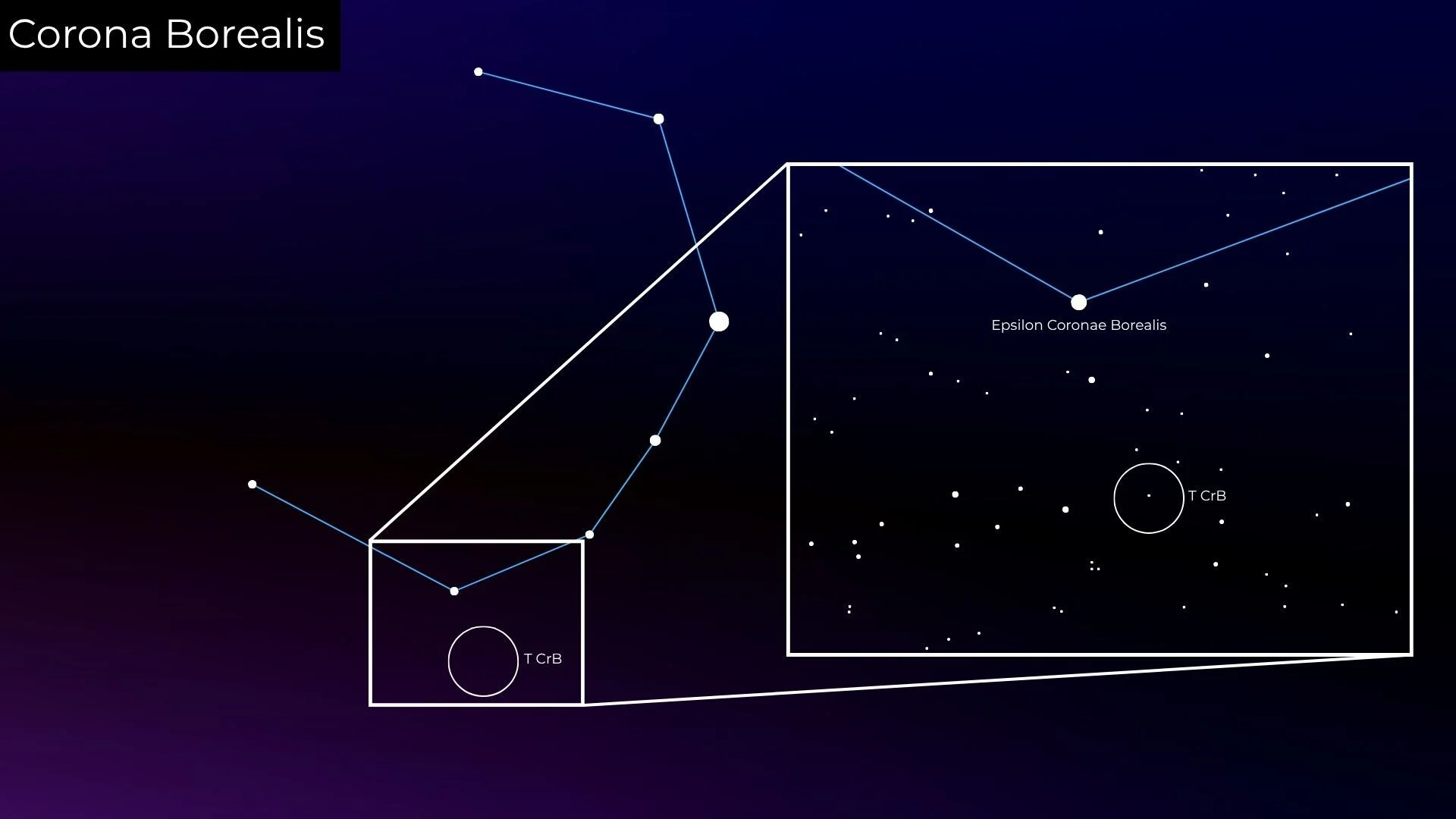
T CrB lies in Corona Borealis, close to the magnitude +4.28 star Epsilon Coronae Borealis. The crown-shaped constellation sits between Hercules and Bootes. In November, it can be seen in the early evening; for U.S. viewers, it sets a few hours after sunset and returns to the northeastern sky before dawn.
The timing remains the open question. With the system under frequent watch and observatories ready to respond, the first clear rise in brightness should quickly turn a long-running prediction into a global observing campaign.