A communications delay measured in days
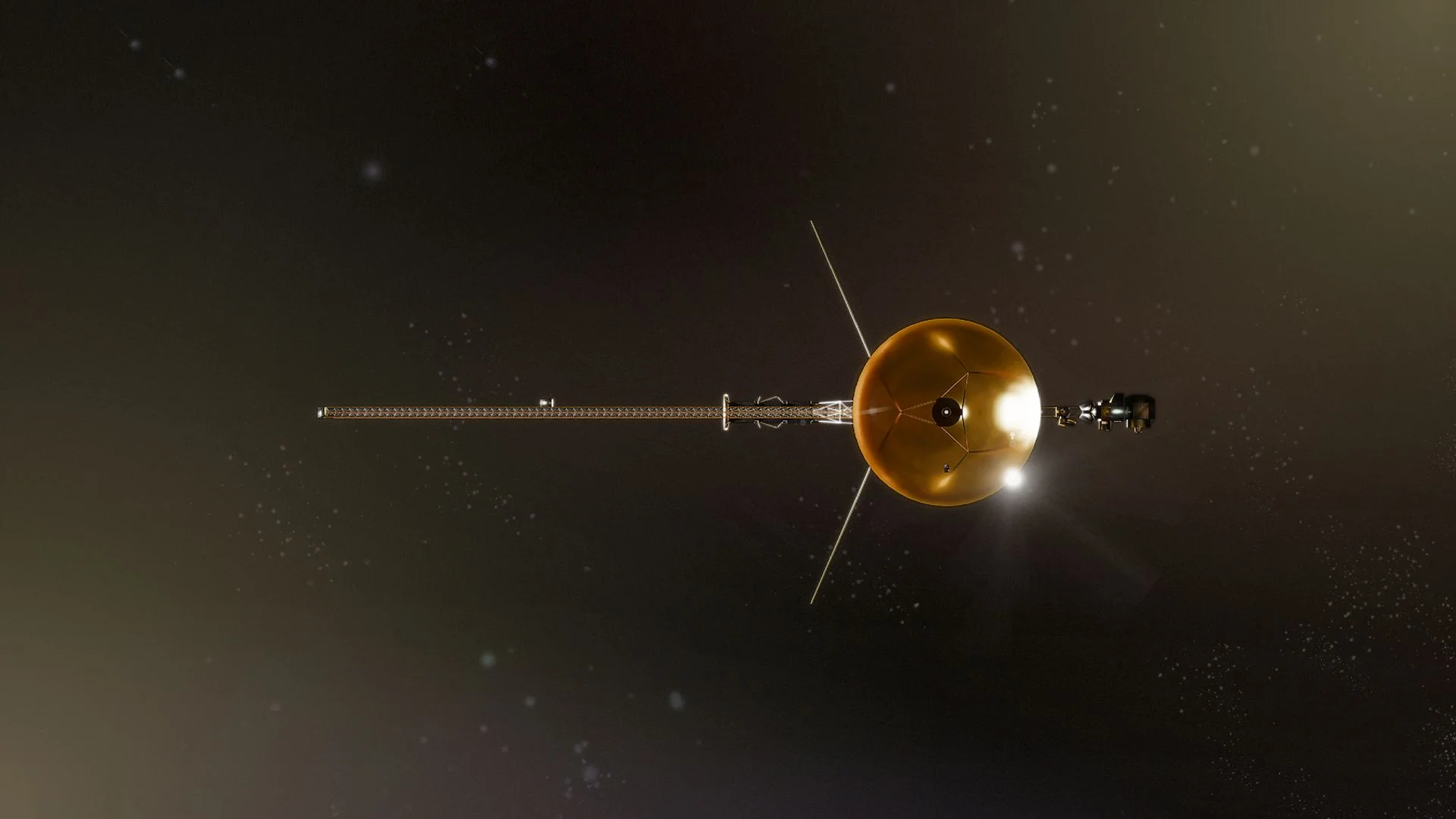
Voyager 1’s approaching one-light-day mark puts a striking number on the limits of real-time communication with a spacecraft. On Nov. 18, a signal from Earth will take 24 hours to reach the probe, and its reply will take another day to return. That’s a two-day round trip for even a simple exchange, before engineers account for the time needed to plan, transmit, and interpret commands and data.
The distance doesn’t mean the spacecraft has gone silent. It means that any conversation has to be planned around a fixed delay: a team can’t send an instruction and immediately learn whether the probe received it or how it responded. For a mission operating far beyond Earth, patience is part of the technical system.
NASA projects the crossing at 5:16:07 a.m. EST (10:16:07 GMT), when Voyager 1 will be about 16 billion miles (26 billion kilometers) away. The spacecraft will be 49 years, two months and 11 days old. It will be communicating through the Madrid station of NASA’s three-antenna Deep Space Network, which supports missions operating far beyond Earth.
That milestone is a measure of communication time, not a change in the probe’s status or destination. The distance makes familiar operations feel less immediate: data received on Earth describes conditions aboard a machine as they were when the signal left it, and instructions arrive only after their long journey outward. The network is the link, but the delay is built into the physics of that link.
From our perspective, Voyager 1 is traveling through Ophiuchus. NASA official Jeffrey Hayes described the milestone as the start of celebrations leading up to the mission’s 50th anniversary in August and September next year. The anniversary offers a reason to look back at the original planetary mission and at the more difficult work of keeping the spacecraft useful decades later.
A mission built to outlast its itinerary
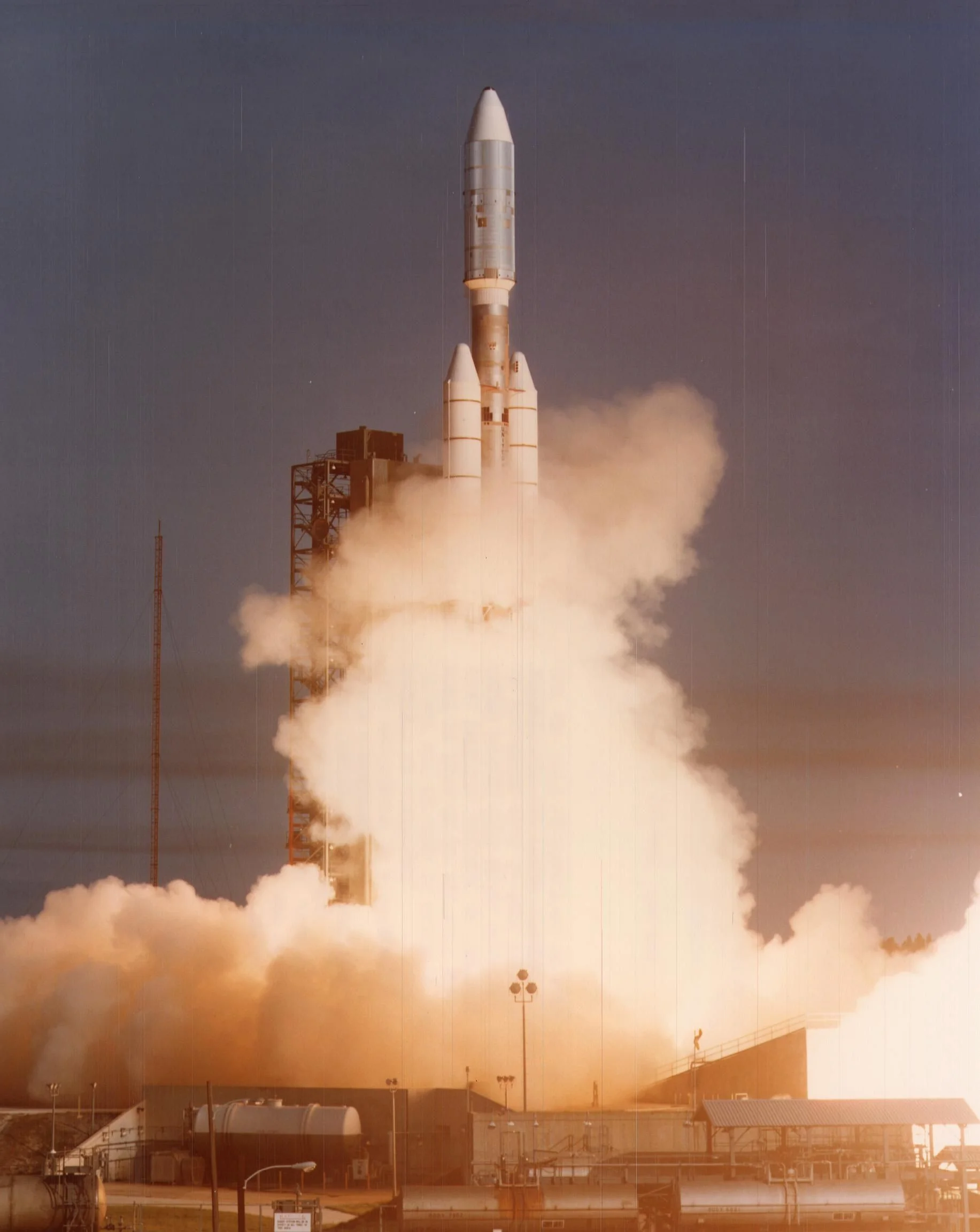
Launched from Kennedy Space Center on Sept. 5, 1977, a few weeks after Voyager 2, Voyager 1 is now the most distant human-made spacecraft. The twin probes were funded initially to study Jupiter and Saturn. A rare planetary alignment also gave Voyager 2 a path to Uranus and Neptune, and NASA extended the mission to make those encounters possible.
The original itinerary was finite: visit the giant planets, gather observations, and transmit them home. The extended mission changed the central question from what the probes could see during planned encounters to what they could still measure as they continued outward. That shift helps explain why Voyager’s long life matters beyond the anniversary. The spacecraft have kept returning science after the purpose that sent them toward the planets had been fulfilled.
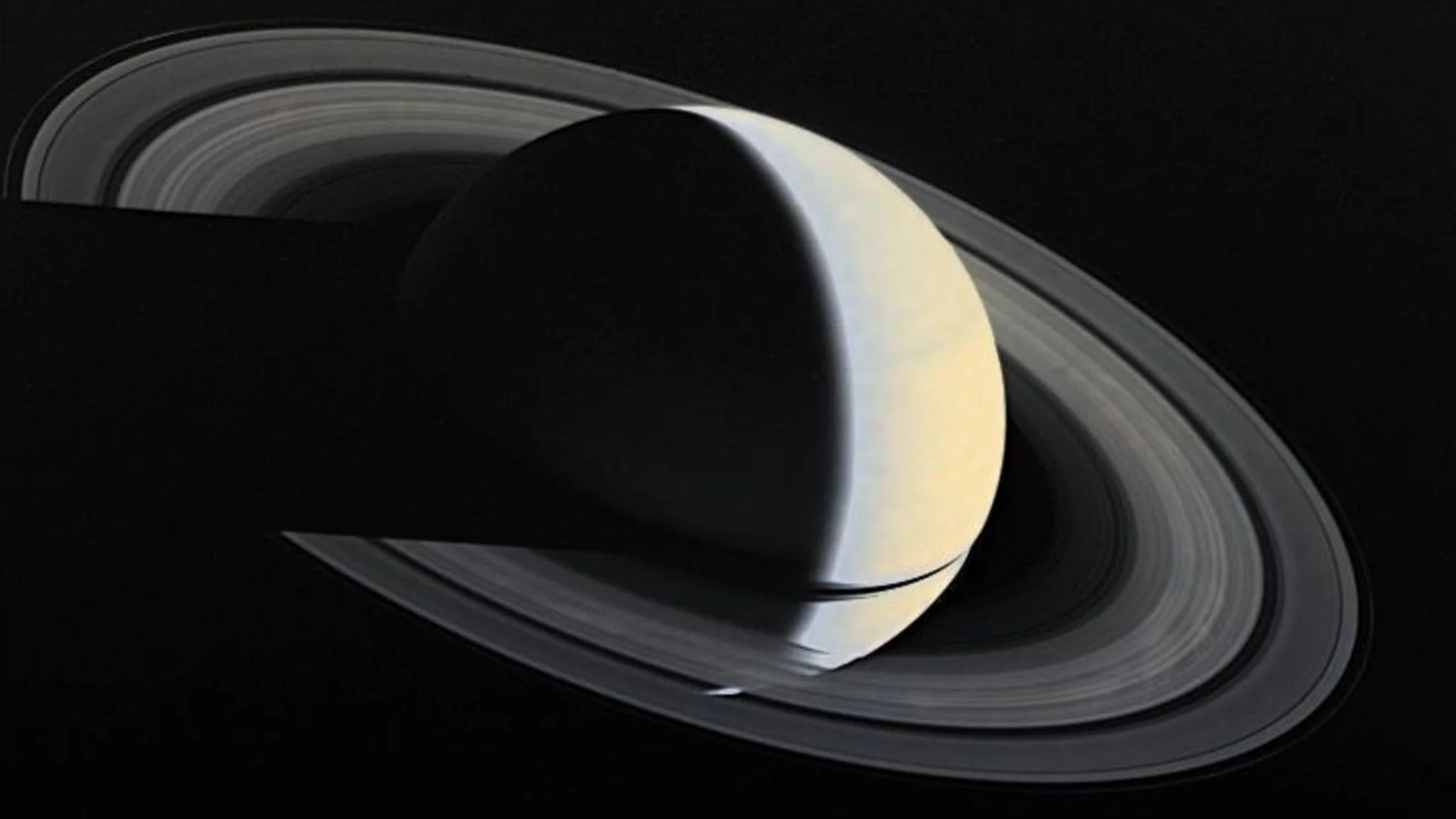
Voyager 1’s Saturn flyby took it on a different trajectory. The probe studied the planet’s rings and Titan, Saturn’s largest moon, whose chemistry offered clues about conditions before life. The maneuver sent Voyager 1 high above the plane of the solar system.
That path also set the two spacecraft on different routes and left Voyager 1 farther from Earth today. A flyby is more than a close look at a world: the spacecraft’s trajectory after the encounter determines where it can go next. In Voyager 1’s case, the Saturn encounter helped redirect a planetary explorer toward the distant environment it now studies.
Voyager 2 remains closer, at about 13.5 billion miles (21.7 billion kilometers) from Earth. NASA expects it to reach the one-light-day distance in 2035. Both probes have operated far beyond their original planetary tours; the mission from launch through Neptune cost $865 million, with another $30 million budgeted for the extended phase.
Those figures describe a mission whose value has grown through longevity, but the extra years haven’t come free of tradeoffs. Extending operations means continuing to communicate with distant craft and deciding which observations justify the power they consume. The one-light-day mark makes the distance visible; the shrinking power supply makes the cost of continued science visible too.
Keeping the probes alive
Both spacecraft have entered interstellar space and still return measurements, but their remaining power shrinks by about four watts each year. Each began with 470 watts from its nuclear power system. NASA has shut off instruments and adjusted operations to preserve enough electricity for the science that remains.
Power limits turn instrument management into a choice about priorities. A spacecraft can’t keep every system running indefinitely if its available electricity continues to decline, so engineers have to balance the value of each instrument’s data against what it takes to operate. The result is a mission that becomes narrower over time, even as the remaining observations continue to extend its reach.
A major power reallocation this year, dubbed the “Big Bang,” helped the team manage those dwindling reserves. Hayes said engineers weigh each instrument’s power demand against the value of its observations: low-power instruments with strong scientific returns are easier to keep running, while energy-hungry equipment faces tougher choices.
This is more significant than it looks: keeping a probe alive isn’t simply a matter of switching off the least useful device. The systems aboard an aging spacecraft have to keep working together well enough to collect and transmit measurements, and every decision narrows the options available later. (And this is the part most people overlook.) A small power budget can shape the science the mission is still able to do.
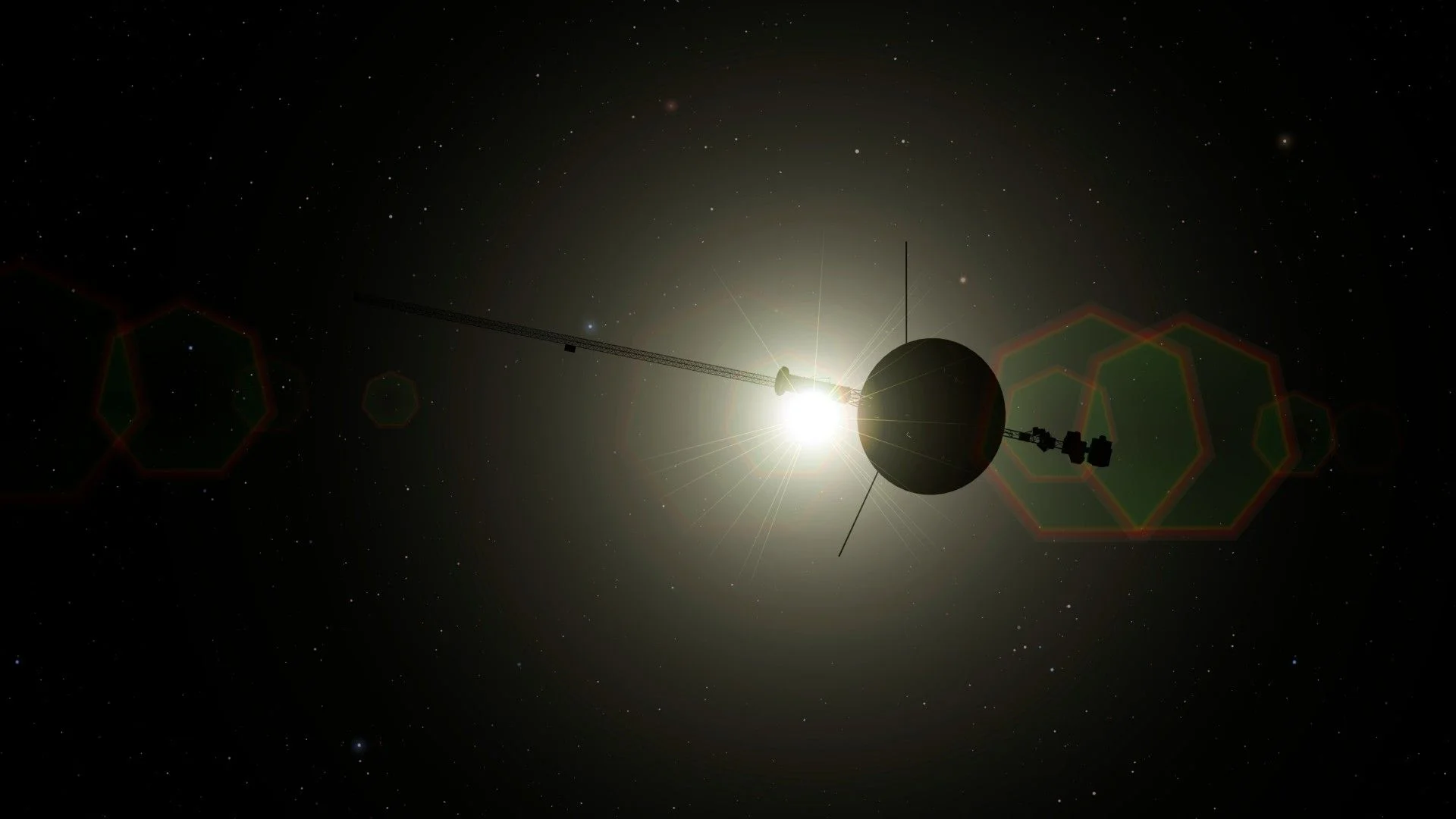
Age and the extreme cold make both Voyagers fragile, Hayes said. They operate only a few degrees above absolute zero, and their hydrazine propellant could freeze—a failure that would end the mission. NASA’s Jet Propulsion Laboratory is continuing to manage those risks and extract what science it can from the aging craft.
For engineers, that means extending a mission is an ongoing exercise in managing failure, not a promise that every component will keep working. If you're working in this space, the Voyagers offer a plain lesson: longevity depends on careful choices about what to operate and what to preserve. The constraint is physical, and no clever command can restore power the spacecraft no longer has.
What the one-light-day mark means
Voyager 1 is headed in the general direction of Gliese 445, a star about 17 light-years from Earth in Ursa Minor. It will pass roughly 1.7 light-years from the star in about 40,000 years, by which time its nuclear power will be gone. For now, the one-light-day crossing makes the communications delay itself part of the mission’s daily reality.
The star’s place in Voyager 1’s general direction shouldn’t be mistaken for a near-term destination. The stated passage is tens of thousands of years away, long after the spacecraft’s power supply is expected to run out. In the nearer term, the useful story is the work still happening: instruments continue to return measurements, while the team balances what can be sustained against the limits of an aging craft.
What this means for you is that “real time” has a hard boundary here. A signal can still travel between Earth and Voyager 1, but at one light-day each way, the probe is already beyond the pace of ordinary back-and-forth control. The achievement is less about a dramatic new discovery than about how long the mission has kept producing science despite distance, delay, and dwindling resources. And yet.