The hardest preparation happened at home
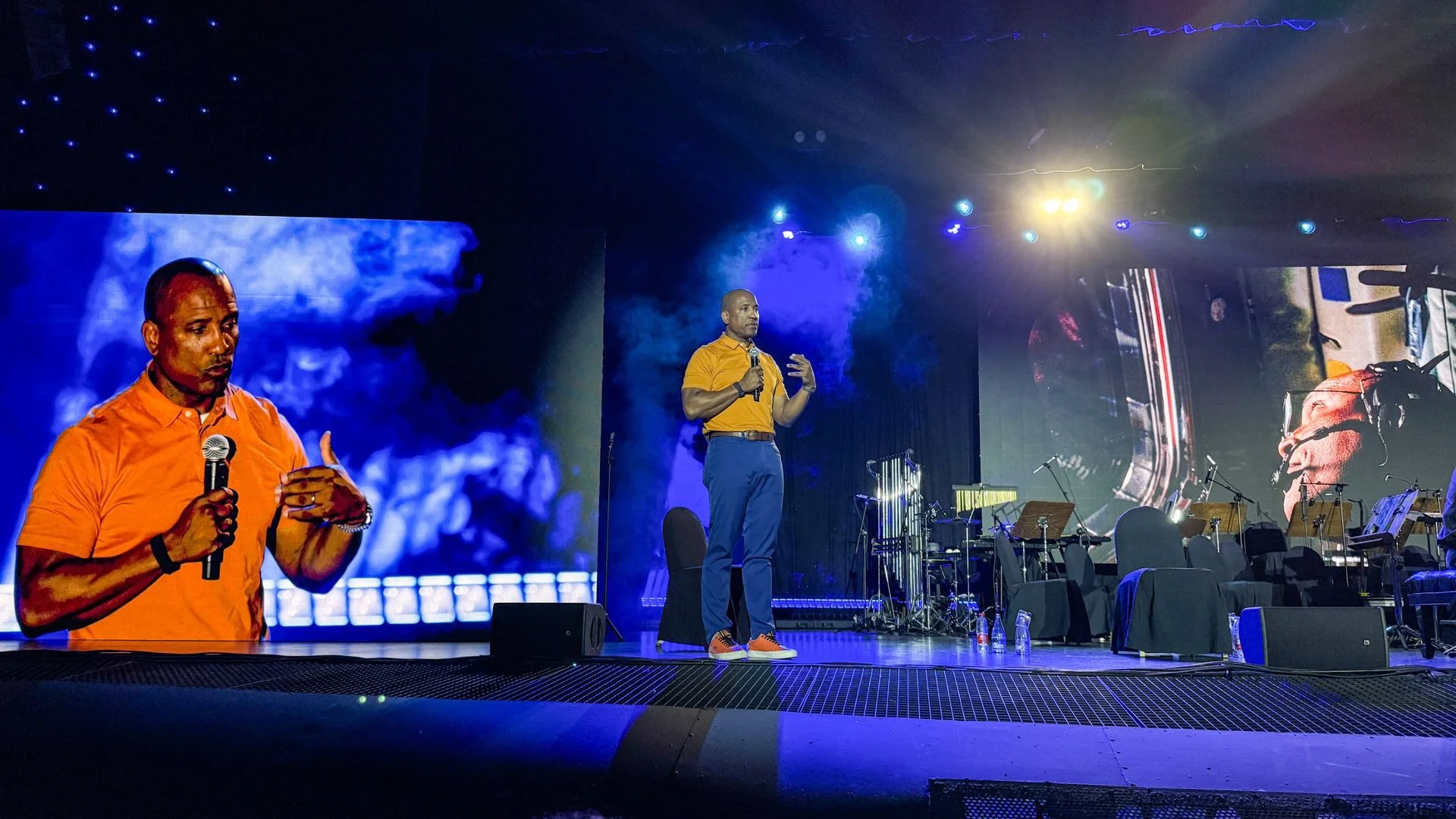
For Victor Glover, the hardest preparation for Artemis II didn’t happen in a simulator. It was telling his four daughters that the flight around the moon carried a real risk he might not come home. “This is maybe the greatest challenge of my astronaut career,” he said at the Starmus VIII festival in Tenerife on Oct. 18.
That challenge had little to do with flight procedures. NASA can rehearse tasks and plan for technical problems, but a family conversation about the possibility of death has no checklist that makes it easy. Glover’s account shows how preparation for a high-risk mission can extend beyond the crew: the people waiting at home also have to confront what the work may demand.
Glover flew with NASA astronauts Reid Wiseman and Christina Koch and Canadian Space Agency astronaut Jeremy Hansen. Their mission launched on April 1, 2026, marking the first crewed lunar journey since Apollo 17 in 1972. The crew’s technical readiness was only part of the preparation; Glover and his wife, Dionna, also had to help their family face what the mission could mean.
That distinction matters. Astronaut training is built around preparation, repetition and procedures. Family readiness is more personal, and it can’t be reduced to a schedule or a set of mission objectives. For Glover, the two kinds of preparation met in a conversation he’d rather have avoided.
Preparing a family for the risks
When Glover flew to the International Space Station on SpaceX’s Crew-1 mission in 2020, his children were younger. He and Dionna made a deliberate effort to prepare them for his time away, treating the family’s readiness as seriously as NASA treated his training. They visited Kennedy Space Center, saw the launch pad and crew quarters, and planned when he would call home from orbit.
Those steps gave the children concrete details to hold on to: where their father would be, what the launch environment looked like and when they might hear from him. A planned call can’t remove the distance, but it can make an unfamiliar absence easier to understand. That kind of preparation also gives parents a way to talk about a mission in terms children can picture.
By Artemis II, his daughters were adults, and the conversation had changed. Glover said his wife urged him to speak with them about the possibility he could die on the mission. He called her suggestion “maybe the scariest thing I’d ever heard.” He knew she was right, though the discussion itself was painful.
The shift from explaining a long absence to naming the possibility of death is stark. His daughters were old enough to understand the danger directly, which left less room for the reassuring explanations that can help younger children. The task wasn’t to make the risk feel acceptable. It was to speak honestly about it before launch.
“We did, and it did not go well in my opinion,” he said. “Well, it’s not about going well. The talk needed to be done, just because it’s hard.”
That answer is more revealing than a polished account of a family calmly accepting the mission. The conversation was difficult, and Glover didn’t describe it as a success in the usual sense. Its value lay in having it at all.
The next day, Glover sent his family Chief Tecumseh’s poem Live Your Life. It gave him a way to explain why he considered the risks worth taking: the flight had a purpose beyond the danger to him personally. The poem, he said, expressed what he hadn’t found words for during their conversation.
That choice also suggests a limit to what a direct conversation can accomplish. Some feelings are easier to approach through a text that already carries meaning, especially when the people involved are still processing a frightening possibility. Glover didn’t say the poem erased the fear. It helped him communicate what he wanted his family to understand about his reasons for flying.
Coming home was the moment that mattered
Glover later identified splashdown as the Artemis II moment he’d most like to relive. After the lunar journey, the return to Earth meant the mission had succeeded and his family could stop worrying. “We did it. We survived. My family is relieved,” he said. “There’s nothing like coming home.”
The answer centers the return, rather than the flight’s most distant point. Reaching the moon was the defining technical milestone, but splashdown brought the journey back to the people who had carried its risks from far away. For Glover, the mission’s completion had a family meaning that no description of the spacecraft’s route could capture.
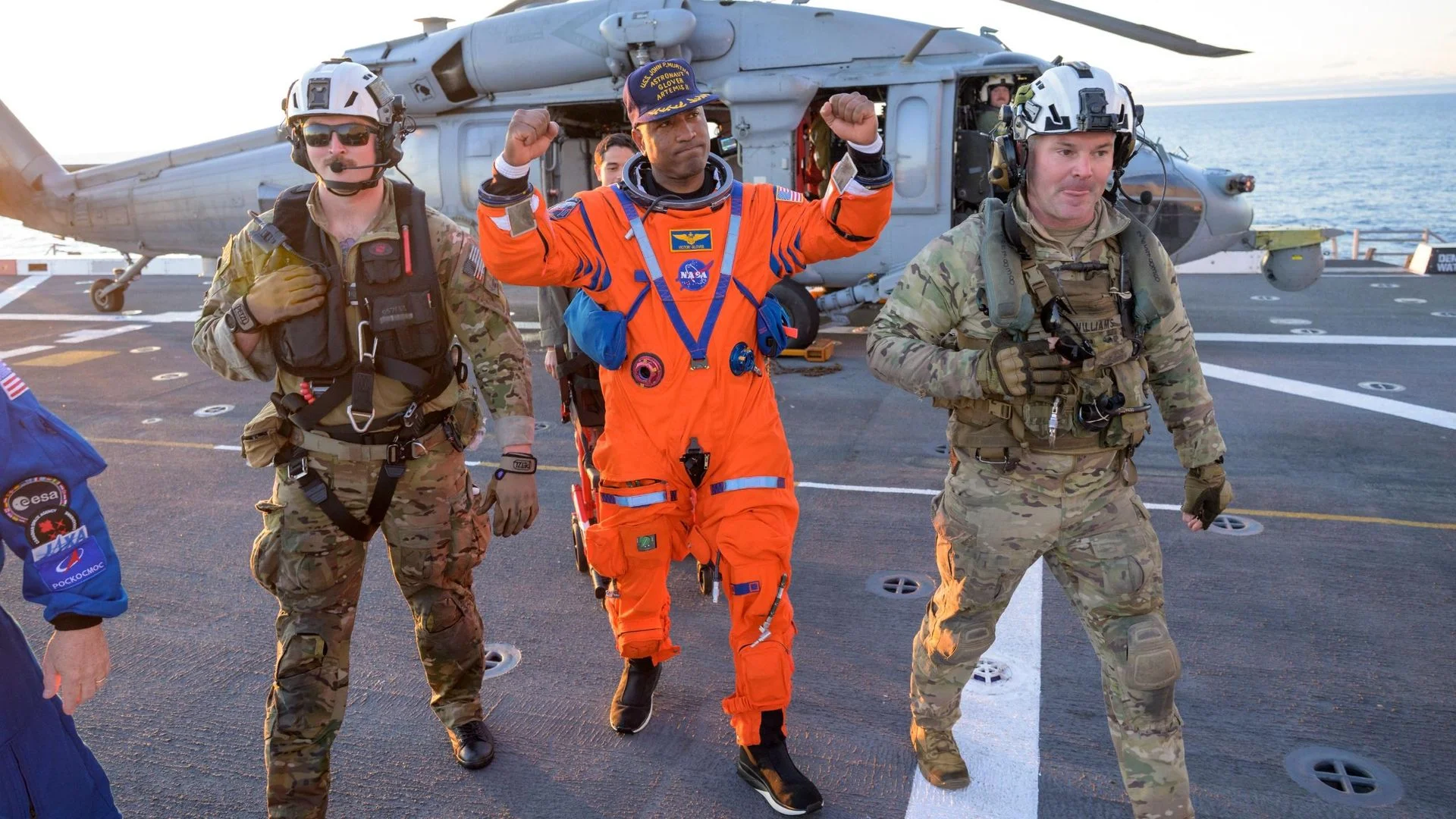
That answer puts the flight’s personal stakes in sharp focus: for Glover, mission success was measured not only by reaching the moon, but by making it back to the people waiting for him.
What the family conversation reveals
Glover’s account offers a grounded view of what human spaceflight asks of a crew. Public attention tends to follow the mission’s technical milestones, while the emotional work that precedes them is harder to see. Yet a willingness to discuss risk with family is part of how an astronaut lives with the mission’s consequences, even though it doesn’t change those consequences.
This is more significant than it looks. The crew’s return can be described as a mission outcome, but for families it also ends a period of uncertainty that began long before launch. If you’re working in this space, Glover’s story is a reminder that mission readiness has a human dimension: the people at home need honest communication, even when no conversation can make the risk disappear.
And this is the part most people overlook: coming home isn’t just the final stage of a flight. It’s the answer to the question Glover had to put to his daughters before he left. Relief, then. And the chance to be together again.