Figuring out which star in a pair is actually making a radio signal sounds like a small detail. For a class of objects called long-period transients, it's the central question. A team has now traced one such signal to a white dwarf sharing an orbit with a sun-like star, and that narrows the search for what these objects really are.
A spinning remnant with a sun-like partner
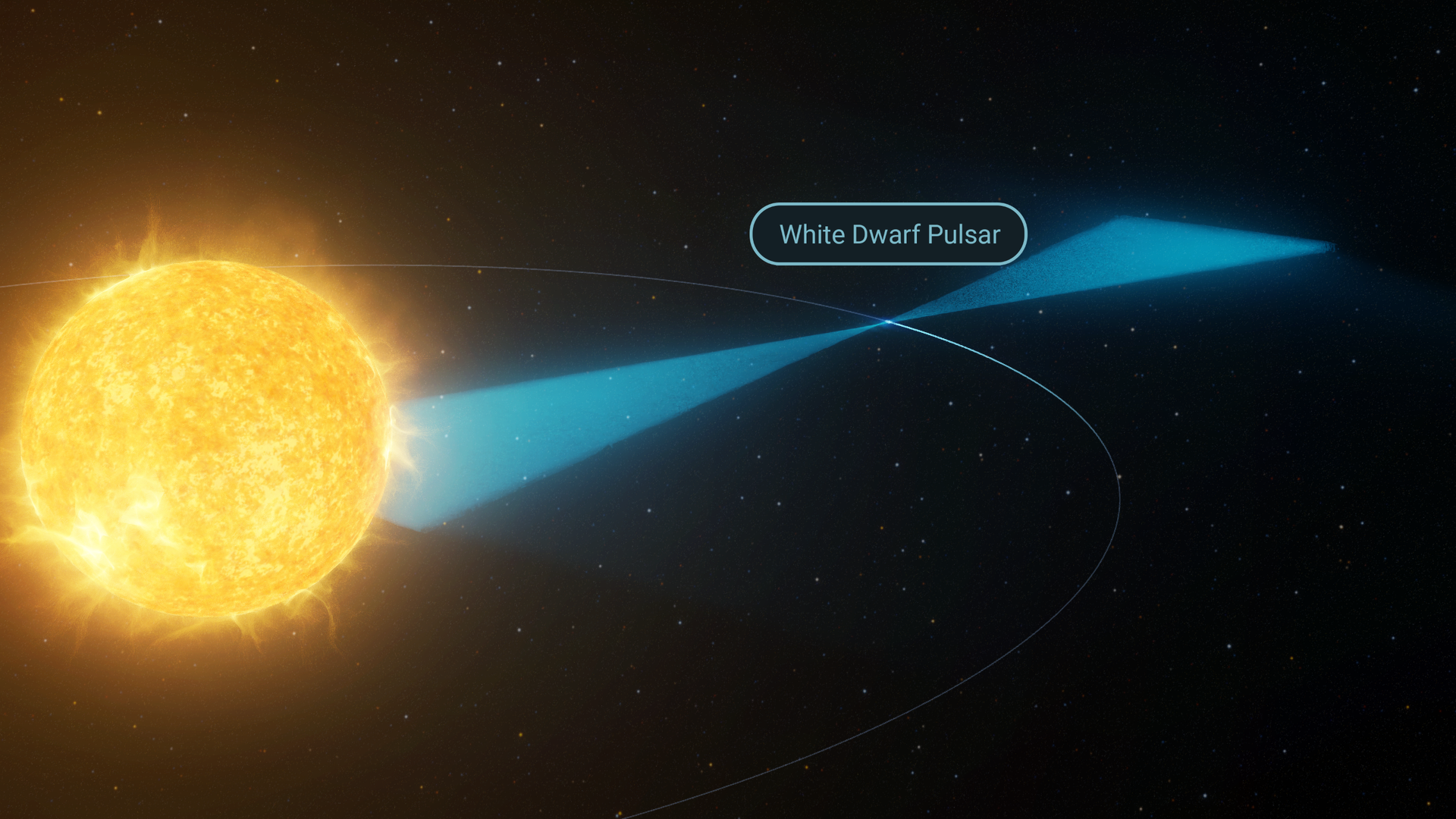
The system, designated GPM J071507−114153, sits about 5,000 light-years away. Its white dwarf, the dense core left behind after a star burns through its fuel, spins once every eight minutes and sends out radio pulses on that cycle. Pulses like these have come from binary systems before, but those usually pair the emitter with smaller, cooler red dwarf stars. This one's companion is a G-type star much like our sun, which makes it an unusual match.
GPM J071507−114153 belongs to the long-period transient (LPT) class, objects whose radio signals switch on and off over intervals of minutes or hours. Around a dozen LPTs have turned up since the team behind this work found the first in 2021. Several known LPTs also contain a white dwarf and a companion star, but nobody could say which one was doing the broadcasting. Here's the thing: the pulses in this system come from close to the white dwarf, and that gives researchers a firmer footing for understanding the whole class.
Watching a stellar orbit from 5,000 light-years
"This is the first time the pulses are clear enough to see the white dwarf moving in its orbit around its companion," said Sam McSweeney, team leader and commissioning scientist with the Square Kilometre Array Observatory (SKA). "So we know that the pulsations are coming from a region close to the white dwarf, or possibly even from the white dwarf itself."
The same pulses also revealed stellar flares erupting on the sun-like companion. Natasha Hurley-Walker of the International Centre for Radio Astronomy Research (ICRAR) at Curtin University in Australia pointed to a bonus. As the white dwarf moved behind a region of strong magnetic field, the team likely caught a stellar prominence, a large loop of plasma rising from the star's surface. "It's amazing that by using radio wavelengths we can detect the storms on a star over 5,000 light-years away."
Two telescopes, one detection chain
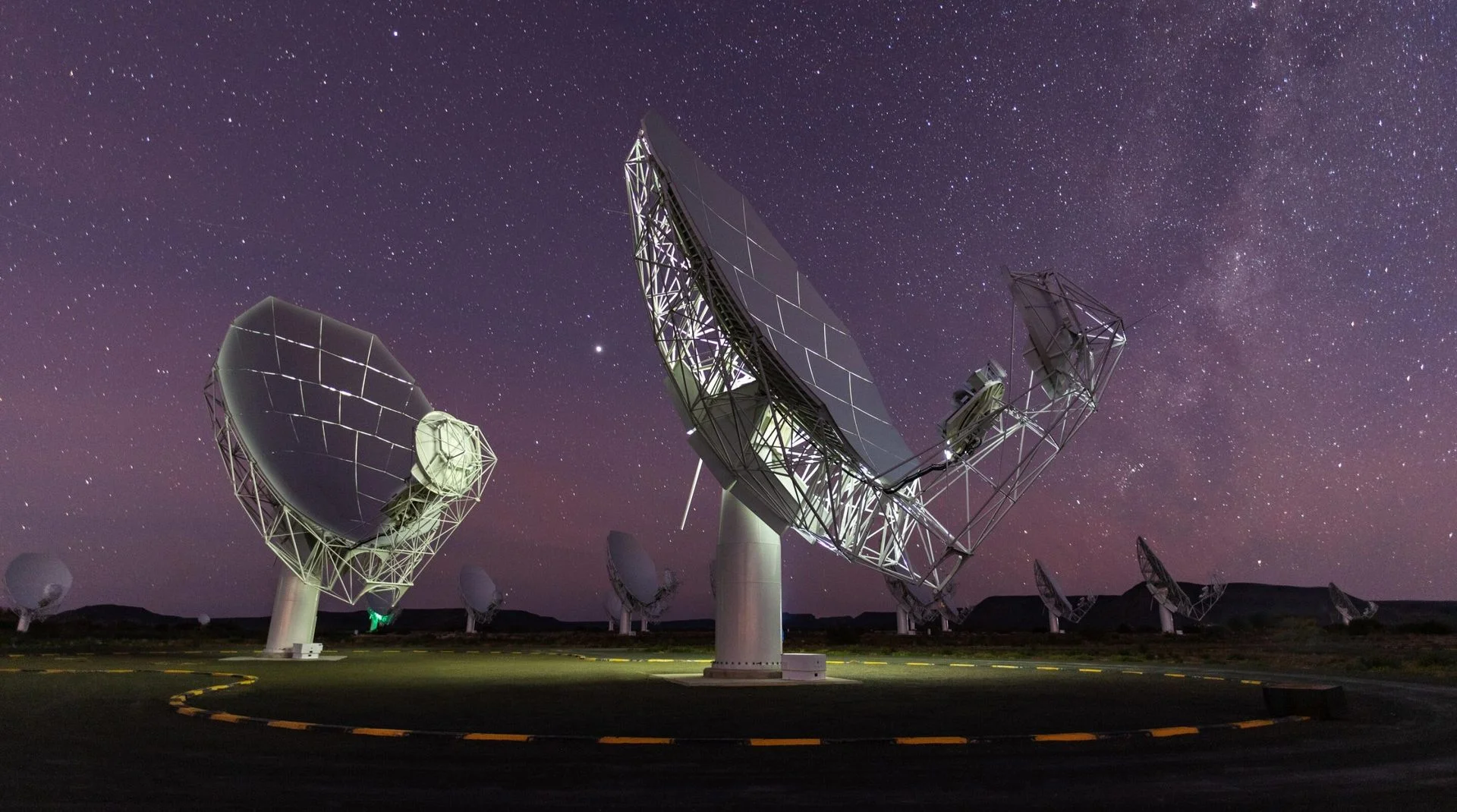
The ICRAR group has spent years chasing rare systems like this one. Hurley-Walker said the discovery began in a large survey with the Murchison Widefield Array (MWA), which scanned the entire Milky Way visible from Australia. "We then used the MeerKAT radio telescope in South Africa to determine its precise position."
Confirmation came from optical observations with the W.M. Keck Observatory on Maunakea in Hawaii. Those visible-light measurements showed that the star is G-type, just like the sun.
Both MeerKAT and the MWA act as precursors to the Square Kilometre Array, billed as the world's largest and most sensitive radio telescope project. Finding this system with smaller instruments suggests the full SKA will find far more of them, with much sharper views of their signals. As McSweeney put it: "If we are already making such discoveries with precursor telescopes, just imagine how many more star systems we will be able to find, and what a beautifully detailed view of their signals we will have, once the SKA telescopes are completely built."
The team published its findings Thursday (Nov. 12) in Nature Astronomy. The next batch of LPT candidates will show whether white dwarfs are the usual culprit or just one of several.