Sci-fi usually lets first contact skip the hard part. Star Trek treats universal translators as standard equipment, and C-3PO has spent the last 49 years in Star Wars boasting that he's fluent in over six million forms of communication. Arrival bets the opposite way: talking to aliens is the hard part, and getting it wrong could be fatal.
The film came out 10 years ago this November, and it's still one of the more emotionally sophisticated pieces of sci-fi in the genre. Making first contact proves far trickier than keeping a Duolingo streak alive. The whole story runs on the effort to open a dialogue with extraterrestrial visitors, and the future of the planet depends on how a single noun is interpreted.
From a short story to a studio project
The film started with a screenwriter better known for horror. Eric Heisserer built his reputation on Final Destination, A Nightmare on Elm Street and The Thing. Then he read a short story by Ted Chiang, "Understand," in an online magazine, and it hit hard enough that he went out and bought a collection of Chiang's work. One story stood out: "Story of Your Life," which won a Nebula Award.
"It had a very profound emotional effect on me," Heisserer told Deadline. "I was in tears, and I was both heartbroken and uplifted. My head was just full of big ideas. I had to walk around the block a couple of times afterward and just hug my friends. The next day, I was like, 'Oh god, I want to give this to other people.'"
He got his chance when 21 Laps, the production company that later made Stranger Things, asked him to pitch future projects. He brought up "Story of Your Life," and the producers were just as taken with it.
Getting it made was another matter. Dan Levine of 21 Laps explained the problem on the Hollywood Gold podcast. "I was so excited, but I had that dread that a lot of producers get, which is, 'Are the rights available?'" he said. "You read something that blows you away, and then you find there aren't the rights, and there's no chance, you have to move on. So we were trying to track down this Ted Chiang, and he had no agent. He had a day job. He was impossible to find, so we started the hunt for Ted Chiang."
Denis Villeneuve, then an up-and-coming Canadian director, had also landed on 21 Laps' radar. His 2010 French-language drama Incendies had earned rave reviews and an Academy Award nomination. He told the producers he'd always wanted to make a science fiction film, which in hindsight reads like a tell. They handed him "Story of Your Life," and he was drawn in immediately.
The rights came together once Chiang saw what Villeneuve had done with Incendies, and he agreed to a deal. Amy Adams signed on to play linguist Dr Louise Banks. The project was ready, with one catch: Villeneuve first had to finish three Hollywood films, Prisoners (2013), Enemy (2013) and Sicario (2015).
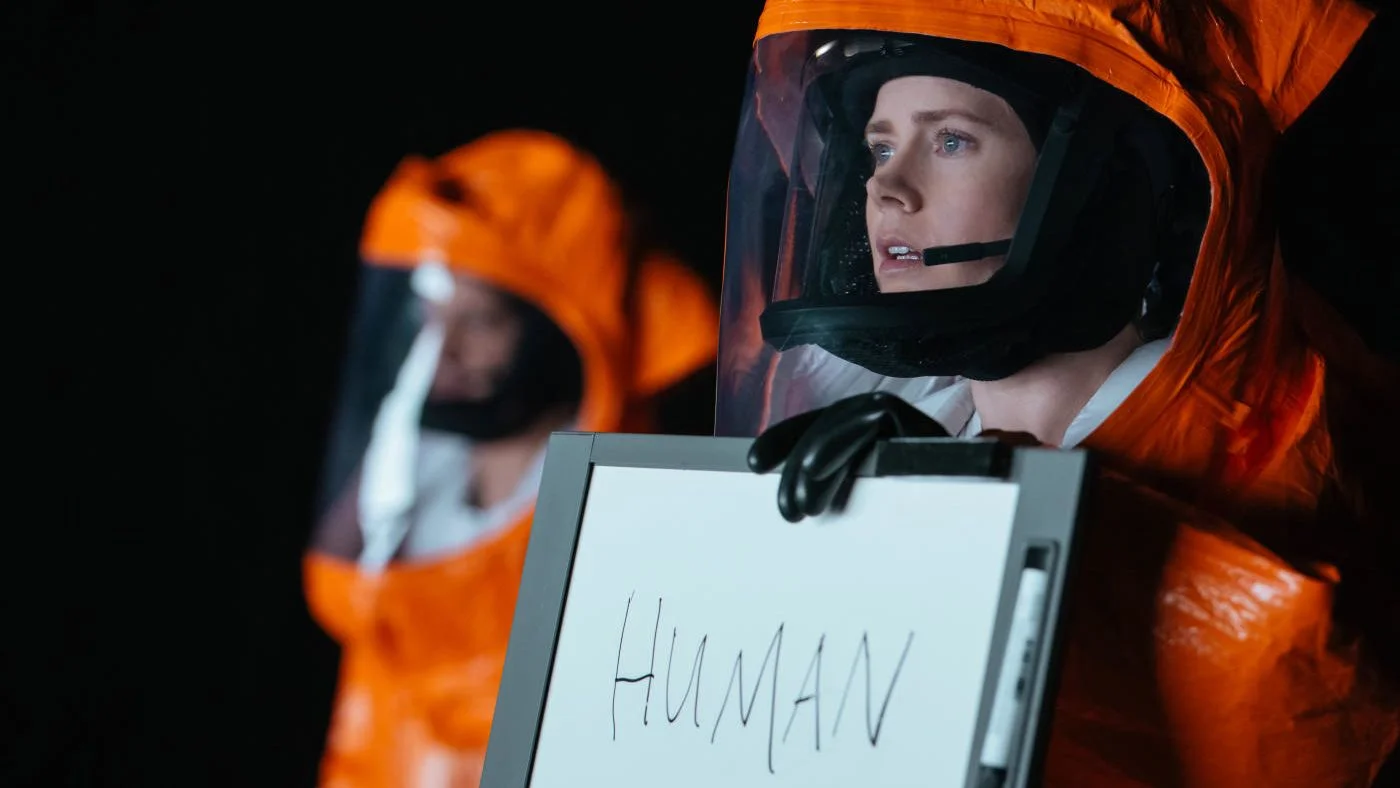
Alien ships, human anxieties
On paper, the setup sounds like a summer blockbuster. Twelve alien spacecraft arrive at once, scattered across the globe. The question is whether these quiet, chocolate-button-shaped ships are friendly visitors in the vein of The Day the Earth Stood Still or Close Encounters, or the opening move of an invasion. Governments want the answer badly, and the film doesn't rush to give it.
Even the comparison to Independence Day is more of a shrug than a fit. The movie isn't really about the ships. Producer Aaron Ryder put it this way to SFX magazine: "Denis didn't really see this as an alien invasion movie — more an alien arrival movie. What would be the protocols that were in place? How would they be implemented? How would people react? What would the government be doing? What would the news organisations be saying? That was the tone and the texture, which is established right up front."
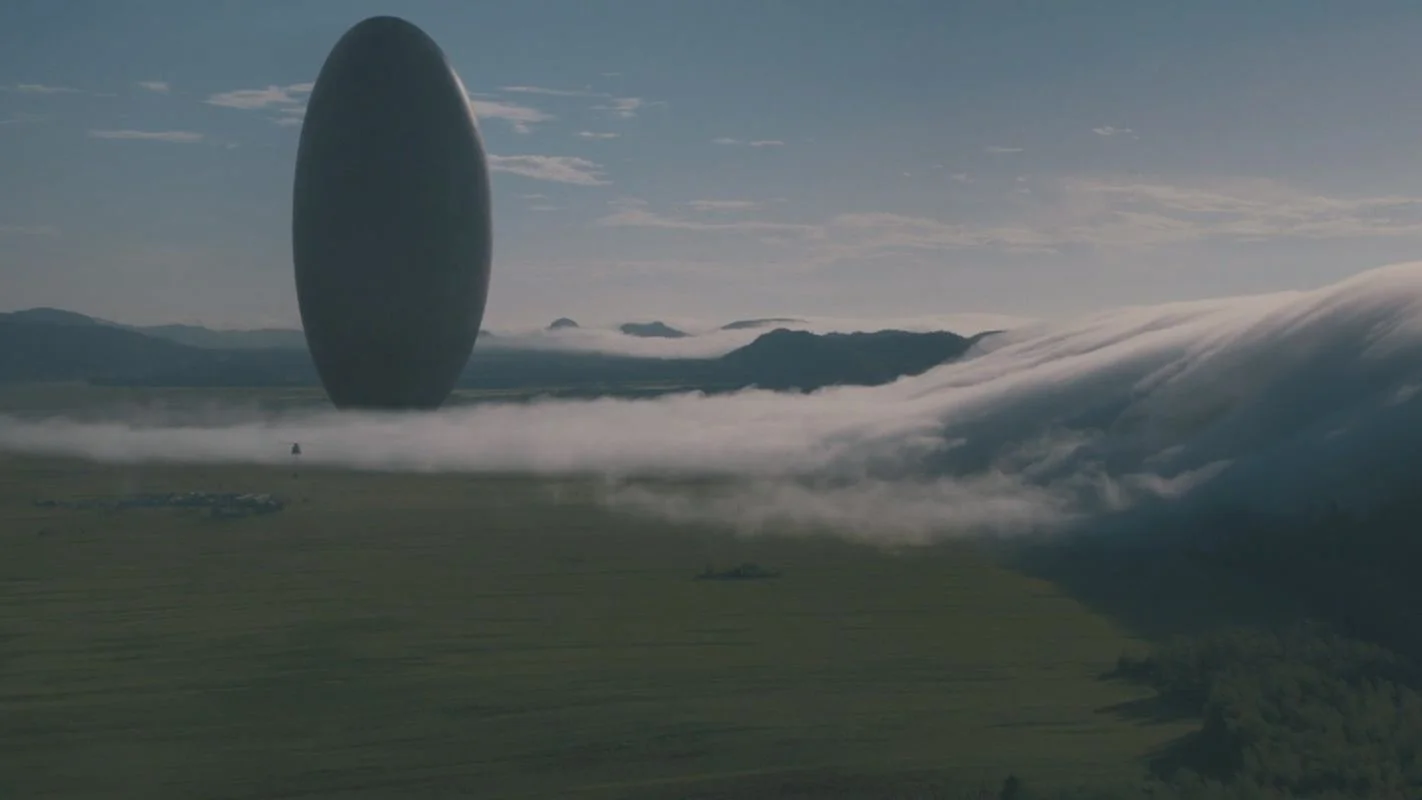
None of the blockbuster machinery came from Chiang's story. Heisserer's script isn't a straight adaptation, but he kept the core: Banks trying to build a channel of communication with seven-legged aliens called heptapods, and the way their language changes how she experiences time.
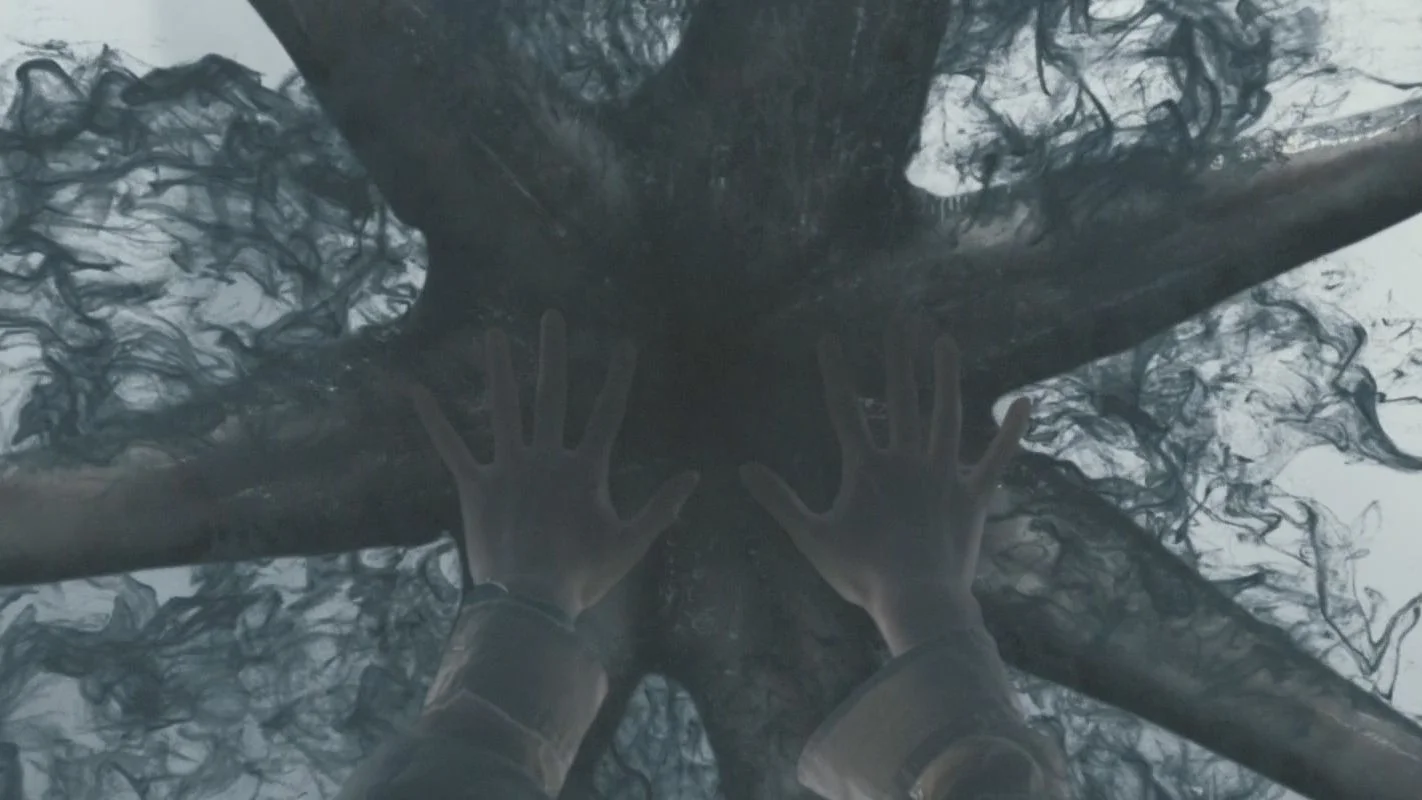
The heptapods are a deliberate break from the Star Trek model of actors with ridges glued to their foreheads. Designed by Carlos Huante, they look like giant elongated hands. They're enclosed in gaseous chambers and produce sounds the human ear can't pick up, which puts them in the same family as the 456 from Torchwood: Children of Earth. It's a strange, unsettling look, and it works.
Weapon, tool, or something stranger
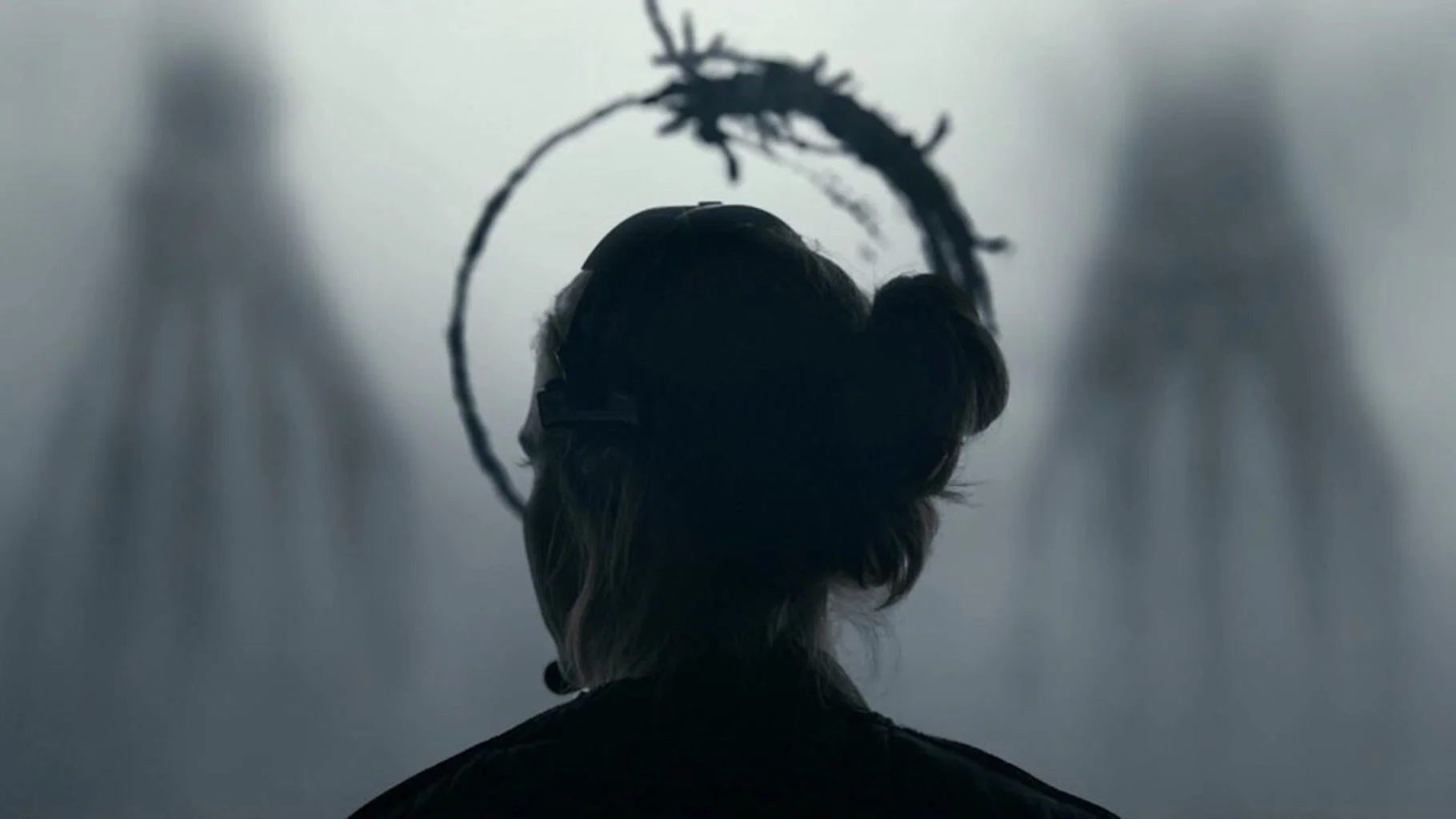
This is where the film gets interesting. Working with physicist Dr Ian Donnelly (Jeremy Renner), Banks slowly builds a basic vocabulary with two heptapods the team nicknames Abbott and Costello. What they learn is that the aliens communicate through circular "logograms," which the creatures expel into their atmosphere like ink from a squid.
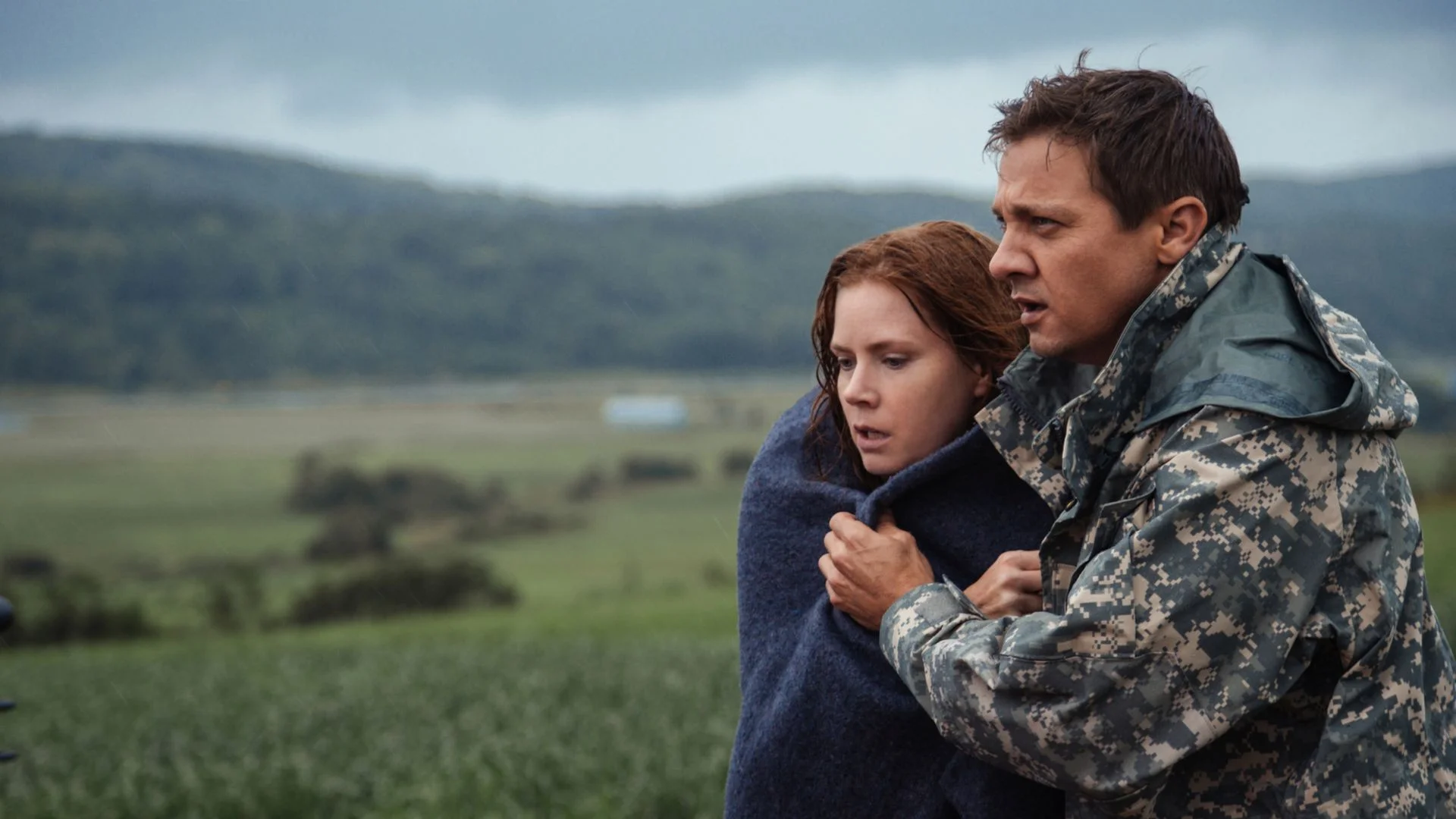
Villeneuve was explicit about wanting something alien, not a dressed-up human tongue. "The idea in the short story is of circular language that has no beginning and no end," he told IndieWire. "We were looking for no relation to any human language. I had to figure out how to produce logograms from my aliens while avoiding being long and boring. The sounds were an expression of their emotions, with more intellect coming from the signs. This beautiful species uses written language as their first means of expression instead of movement or gesture. They produce words out of their bodies."
The research has a clock on it. The world's militaries are on high alert, and they're struggling to communicate with each other. Banks and Donnelly need to ask the one question that matters: why are you here?
The answer, "offer weapon," is maddeningly vague. Are the heptapods preparing an attack? Or is "weapon" just a loose translation of "tool," as Banks suggests? The film keeps you uneasy long enough for the ambiguity to do its work.
The twist and the second viewing
Spoilers follow.
Apart from a bomb planted on the heptapod ship by a rogue US soldier, Arrival avoids the big-budget set pieces that dominate most alien visitation movies. Its real weapon is the reveal at the end, which is the core of Chiang's story and holds its own against The Sixth Sense, Fight Club and The Prestige for sheer nerve.
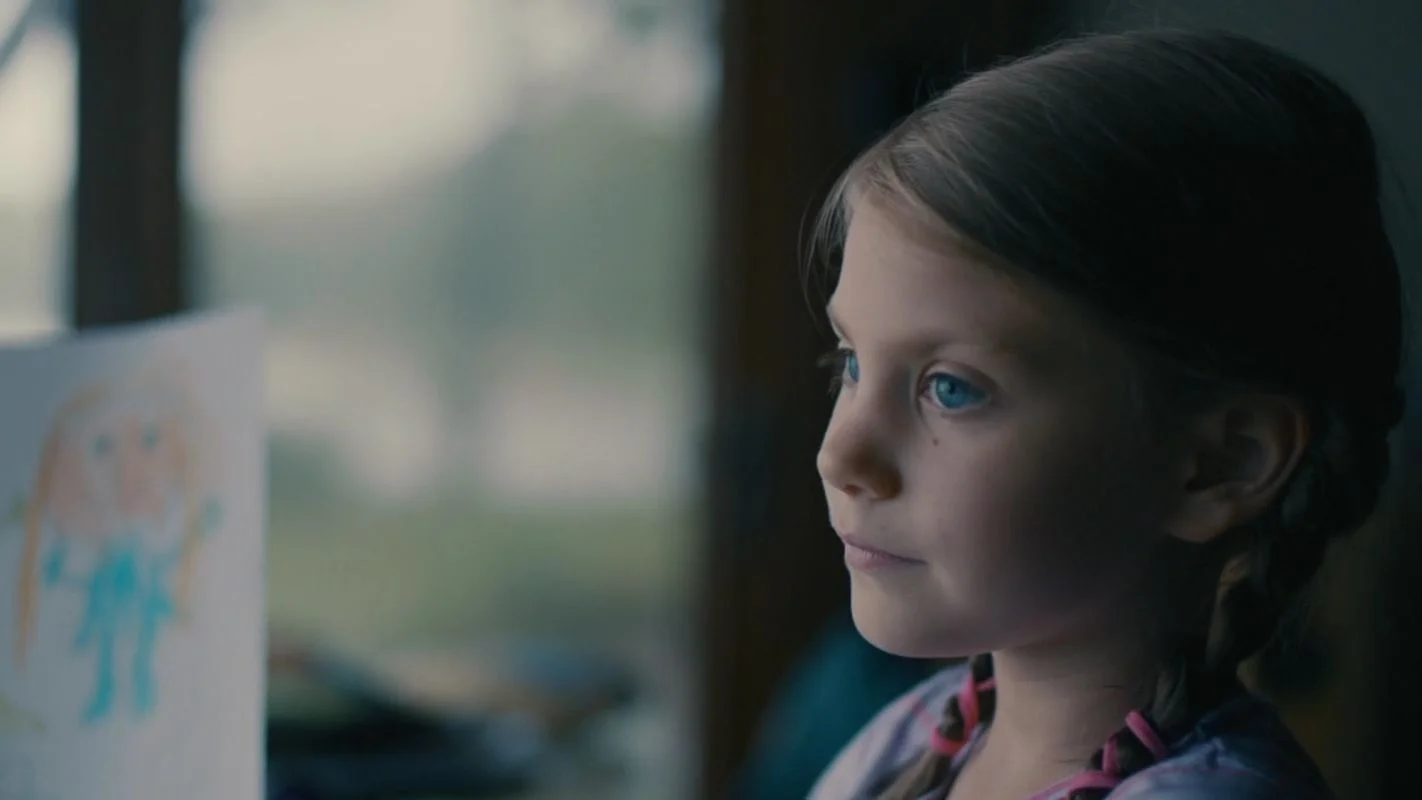
The "weapon" is the heptapod language itself. Because the aliens perceive time non-linearly, anyone who learns to speak their language gets a view of past, present and future at once. The scenes we took for flashbacks of Louise's daughter Hannah's life and death are actually flashforwards. Her growing fluency gives her memories of a life she hasn't lived yet.
That kind of trick is hard to pull off without losing people, and Villeneuve knew it. He ran multiple test screenings. "I wanted to screen it with people who knew nothing about the project," he said. "What we discovered is when someone in the audience felt too lost — if intellectually they were not engaged — the ending was less powerful from an emotional point of view. So we tried to give as few clues as possible, but enough clues to be able to stay engaged and follow the story."
The clues are easy to miss the first time. A wedding ring is absent in the film's "present." A conversation about the Sapir-Whorf hypothesis, the idea that a language's structure can shape how its speakers think, carries more weight once you know the ending. And the missing father of young Hannah takes on new meaning when you realise it's Ian, who leaves after Louise tells him about their daughter's fate.
Adams had to walk a tightrope to make that work. "We were walking on this tightrope of trying to play things so it could play both ways, because of the reveal at the end," she recalled in a Vanity Fair conversation with Villeneuve. "I had to do so much work to understand how I play a character so that the first time you watch it you think that it's one thing, and the second time you watch it you can see it from a totally different perspective."
Where it landed
Adams didn't get the Oscar nomination her performance deserved, which remains the film's most obvious omission. Everything else went the film's way. It earned more than $200 million worldwide on a reported $47 million budget, and it won the Academy Award for sound editing. It also picked up nominations for best picture, director and adapted screenplay.
Villeneuve has since become the go-to director for intelligent, large-scale sci-fi, with Blade Runner 2049 and the Dune saga. Next, he'll take on James Bond. Looking back, it's hard to imagine anyone predicting that trajectory from a French-language drama and a short story. Then again, when heptapods and a few sharp people at 21 Laps are involved, maybe nobody gets to be that sure.
Arrival is streaming on Paramount+ in the US and Netflix in the UK, and it's available on Blu-ray via Amazon.