The shuttle that flew 25 missions to Earth orbit is no longer lying on its side in a hangar. Endeavour now stands upright in launch position inside the California Science Center's new Samuel Oschin Air & Space Center, and the public got its first real look on Thursday, Nov. 13.
The wing took more than three decades to develop, and it shows. Endeavour towers nearly 200 feet (61 meters), and the building is organized around it. Visitors walk through a video presentation, then reach a reveal that makes the orbiter feel far bigger than any photo suggests. I was in a group of reporters who previewed the space on Oct. 28, and the reaction in that room was about what you'd expect from a crowd of people who've covered spaceflight for years.
A shuttle that was built to be seen from below
Former NASA astronaut Garrett Reisman flew two space shuttle missions, and the first was aboard Endeavour. He described the reveal bluntly. "It just takes your breath away when you see that reveal and the doors open and you get to look at it for the first time. It's just — it's overwhelming."
Reisman sees the wing as a distribution channel as much as a museum. People travel to Los Angeles from around the world, and now they have a reason to bring their kids. "The exposure it's going to have is just a force multiplier," he said. "There are so many people that can have that opportunity to bring their kids here and show them [the shuttle] and have that experience."
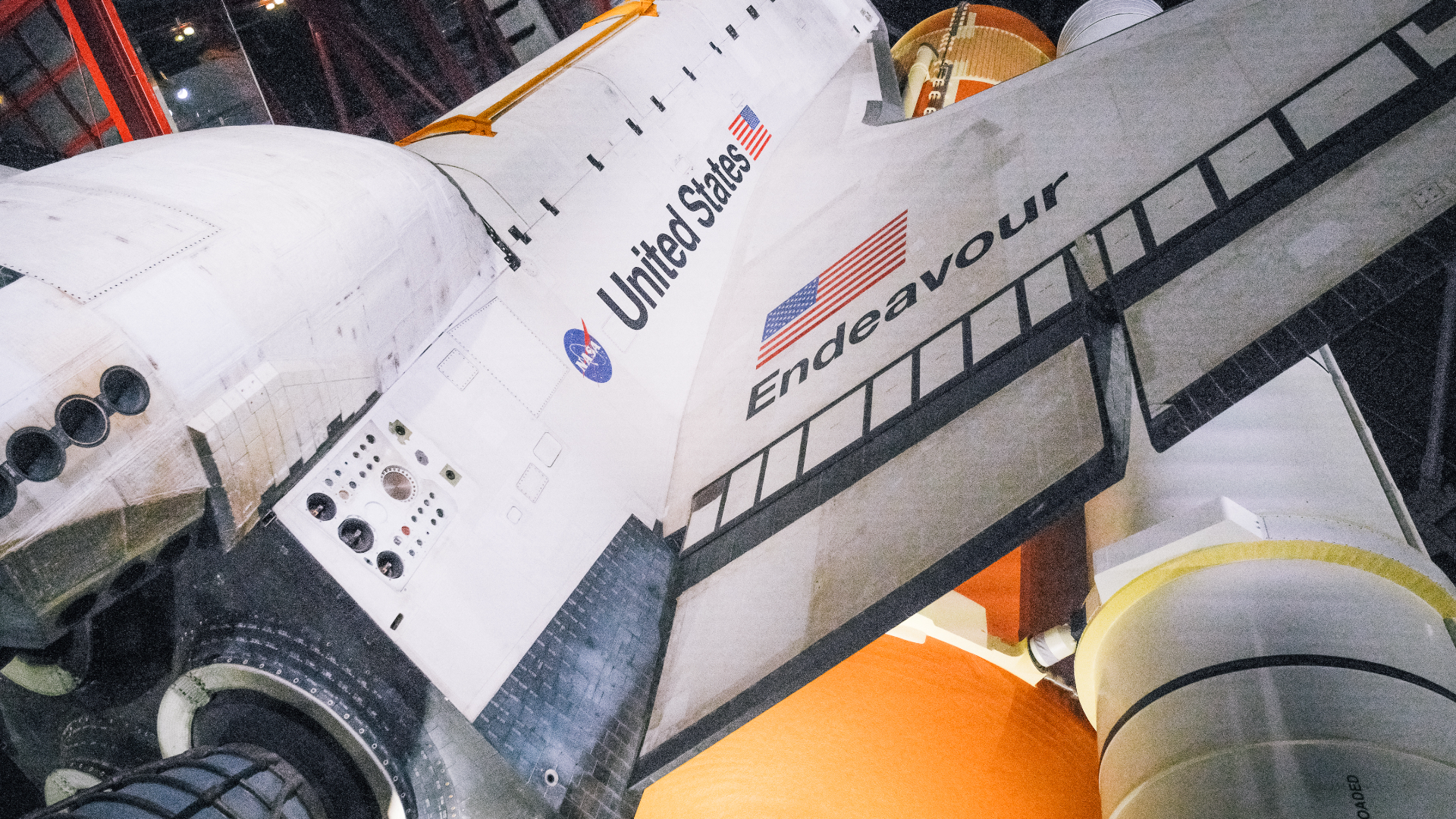
More than a shuttle on display
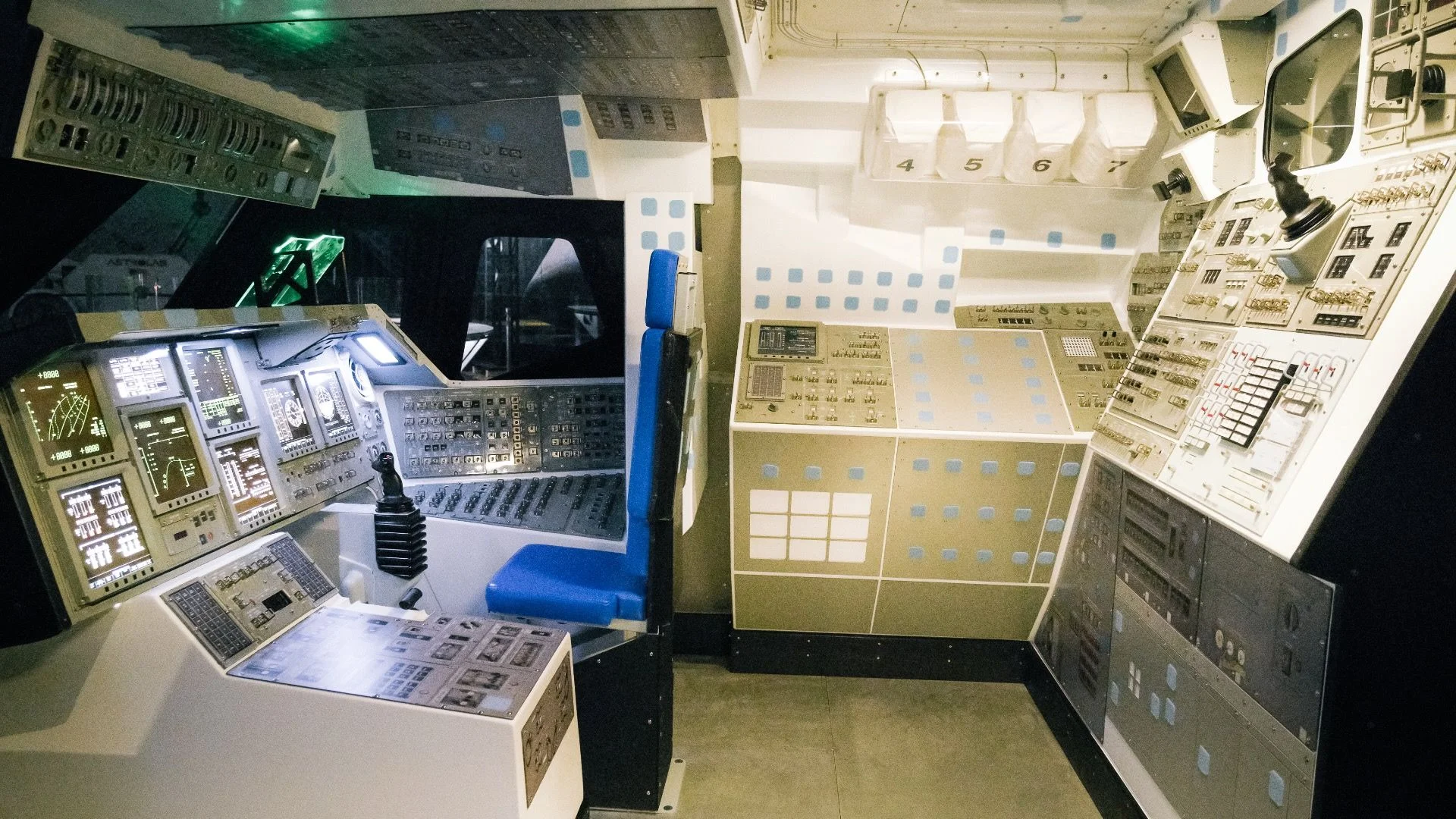
The exhibit goes well beyond the orbiter. Around the base, interactive stations let visitors test themselves against the spacecraft's scale. A shuttle landing simulator sits alongside a replica flight deck you can climb into and sit in, and shuttle tires and hardware from decades of spaceflight fill out the floor. You can slide down to the base of the stand or take the elevator or stairs, which is a small choice that says a lot about how the designers thought about pacing.
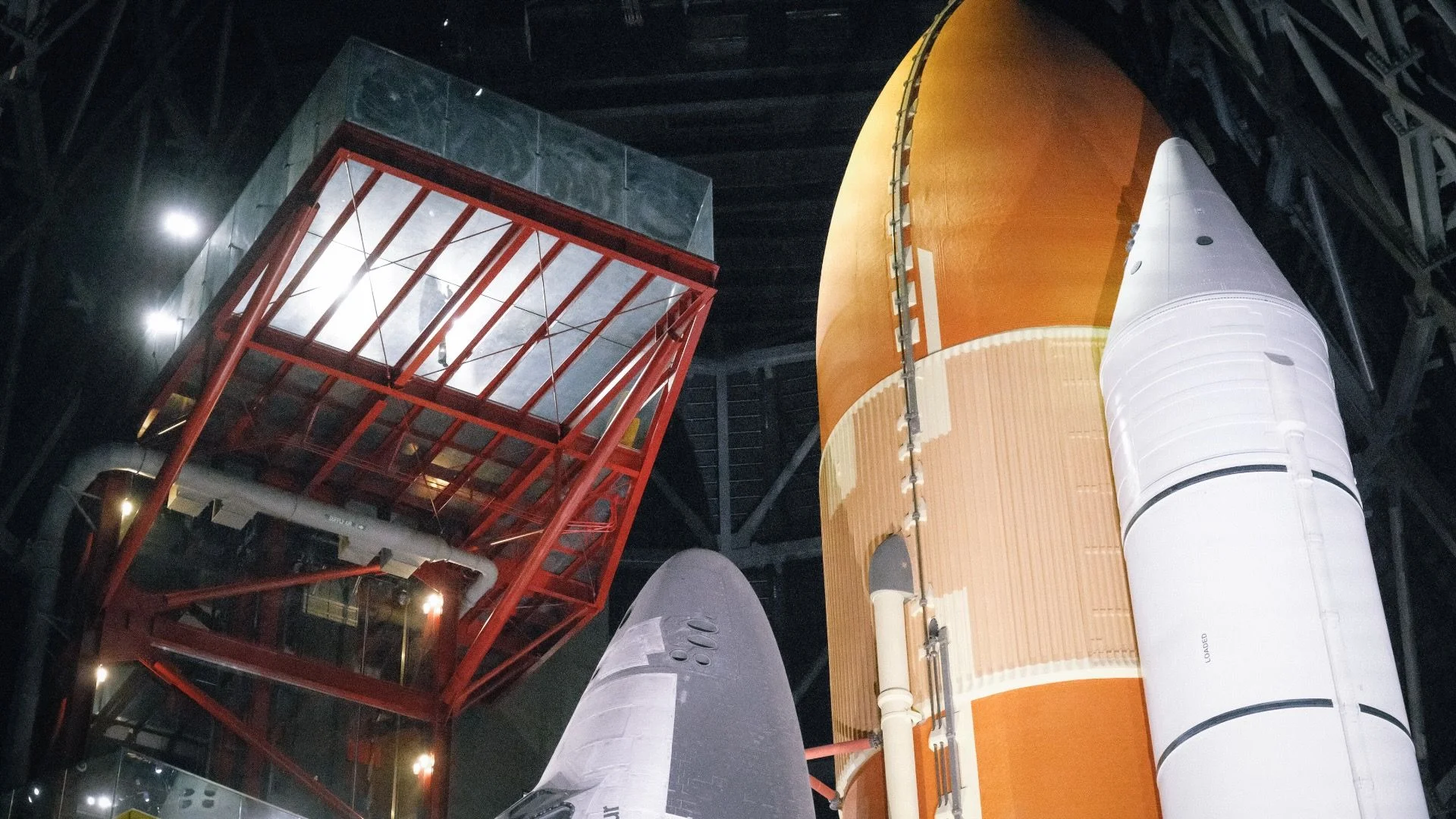
Endeavour itself is open. You can peer into the cargo bay, where the robotic arm sits folded among handles, straps and electronics, and you can view the orbiter from underneath all the way up to its nose. The engines are the most striking angle. You can lie on the floor beneath them, then ride the replica launch tower up to face the nose at eye level. A transparent floor at the top lets you stand directly above the shuttle, which is either thrilling or unnerving depending on your tolerance for heights.
The spacewalk handrails
The exhibit works on astronauts too, and Reisman's visit made that clear. Looking at the orbiter brought back specific memories, and he pointed to parts of the shuttle that mattered during his missions.
"I'm looking at handrails that I held onto during a spacewalk," he said. "They're the same handrails. My hand was in the glove, but it was wrapped around those handrails. And I practiced for a long time exactly how I was going to do that, how I was going to root my tether, and all that kind of stuff. And I get to stand [here] now. When you go up the elevator there, you can actually have a direct view of those handrails, and every time I see that, I'm thinking about that spacewalk."
You don't need a spacewalk on your résumé to get that view, though. Anyone climbing the tower gets the same angle on those handrails.
Access and the reservation catch
The museum and the new air and space center are free to enter, and the Endeavour exhibit is included. The catch is timing. Given the crowds expected during the opening, visitors must book a time slot online, and reserving those slots carries a cost during these first few busy days. Plan ahead if you want to see the shuttle without a long wait, and budget more time than you think you'll need. This is a place where the shuttle is only the starting point.