NASA’s Artemis IV plan now sketches a more detailed route for SpaceX’s Starship lunar lander, but the mission’s central logistics question remains open: how many launches will it take to fuel the vehicle, and how will those transfers fit together? The new diagram makes the sequence easier to follow, from a propellant depot in Earth orbit to the lander’s trip toward the moon. It doesn’t resolve the harder question of how many tanker flights that sequence will require.
The estimates have shifted sharply. A 2021 Government Accountability Office audit said Starship could require as many as 16 launches. Earlier this month, a member of NASA’s Aerospace Safety Advisory Panel put the figure as high as 22. SpaceX CEO Elon Musk disputed that estimate on X, saying the number would be closer to six or eight. Those figures point to a wide gap in expectations, and the new NASA graphic doesn’t narrow it: it labels the tanker campaigns “multiple” without specifying a count.
Two orbital refueling stops
NASA’s latest Artemis IV graphic shows why a single launch count doesn’t capture the challenge. The sequence includes a propellant depot in low Earth orbit (LEO), tanker flights to fill it, and a second transfer in an orbit NASA calls the “final tanking orbit,” or FTO. Each step depends on vehicles reaching the right orbit and being ready to transfer propellant. That adds timing and coordination questions on top of the raw number of launches.
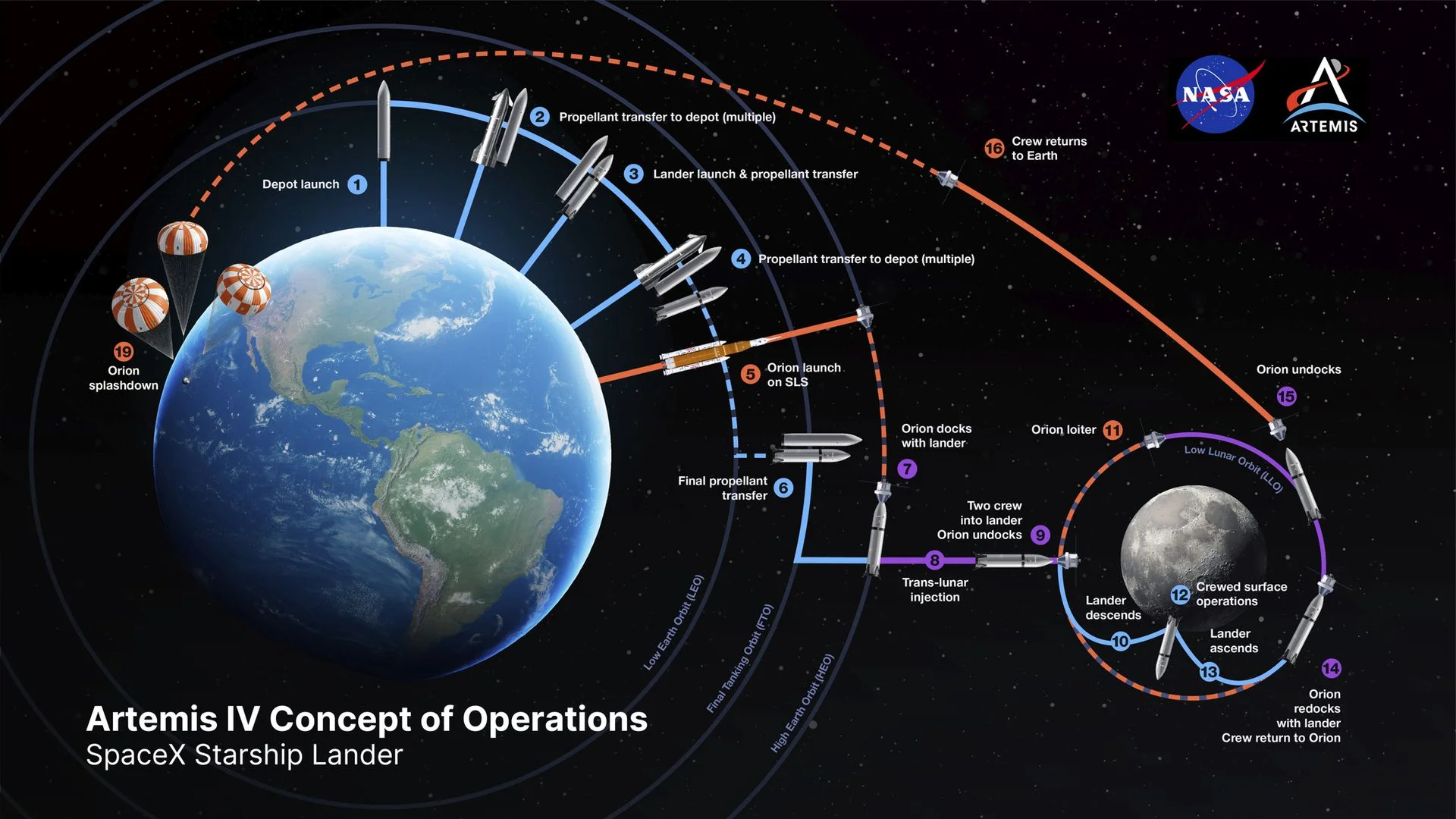
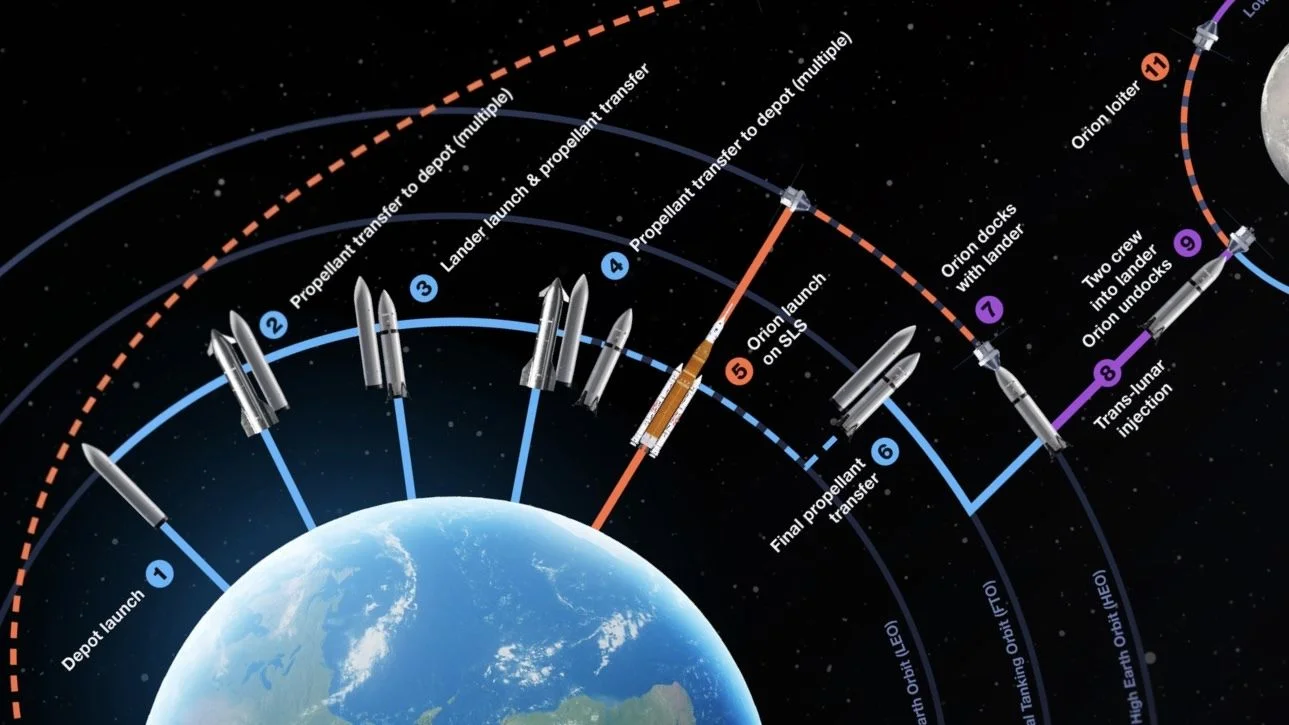
SpaceX would first launch the depot to LEO and send multiple tanker Starships to stock it. The lander would then join the depot for an initial refueling before departing for FTO. Later, another group of tanker flights would replenish the depot, which would travel to meet the lander for a final propellant transfer. In practical terms, the plan calls for two rounds of tanker activity, separated by other orbital operations. The diagram labels both tanker campaigns “multiple” and doesn’t give a flight count.
That omission matters because the number of launches is tied to more than the amount of fuel the lander needs. The sequence also requires the depot, tankers, and lander to arrive in usable order, with the transfer operations completed before the next leg of the mission. Similar systems typically depend on a chain of successful operations; a delay or change in one part can affect the schedule for the rest. NASA’s graphic lays out that chain, but it doesn’t show how much margin the plan has if a launch or transfer slips.
After separating from the depot, Starship would head to high Earth orbit to meet Orion. NASA’s graphic places Orion’s launch before Starship completes its final fueling, a sequence that appears designed to give the agency more flexibility in scheduling the crewed launch. That ordering could let preparations for Orion proceed while the lander’s fueling campaign continues. It also means the two spacecraft’s readiness schedules would need to converge before they can begin the lunar journey.
From Earth orbit to the lunar surface
Once Starship and Orion meet in high Earth orbit, the spacecraft would dock and use Starship’s engines to head toward the moon. They would separate in low lunar orbit. Two astronauts would stay aboard Orion while the other two descend to the surface in Starship, then return to orbit and rejoin their crewmates for the journey home. The division of labor makes the lander’s performance central to the mission: Orion carries the crew between major stages, while Starship handles the descent and return from the lunar surface.
NASA says the revised architecture could reduce the propellant Starship needs. One change is that the spacecraft would take Orion directly to low lunar orbit, rather than the much higher orbit considered in earlier plans. That change helps explain why NASA is revisiting the mission architecture, but it doesn’t answer how much propellant the complete sequence will require. The refueling plan still has to support the departure from Earth orbit, the trip to the moon, and the lander’s surface operations.
The open questions behind the diagram
Here’s the thing: the diagram describes a concept, not a settled operating plan. SpaceX still needs to demonstrate that orbital refueling works and complete an uncrewed lunar landing mission by the end of next year. Those are distinct milestones: refueling has to work as part of the transportation system, and the lander also has to show it can reach the lunar surface. If it can’t meet NASA’s requirements, Blue Origin’s Blue Moon lander remains a possible choice for Artemis IV, provided it meets its own milestones in time.
This is more significant than it looks. Orbital refueling is the link that allows a large lander to be filled across multiple launches, so the launch count and transfer sequence shape the mission’s schedule as well as its hardware plan. A lower estimate could make the campaign look simpler, but it would still depend on the operations working as intended. If you’re following Artemis IV, the useful signal will be whether NASA and SpaceX can turn the diagram’s “multiple” tanker flights into a demonstrated, repeatable sequence. And that’s the part most people overlook.
The broad mission sequence is taking shape, but the tanker count and the details of the orbital transfers still need answers. NASA’s outline clarifies where the depot and the two fueling stages fit, while leaving the workload and timing of those stages unspecified. One sentence sums up the gap: a route is not yet an operating plan. Those decisions will determine how much launch coordination Artemis IV demands as its planned crewed landing draws closer.