Artemis II’s upper-stage engine burns produced a stronger ionospheric disturbance than researchers had previously measured after a rocket launch, even though the Space Launch System’s core stage generated the greater thrust. The findings suggest lunar missions may create brief but substantial GPS errors as more spacecraft travel beyond Earth orbit.
A team led by researchers at National Cheng Kung University in Taiwan traced the effects using high-precision GPS receiver networks on the ground. These stations, used by U.S. scientific institutions to track tiny shifts in Earth’s tectonic plates, also reveal changes in the atmosphere: variations in signal travel time can show where free-electron concentrations have changed.
During the Artemis II launch, the receivers recorded disturbances equivalent to positioning errors of several meters. Charles Lin, an earth science professor at the university and a co-author of the study, said an error of a couple of meters could prompt an autonomous vehicle to change lanes. Drones that rely on precise positioning could also be affected.
Two disturbances stretched across the continent
The researchers identified two broad ionospheric disturbances after the April 1, 2026 launch from Kennedy Space Center in Florida. One followed the SLS core stage; the other came from two burns by the rocket’s upper stage. Both extended roughly 3,100 miles (5,000 kilometers) from east to west across the United States.
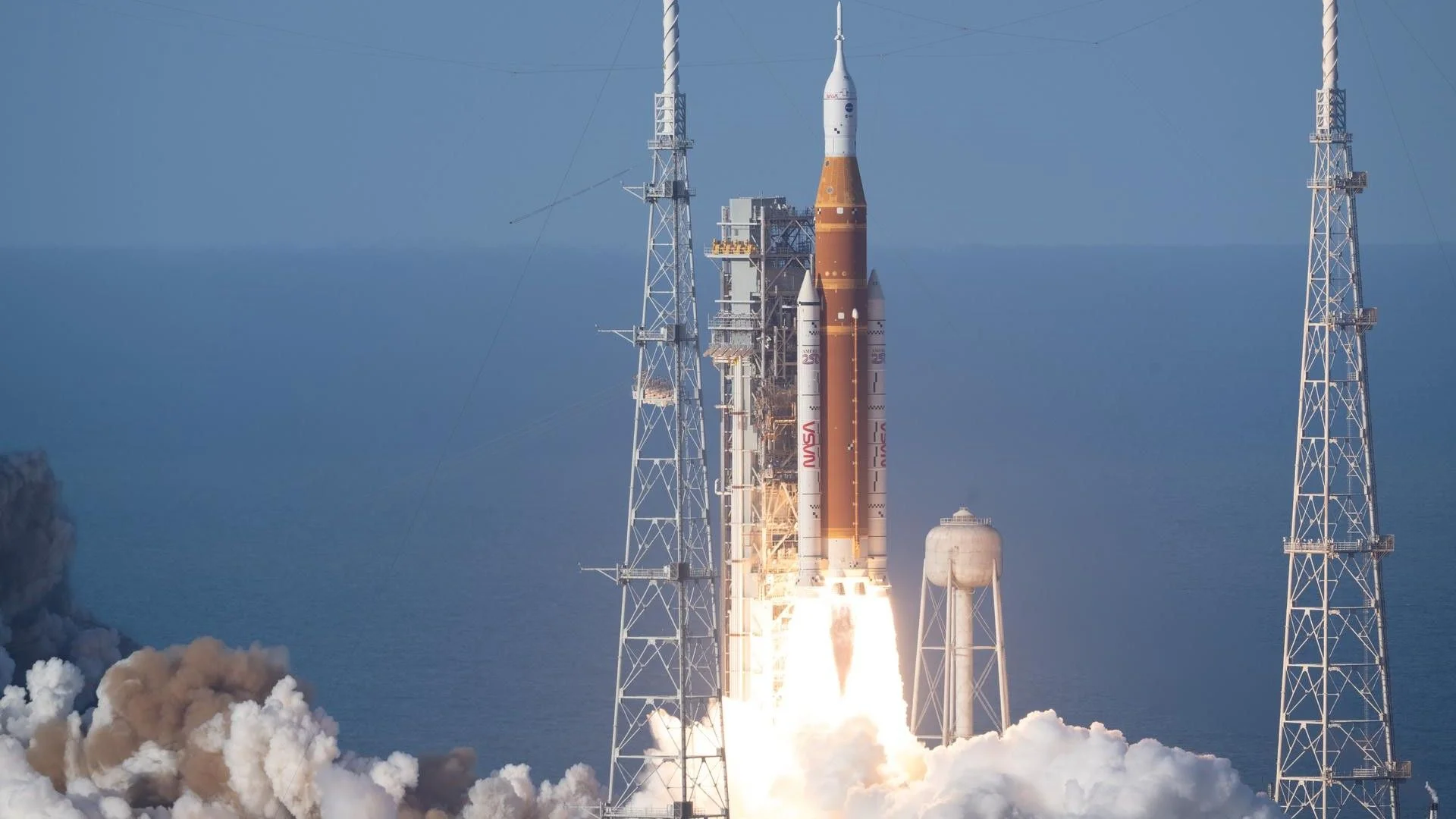
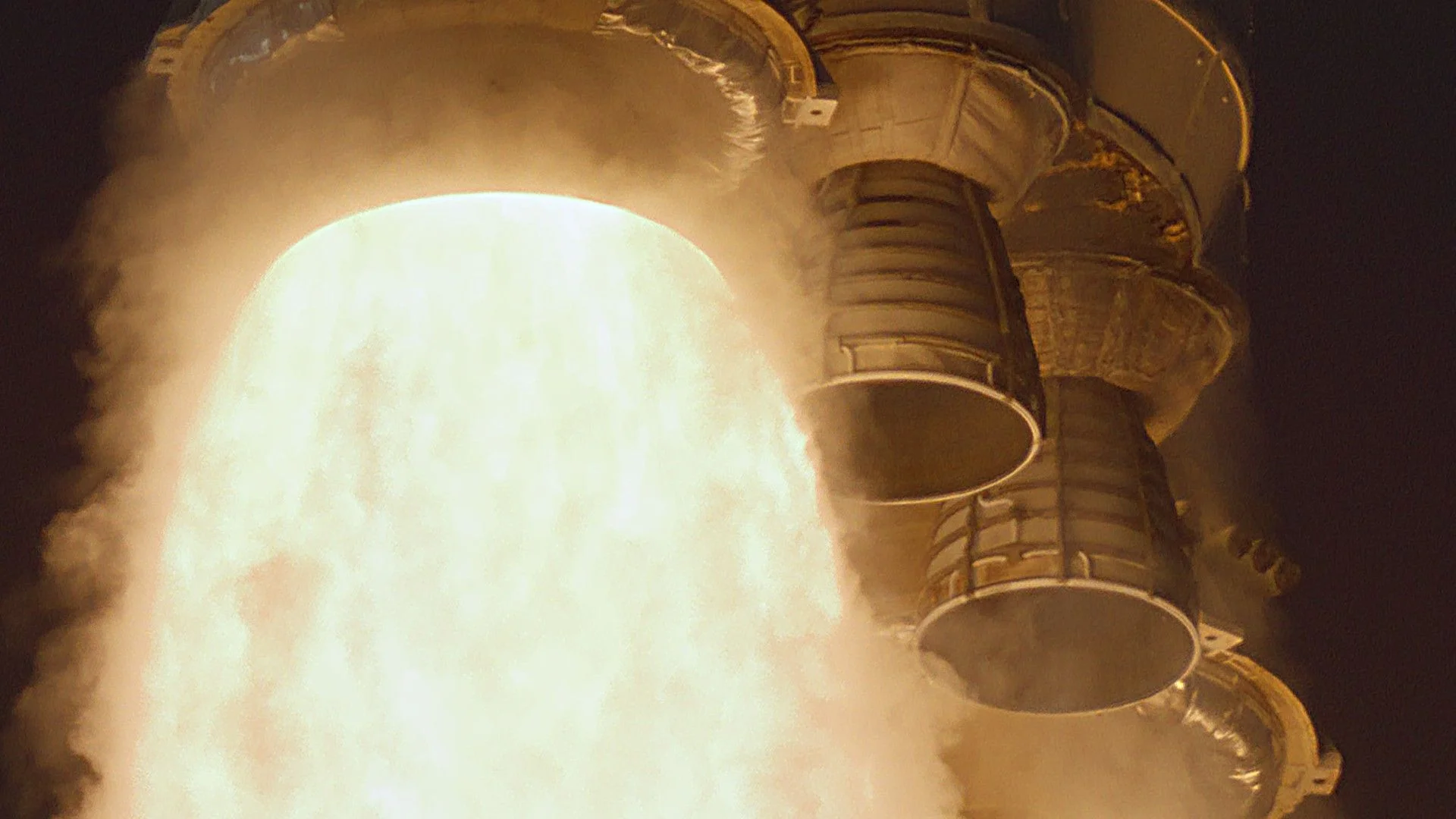
The later disturbance proved more pronounced. More than an hour after liftoff, two upper-stage burns at about 115 miles (185 kilometers) altitude helped the Orion capsule escape Earth’s gravity and begin its journey to the moon. The SLS core stage is 212 feet (65 meters) long, but its passage caused a smaller effect than those maneuvers inside the ionosphere.
The measurements also stood out against previous launch data. The Artemis II effects were up to ten times more intense than disturbances recorded after SpaceX Starship test flights, despite Starship having roughly twice the SLS’s liftoff thrust.
Why a rocket can alter GPS readings
GPS receivers estimate their location by measuring distances to four satellites. Signals from GPS and other Global Navigation Satellite Systems travel from orbit, about 12,550 miles (20,200 kilometers) above Earth, through the ionosphere before reaching the ground. When free-electron levels shift, signals can arrive sooner or later than expected, skewing those distance calculations.
A rocket’s supersonic flight creates shock waves that disturb the upper atmosphere, leaving a temporary region with altered electron density. Solar storms can also disrupt GPS by injecting charged particles into the atmosphere, sometimes affecting signals for days. Rocket-related changes are shorter-lived, but the scale observed after Artemis II gives researchers a reason to track them closely.
A new factor for deep-space missions
Lin said researchers had studied atmospheric effects from rockets traveling from the ground to space, but hadn’t seen this kind of disturbance from an orbital maneuver on an interplanetary mission. With more missions expected to head to the moon and Mars, he said, these space-weather effects could become more significant.
Artemis II carried astronauts back into lunar space for the first time in more than 50 years, as part of NASA’s effort to enable future lunar landings and a sustained human presence on the moon. The study, posted as a preprint in Geophysical Research Letters, points to an operational detail mission planners will need to account for: upper-stage burns can leave GPS users below with short-lived positioning errors spanning a vast area.