Shield Space’s near-term test is modest by comparison with its stated ambition: two small spacecraft attempting to maneuver toward one another in orbit. But the U.K. startup sees that demonstration as an early step toward deploying autonomous CubeSat swarms to protect satellites from hostile approaches. The proposition is striking; proving the technology, and showing that it can operate safely and reliably in a conflict, will take much more than a successful rendezvous.
The company’s plans reflect a growing concern about spacecraft operating close to one another. In May 2026, four Russian military satellites approached ICEYE-X36, a private synthetic aperture radar satellite widely believed to provide battlefield intelligence for Ukraine. The maneuver appeared aggressive and risky. In October, one of the same Russian satellites reportedly came within 500 meters (1,650 feet) of ICEYE-X36 again.
Close approaches can create pressure without an attack. A nearby spacecraft could interfere with a satellite’s signals, use a laser to impair its sensors, force it to maneuver and expend fuel, or potentially threaten it with a physical weapon. Western interest in defensive technology for satellites has grown alongside these encounters.
Shield Space wants to borrow a lesson from drone warfare in Ukraine: use many small, comparatively inexpensive autonomous vehicles rather than rely on a handful of costly platforms. Its proposed system would release as many as 100 CubeSats from a car-sized carrier in orbit. The spacecraft, which the company describes as drone-like and attritable, would act as interceptors to protect Western satellites.
The company says its spacecraft could use lasers, microwaves or “kinetic standoff” methods as defensive “effectors.” It also envisions them carrying out missions if operators lose contact. That ambition puts the project among a wider set of ideas about the future of orbital warfare, where autonomous systems could make decisions faster than ground controllers can respond.
Shield Space co-founder and CEO Graeme Ritchie says the economics are part of the case. “We're talking about deploying 100 cubesats on a protect-and-defend mission for less than £100 million [$134 million US], which is how [much] you would pay for one satellite previously,” he told Space.com. That comparison points to a change in scale, though the price of a proposed constellation doesn’t establish what it would cost to develop, operate and sustain one.
First, a close approach
The company’s first planned demonstration, Project Broadsword, is scheduled for the fourth quarter of 2027 aboard SpaceX’s Transporter-21 rideshare mission. It will pair an 8U CubeSat with a smaller 3U target craft. Shield Space plans to maneuver the two vehicles from 100 kilometers (62 miles) apart to within 100 meters (330 feet), progressing through four autonomy stages, from human-in-the-loop operations to what it describes as “approximately” full autonomy.
One CubeSat unit, or U, is a cube measuring 10 centimeters (about four inches) on each side. The formats are small, but the task is demanding: the spacecraft must establish where the target is, plan a safe path and control its movement as the separation closes. NASA’s civilian Starling project showed in 2023 that four small satellites could cooperate autonomously in space on a science mission, with limited reliance on real-time commands from Earth. A military interception mission would ask far more of the system.
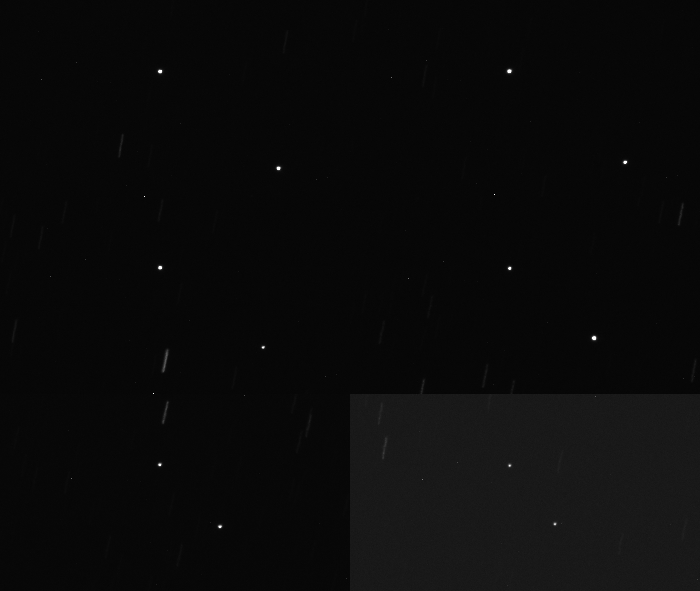
That difference matters. Starling’s guidance task was to keep spacecraft within a specified range of one another. A military swarm would need to coordinate a mission among multiple vehicles, distinguish relevant targets and act within the limits of rules of engagement. Shield Space co-founder and CTO Dan Molland told Space.com that a military mission raises a “much more complex set of questions” than Starling’s guidance problem.
Small spacecraft, difficult trade-offs
Fitting the necessary equipment into a CubeSat is another hurdle. A defensive spacecraft may need propulsion, power, sensors, imaging systems, communications, onboard computing and some form of effectors. Those components all compete for limited mass, volume and electrical power. Shield Space’s first demonstration will test rendezvous and proximity operations, or RPO; it won’t, by itself, demonstrate an operational defense swarm.
Ritchie acknowledges the packaging challenge. “Yes, it's a problem because of size, weight and power,” he said. “We've had to totally innovate from scratch some elements of the mission… but we have only got roughly 100 cm by 100 cm [40 by 40 inches], so saving space or having systems that are already completely integrated is the main aim.”
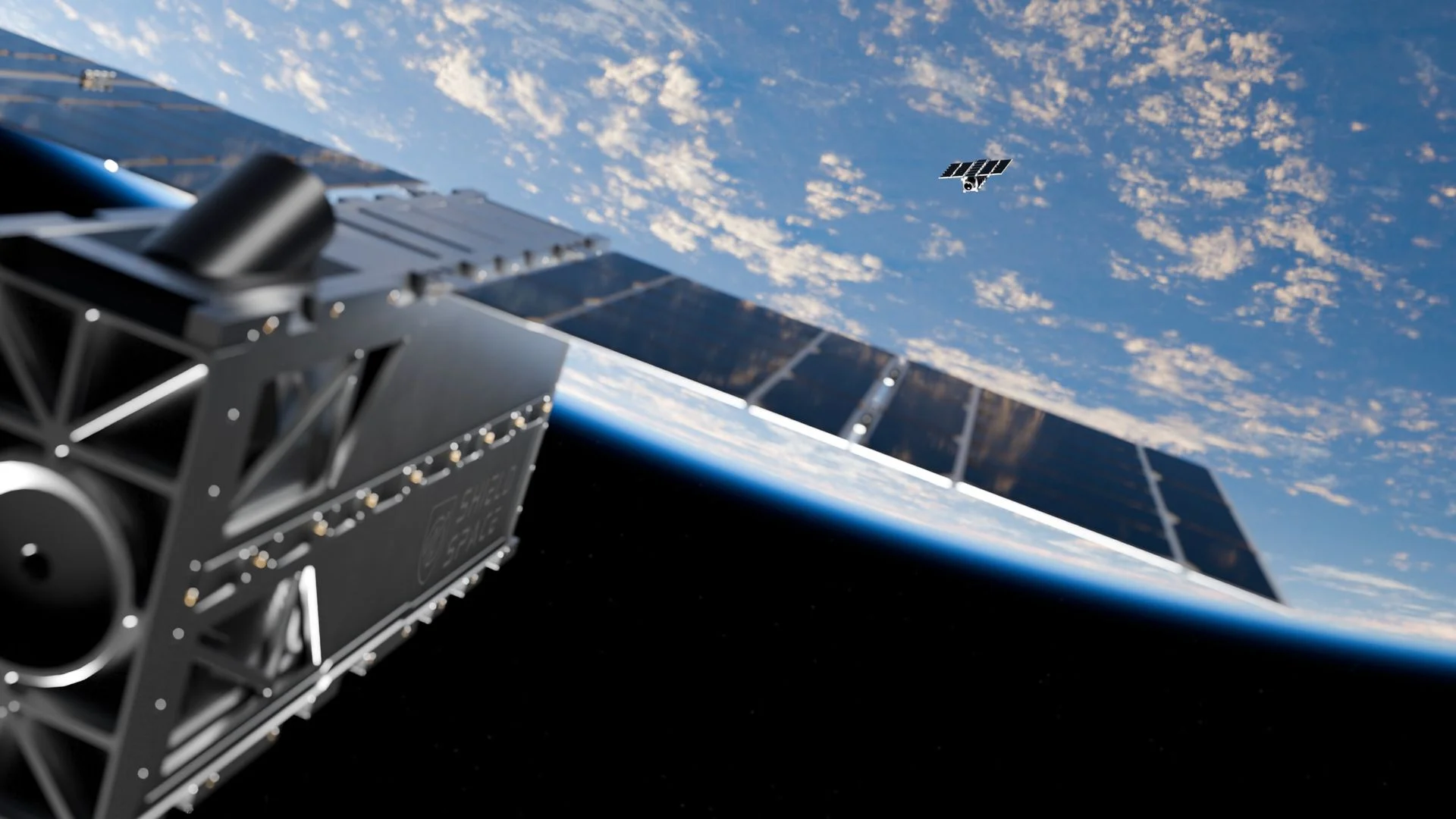
The startup is relying in part on commercially available spacecraft components. Molland said EnduroSat is building an autonomous 8U CubeSat with chemical propulsion and imaging capability, onto which Shield Space will add its software for the RPO demonstration. He argues that standardized CubeSats offer more opportunities to use existing components than conventional satellites, which are often custom-built. That approach could reduce integration work, but the mission still has to show that separate subsystems function together under real orbital conditions.
For Ritchie, gathering flight data may prove just as important as solving the hardware constraints. “It takes an extraordinary amount of data to train the models and algorithms to achieve a fully autonomous mission,” he said. Space offers fewer opportunities to gather the relevant data than drone operations in Ukraine, he added. Synthetic data can help train systems, but Ritchie says it doesn’t yet fully capture the conditions needed for autonomous space missions. Demonstrations such as Broadsword could therefore supply information needed to improve later models.
Ambition meets a long development path
Shield Space has outlined a sequence of steps beyond Broadsword: test two full-sized 16U CubeSats, move to a carrier holding 10 CubeSats, and then develop a “super carrier” consisting of 10 carriers across multiple orbits. Ritchie calls the longer-term concept “space-based carrier strike.” In his description, carriers launched on demand or positioned in advance could protect and defend entire orbits.
That is a substantial leap from maneuvering two test spacecraft. The leading space powers have not publicly demonstrated combat operations by satellite swarms, though they may be reluctant to disclose their capabilities. And the technical questions extend beyond autonomy and miniaturization: a system would need to communicate, coordinate and operate predictably while managing the risks of close approaches and weapons use in orbit.
Bleddyn Bowen, an associate professor of astropolitics at Durham University and author of War in Space: Strategy, Spacepower, Geopolitics (Edinburgh University Press, 2020), compares the proposal with Brilliant Pebbles, a late Cold War missile-defense concept developed under the Strategic Defense Initiative. That plan envisioned thousands of small autonomous orbiting interceptors designed to destroy Soviet intercontinental ballistic missiles through collision.
“With enough investment, a lot is feasible,” Bowen said. “But you're looking at many years of development and testing, solving the problem of testing kinetic weapons in space without leaving debris, and finding someone to buy the system.” His comparison puts the scale of the challenge in view: a successful proximity demonstration would be useful evidence, but it wouldn’t resolve the engineering, safety and customer questions facing a full defense network.
The immediate test is narrower and more measurable. If Shield Space can guide two spacecraft toward one another with increasing autonomy, it will have taken a step toward the operating model it proposes. Its later missions will need to show that the same approach can scale to larger groups, with the control and coordination demands of a real defensive mission. The future of satellite protection may involve swarms, but for now the key question is whether the first small spacecraft can reliably find and approach their target.